
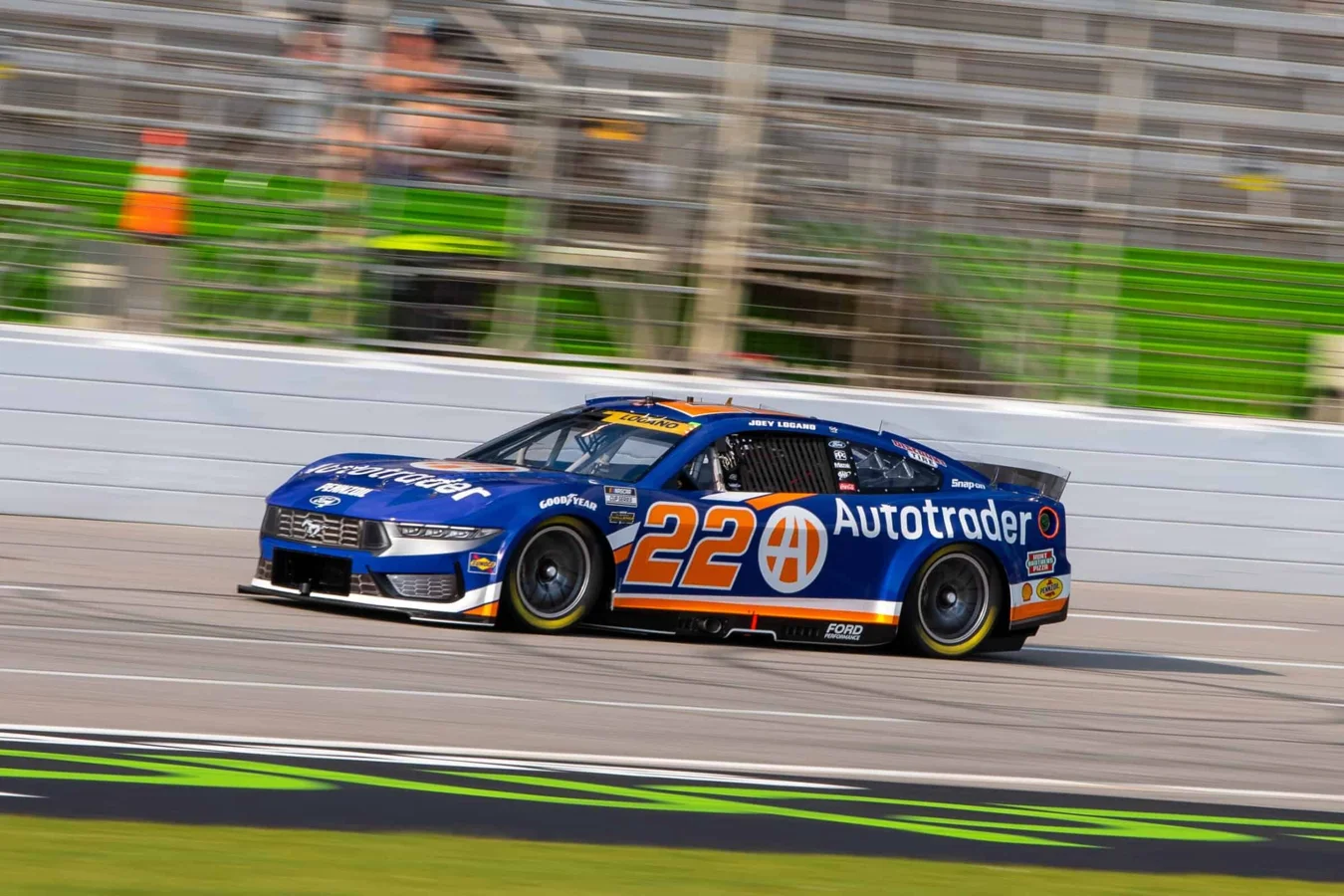
Before turning his focus to the upcoming challenges on Chicago’s streets, Denny Hamlin reflected on the recent weekend at EchoPark Speedway in Hampton, Georgia, where Joey Logano secured the pole position at the Quaker State 400. Hamlin examined how Logano’s aggressive qualifying tactic—prioritizing speed over grip—ultimately influenced the race outcome, especially considering all top-five finishers started sixth or lower.
Logano earned the pole by winning a tiebreaker against Josh Berry after both recorded identical lap times. His fastest lap was 30.979 seconds, translating to 178.960 mph around the 1.54-mile oval. Despite this impressive qualifying speed, Hamlin criticized the overall strategy that Team Penske adopted for the event.
The Tradeoff Between Qualifying Speed and Race Performance
Hamlin pointed out that the Penske cars, including Logano and Ryan Blaney, clearly focused on maximizing qualifying speed at the expense of race handling. Explaining this, Hamlin said,
“Screw the grip. We want to be out front. We want to qualify one, two, three, four, and then control the race from there,” —Denny Hamlin
He noted that the Penske trio’s advantage—around a tenth of a second faster than the next pack—is significant at speedways, underscoring their all-in commitment to raw speed. Hamlin continued,
“So, to me, that says that they sell out for all-out speed. Don’t really worry about handling too much, which we were going to see had that wreck not happened.” —Denny Hamlin
This approach works well when a driver leads clean air, maintaining grip and steady track position. However, Hamlin explained how things deteriorate once a driver drops back into turbulent air, facing unstable handling and added difficulties during restarts and cautions.
Consequences of the Aggressive Strategy During the Race
Although Logano started at the front, by the end of Stage 1 his position slipped to third, while Blaney fell further back to seventeenth. Both drivers ultimately became involved in a multi-car pileup during Stage 2, abruptly ending their races.
Hamlin expressed curiosity about whether the Penske cars could have recovered to contend at the front if not for the wreck, implying that their setups left little margin for recovery once they lost clean air and track position. This rapid decline highlighted the cost of the setup choices: sacrificing long-term race stability for short-term qualifying advantage.
Implications for 23XI Racing and Joe Gibbs Racing
As Hamlin balances dual responsibilities driving for 23XI Racing and Joe Gibbs Racing, these insights into Logano’s strategy offer lessons about optimizing setups for race endurance and adaptability. Hamlin aims to improve his Toyota’s speed while ensuring competitive readiness from the outset, which contrasts with Penske’s pursuit of track position regardless of handling compromises.
Understanding how different strategies played out at EchoPark Speedway will likely shape the decisions made at the next venue in Chicago, where both teams face distinct challenges. The impact of Logano’s pole approach serves as a cautionary example of how focusing narrowly on qualifying can backfire during the race.
