
Bubba Wallace’s spotter, Freddie Kraft, criticized Joey Logano’s response to the events after the NASCAR All-Star Race, highlighting what he sees as Logano’s hypocrisy. On the Door Bumper Clear podcast, Kraft addressed Logano’s frustration over losing the race to Christopher Bell, particularly focusing on Logano’s disagreement with the promoter’s caution during the race.
“What the f**k,” Kraft began. “First of all, he was crying after the race about the caution that we all knew was coming. This is probably one of the most hypocritical things I’ve ever heard anybody say.
—Freddie Kraft, Bubba Wallace’s Spotter
Kraft acknowledged Logano’s skill as an exceptional defensive driver but pointed out that Logano would likely have used similar tactics if the situation were reversed. He stressed that everyone expected the caution flag, making Logano’s complaints seem inconsistent with how he would act in Bell’s shoes.
“It’s just funny for me,” Kraft said. “He gets out of the car. First of all, he’s mad about the caution… The roles were reversed. He was finally the best car and got beat by strategy or caution. But we all knew that caution was coming.
—Freddie Kraft, Bubba Wallace’s Spotter
Joey Logano’s Frustration Visible After Race Ends
During the NASCAR All-Star Race, Joey Logano dominated by leading 139 of 250 laps. The race’s defining moment came on Lap 216 when a promoter’s caution was issued. At that point, Christopher Bell took advantage by pitting for two tires, contrasting Logano’s decision to stay out. Bell capitalized on this move, matching Logano’s pace by Lap 241 and eventually overtaking him by moving close to the wall.
After the race, Logano expressed his anger about the outcome, emphasizing his disappointment with how the caution impacted his chances despite having the fastest car on the track.
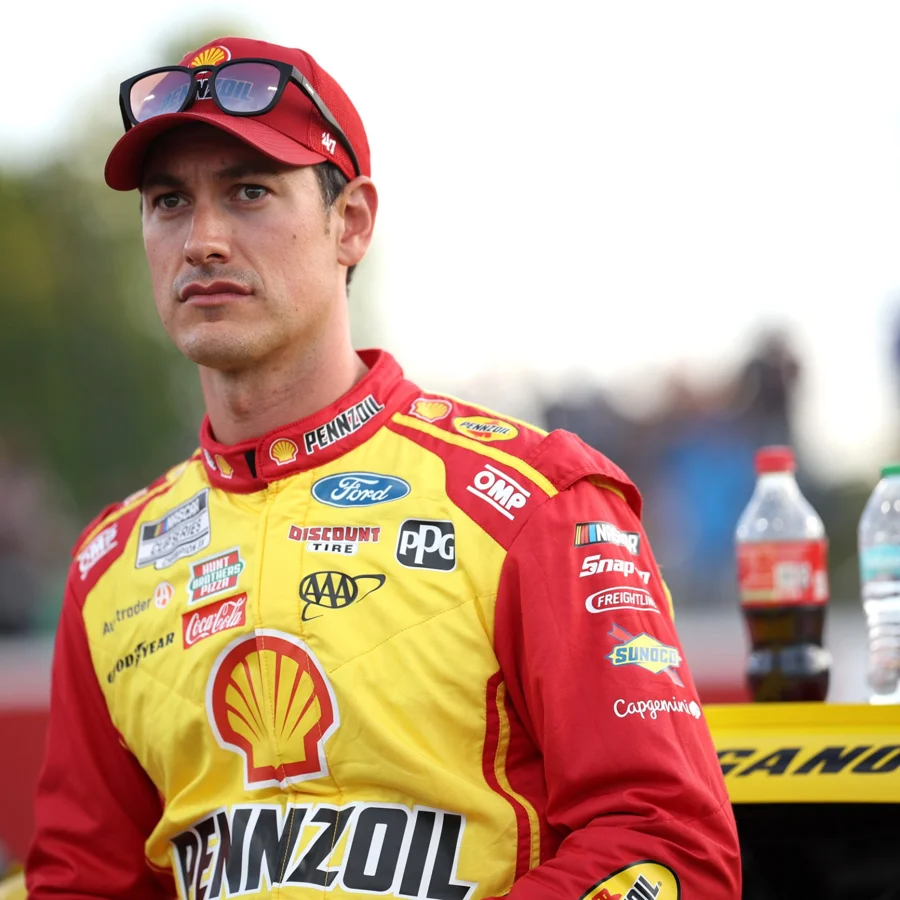
“I’m pissed off right now,” Logano said after the race. “Just dang it, we had the fastest car. The Shell-Pennzoil Mustang was so fast. You get to … I’m trying to choose my words correctly on the caution situation. Obviously, I got bit by it, so I am the one frustrated.
—Joey Logano, NASCAR Driver
Bell commented on his strategy and aggressive moves during the last laps, explaining how he strategically leveraged tire advantage and positioning to claim the lead.
“He did a great job of trying to keep me behind him, and I knew that once I got that run off Turn 4, it was like alright, I’m going to have to be a little more aggressive and kind of leaned on him and got him out of position,” Bell said. “I knew once I got the lead, I had the tire advantage so I should be able to cruise, and it worked out that way.
—Christopher Bell, NASCAR Driver
Contrasting Reactions Highlight Rivalry Dynamics in Race
Freddie Kraft illustrated the familiar pattern of Logano’s competitive attitude by pointing out how, in similar situations, Logano himself does not hesitate to race aggressively or capitalize on strategic decisions like cautions.
“That was quintessential Joey there at the end of that race complaining about the cautions and getting raced hard. Rolls reversed, he’s doing the exact same thing to Christopher.”
—Freddie Kraft, Bubba Wallace’s Spotter
This exchange underscores the complex dynamics between drivers and how strategic caution periods can drastically alter race outcomes, often leading to intense emotions and disputes over fairness.
Details of the Final Laps and Strategic Moves at NASCAR All-Star Race
The promoter’s caution on Lap 216 set the stage for the race’s climax. Logano stayed on track, opting not to pit, while Bell’s pit stop for two tires proved decisive. Bell’s patience and aggressive move near the wall enabled him to overtake Logano toward the end of the race, despite Logano’s prolonged leadership.
These strategic choices exemplify how split-second decisions during caution periods can influence the victory, highlighting the strategic depth within NASCAR competition and how it affects driver rivalries.
