
Mercedes is focusing on the positive aspects of Kimi Antonelli’s rookie campaign to help him grow as a driver during the 2025 Formula 1 season. The Italian, only 18 years old, has faced a mixture of successes and setbacks since joining Mercedes, with the team emphasizing the importance of learning over results as he adjusts to the top level of racing.
Antonelli, promoted through the Mercedes driver development programme after a standout junior career, arrived in Formula 1 with strong expectations. Despite a quieter Formula 2 season in 2024, Mercedes prepared him extensively through testing previous model cars before naming him the successor to Lewis Hamilton, the seven-time F1 World Champion who recently moved to Ferrari.
Early season highlights and midseason struggles for Antonelli
The rookie has had notable moments that showcased the promise Mercedes believes he has, including securing his first pole position during the Sprint race in Miami, finishing third in Canada, and a remarkable fourth place at the unpredictable season opener in Australia. These results gave a glimpse of Antonelli’s raw talent and potential on challenging race days.
However, Antonelli’s strong early showings were followed by a tougher second quarter of the championship, marked by performance difficulties. The introduction of technical upgrades on the Mercedes W16 car led to a development path that proved uncomfortable, forcing the team to remove a rear suspension upgrade introduced at Imola to address the issues. This technical instability coincided with a drop in Antonelli’s confidence behind the wheel.
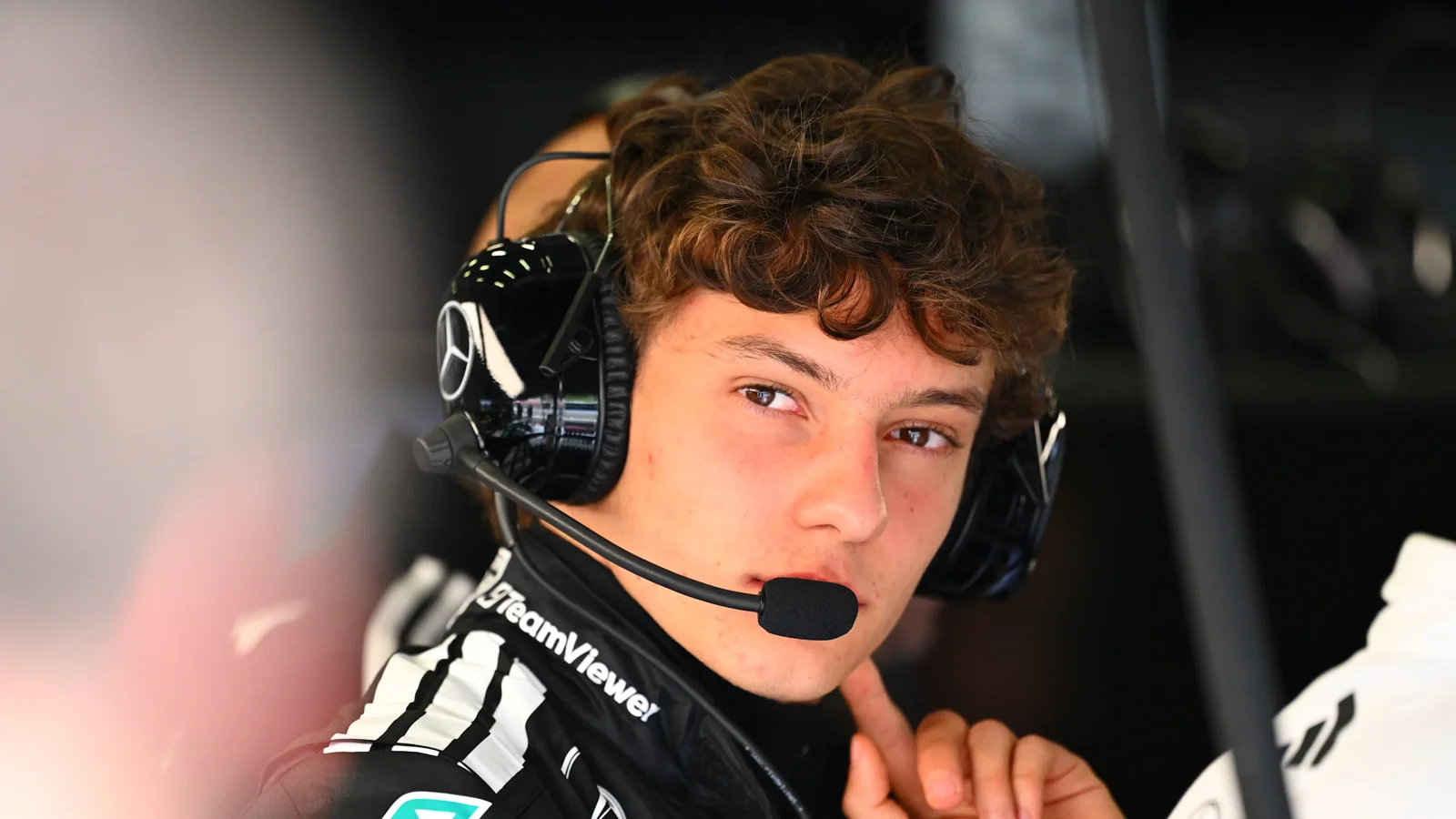
The Belgian Grand Prix highlighted the rookie’s struggles when Antonelli openly admitted to media, including PlanetF1.com, that he was battling a loss of confidence impacting his driving performance.
“It’s a difficult moment for me because I feel like I have no confidence in pushing,”
he said.
“I tried to push a bit too much and then I spun, and then it kind of hurts the confidence even more.”
“With the way I’m driving, I’m just increasing the problem. And that gives me even less confidence with the car.”
Feeling forced into unnatural driving styles at times, Antonelli faced an early mental obstacle in his Formula 1 career. Recognizing this, Mercedes has prioritized supporting him to regain his confidence and stability moving forward.
Team support crucial for mental recovery and performance growth
Mercedes understands the psychological challenges Antonelli faces as a rookie and is committed to providing him with the backing necessary to avoid a prolonged confidence crisis. Bradley Lord, a Mercedes team representative, emphasized the role of belief and honest communication within the team to help Antonelli through the ups and downs inherent in a rookie season.
“I think every human being responds positively to knowing they have the support of their team and the belief of their team, and you know that that group has faith in them,”
Lord explained at the Hungarian Grand Prix.
“That doesn’t stop honest conversations if things are not hitting objectives and things like that. I’m not saying that’s the case with Kimi, just talking in general terms, but yeah, every human being responds to that sort of positive feeling of support and being part of a team and being part of a collective endeavour.”
“So that’s been the case all the way through this first season. It was the case last season as well, as we were building towards it. You’ve got to not get too lost in the moment and step back and see this all as part of a learning curve and a development trajectory, which is what this year is all about.”
Following the rollback of the rear suspension upgrade, both Antonelli and his experienced teammate George Russell showed signs of improvement during the Hungarian Grand Prix weekend. Although Antonelli finished 10th in Budapest, the result reflected missed opportunities rather than a lack of speed, and the Italian appeared reassured going into the summer break.
Technical challenges and learning curve shape Antonelli’s first year
Lord acknowledged the car’s handling difficulties have affected both Antonelli and Russell, contributing to problems with confidence on track. He stressed that the car’s unpredictable nature made it harder for the rookie to commit fully to corners and maintain competitive performance.
“We know that a rookie season has ups and downs, and it’s full of learning – that’s going to be the positive learnings and the positive surprises, and also the more difficult moments,”
Lord said.
“It’s certainly true that Kimi, as one would expect where the car has become more difficult – both drivers were lacking confidence in the ability to commit to the corner with the car – that has been a struggle for him as well, has cost him confidence, and the step backwards in performance that we’ve seen has meant that we are more vulnerable to those early exits and qualifying things than was the case earlier in the season.
So that’s certainly a difficult moment for the team as a whole, and for him in particular.”
Lord was clear the issue is not a lack of talent but a combination of limited experience and the car’s development challenges:
“I think the key thing is, we’ve already said this first and foremost, it’s the car that isn’t there, not any doubt or any lack of anything on Kimi’s side, apart from experience that he hasn’t yet got and hasn’t yet had the opportunity to acquire.”
Mercedes’ approach emphasizes encouraging Antonelli to focus on growth and process rather than dwelling on results. Engaging closely with the engineers and understanding the car’s technical nuances are vital parts of building his confidence and maximizing performance.
“So our approach is very much one of encouraging him to see, to take the learning from these experiences, rather than focusing on the outcomes and then focusing on what is the process of regaining that confidence and regaining that performance, and that comes from spending time with the team, spending time with the engineers, really understanding what we’re doing with the car and how he can extract the maximum from it.”
“For us, the priority is giving him a car with which he can express the talent that we know he’s got and continue to realise the potential that we know is there as well.”
“There’s full honesty on where we are and what we can improve, and then full support in that process of improving on the technical side, to give the drivers the tool that they need to deliver performance, and then for them to achieve that delivery.”
Reflection on Antonelli’s emotional release and ongoing development
Antonelli, who is still awaiting contract confirmation for the 2026 season but is expected to remain with Mercedes, has discussed how releasing frustration has positively affected his mindset. After showing visible emotion at the Belgian Grand Prix, he told media that letting those feelings out was healthier than bottling them up.
“Sometimes the best way is just to let it all out, and instead of keeping it for yourself, because I think, in some cases, it’s just gonna hurt even more,”
Antonelli shared in Hungary.
“I was very frustrated with my performances, because I feel like the potential is just so much higher than what I’ve been showing, so definitely, I was really frustrated, and it was a good moment to let it all out. It definitely made me feel much better afterwards.”
Beyond his standout third place in Canada, Antonelli’s results have been less consistent since the Miami Grand Prix in May. However, both the team and driver remain hopeful that lessons learned during the first half will translate into stronger performances after the summer break.
Approaching his 19th birthday, Antonelli has avoided disappointment but has yet to ignite the kind of rapid impact some rookies like Max Verstappen have achieved in recent years. As Mercedes’ first rookie signing since their 2010 return to Formula 1, questions have arisen about whether the adjustment phase is proving more arduous than expected.
Bradley Lord responded to this by emphasizing the high challenge Antonelli faces. He stressed that both entering Formula 1 and doing so under the intense spotlight of Mercedes brings formidable pressure.
“No, I don’t think so,” Lord said when asked if the development process was more difficult than anticipated.
“I think we knew we were setting a very high… It’s a huge challenge, not just coming into Formula 1 full stop, is a huge thing to do.
To do so in a team with the level of expectation in it that Mercedes has is an even bigger thing.
We knew that and took that decision with open eyes, and our job is to support Kimi to deliver in that environment, and to give him the conditions to deliver and to realise that potential, so he knew the season would have ups and downs.”
“The more you can give a rookie driver a car that they can be confident in, that is predictable, where they can access the performance with confidence, the easier that process will be – that’s where we have fallen down in the second quarter of the season, and hopefully we can find a better direction as we go forward.”
Outlook for Kimi Antonelli’s growth with Mercedes in the 2025 season
Mercedes’ primary focus is to provide Kimi Antonelli with a stable and predictable car that allows him to tap into his existing talent and confidence. As he accumulates necessary experience, the team expects him to overcome current challenges and deliver more consistently. With ongoing technical improvements and mental support, Antonelli’s rookie season is viewed as the foundation for a long-term Formula 1 career.
Maintaining a growth mindset and focusing on the learning process are central to Antonelli’s development, while Mercedes remains dedicated to preparing tools and conditions to unlock his full potential. The second half of the 2025 season will be a crucial period for both driver and team to demonstrate progress after a rocky middle phase of the championship.
