
During the recent Pocono Xfinity race weekend, Hall of Famer Dale Earnhardt Jr. made his national series debut as a crew chief, stepping in for Conor Zilisch with the No. 88 team while the regular crew chief was suspended. Earnhardt Jr. led the team to victory in his first race in this position, creating significant attention within the NASCAR community. However, the move received mixed reactions, particularly from two-time Xfinity Series champion Kyle Busch, who openly criticized the decision as little more than a publicity stunt.
Kyle Busch expressed his perspective clearly, although he later softened his remarks following backlash. Despite this, Busch maintained that Earnhardt Jr.’s role was not genuinely essential to the team’s performance. In response, Denny Hamlin, Busch’s former teammate, shared his views on the controversy during the latest episode of the Actions Detrimental podcast, urging that Earnhardt Jr. deserves recognition for his involvement without overstating his role.
Denny Hamlin Highlights Dale Jr.’s Balanced Role in Crew Chief Duties
Hamlin emphasized that while the team carried much of the operational responsibility, Earnhardt Jr.’s presence was more than just symbolic. He argued against dismissing Junior’s contributions entirely and suggested the reality falls somewhere between Busch’s dismissive take and the media portrayal of Earnhardt Jr. as an actual, fully hands-on crew chief.
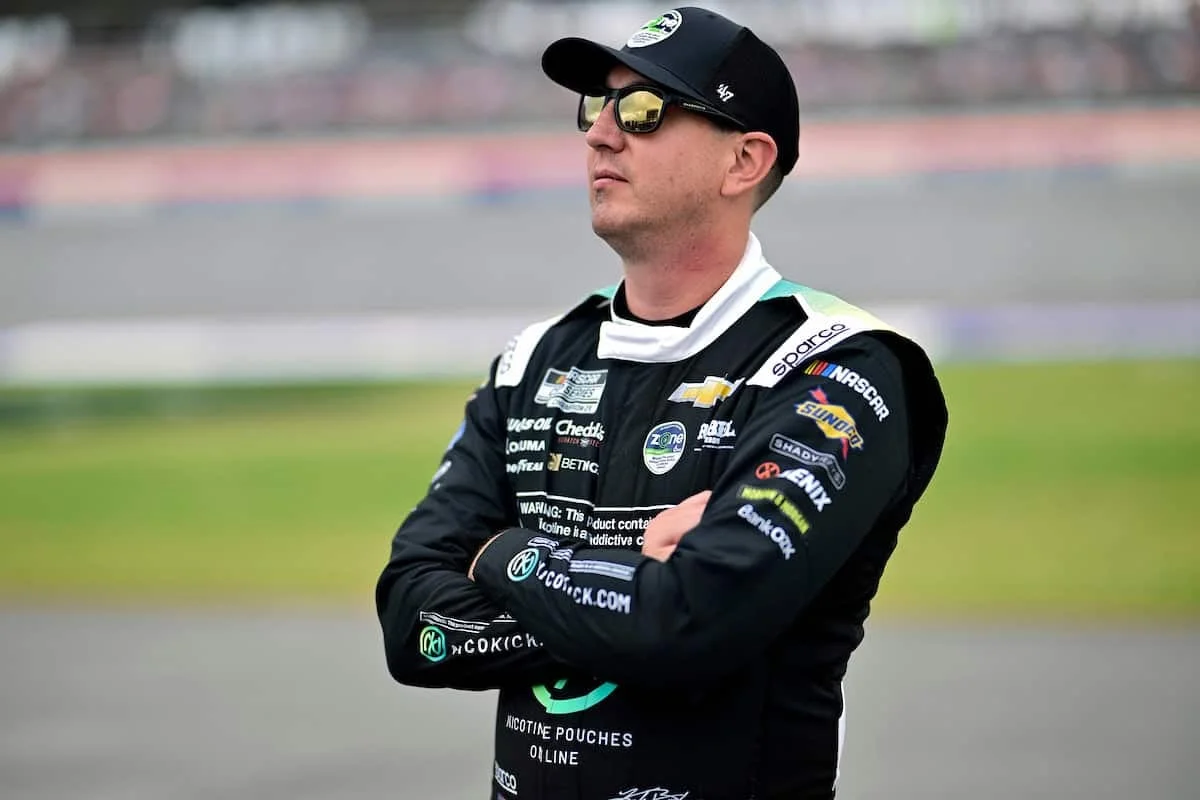
I think we’ve got to give Dale Jr. a little bit of due and certainly, don’t want to undersell the fact that the team was doing the heavy lifting. I think that the answer can be somewhere in between of Kyle Busch says he’s nothing but a warm body up there — the TV sells it as if he’s an actual crew chief — I think the answer is probably somewhere in between. But you still got to be responsible, right?
Denny Hamlin said via Actions Detrimental.
Hamlin described how the original crew chief continued to manage most technical aspects behind the scenes, while Earnhardt Jr. likely contributed to strategy decisions, leveraging his extensive experience as a former Xfinity Series champion to identify on-track opportunities. This combined effort resulted in a victory, highlighting Junior’s strategic influence and the driver Conor Zilisch’s outstanding performance.
You got to get the messages to the driver, and he saw opportunities, strategy wise, and he’s probably talking to the engineers about the strategy. The result was he was walking to Victory Lane at the end of that race and obviously, Connor drove that car fantastic.
Denny Hamlin added.
Senior NASCAR Insider Weighs In On The Dispute
Kelly Crandall, a respected NASCAR journalist, provided insight during the Door Bumper Clear podcast, acknowledging both sides of the debate. She recognized that Kyle Busch’s point about the limited impact of crew chief suspensions reflects current realities, particularly considering modern communication tools that help teams operate seamlessly even when a crew chief is absent.
Now, as for what Kyle said, I mean, he’s not wrong. I think we’re all well educated enough, even the race fans that understand to Kyle’s point. When crew chief gets suspended and we can keep reading, nothing. I mean, they are not physically there, but they are.
Kelly Crandal added.
Crandall highlighted that the crew chief’s physical absence no longer equates to a complete loss of influence, challenging the effectiveness of such penalties. She suggested that Earnhardt Jr.’s visible role may have been part of a marketing strategy, but noted Busch’s concerns as valid from a procedural standpoint.
Impact and Future Considerations for NASCAR Crew Chief Roles
The discussion sparked by Kyle Busch’s critique and Denny Hamlin’s defense brings attention to NASCAR’s approach to crew chief suspensions and the evolving nature of team dynamics in the digital era. This incident is likely to encourage NASCAR officials to assess how penalties affect team operations and whether adjustments are needed to ensure fair competition and meaningful consequences.
Meanwhile, Earnhardt Jr.’s win in his crew chief debut helped to quiet some critics, marking an important milestone in his developing role off the track. The success demonstrated the combined strength of the team and the strategic input Earnhardt Jr. provided, while also illustrating how marketing and competitive elements can overlap in modern racing.
As NASCAR continues to evolve, these conversations highlight the balance between promotional opportunities and sporting integrity, with key figures like Hamlin, Busch, and Crandall driving the dialogue forward.
