
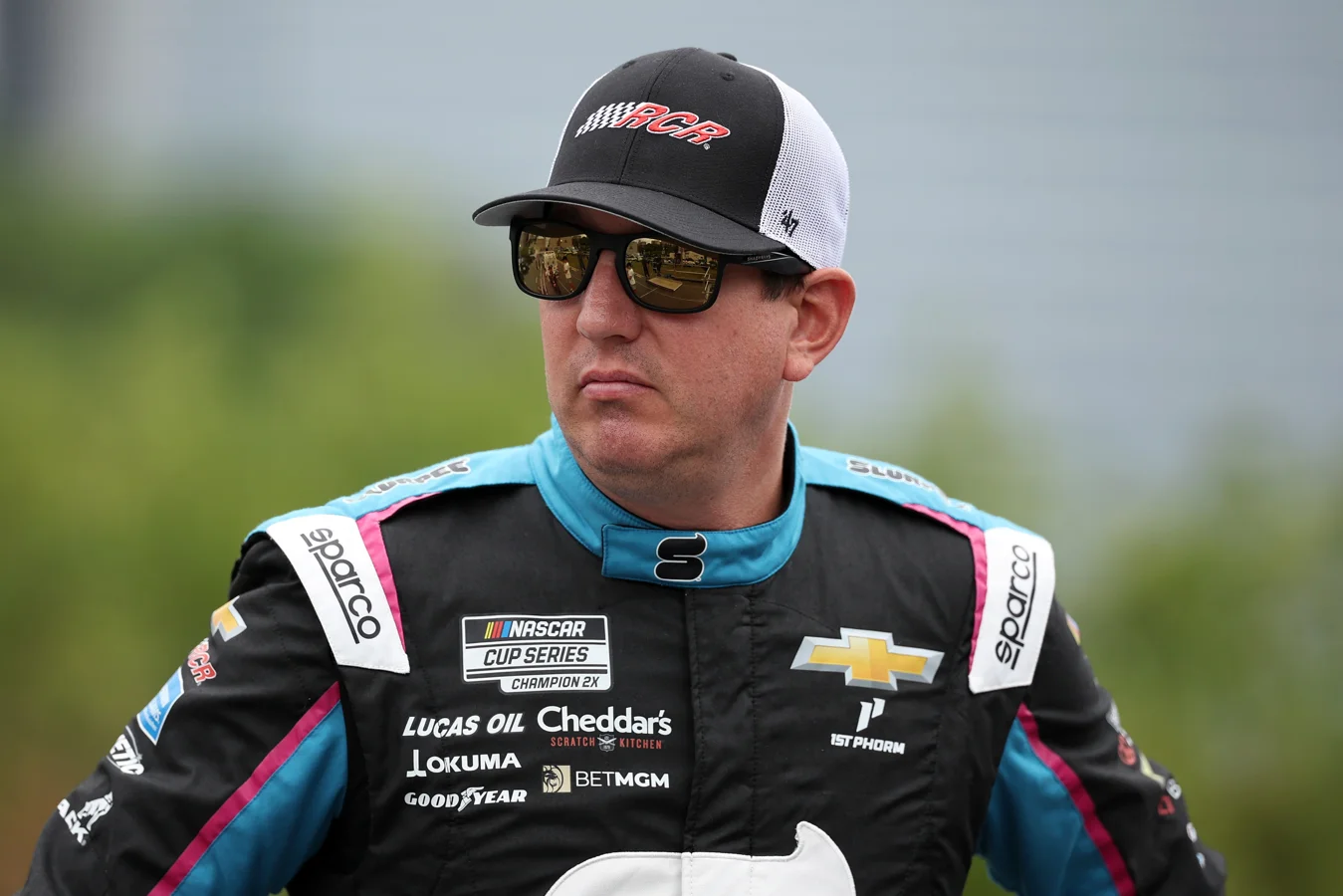
Kyle Busch, a two-time NASCAR Cup Series champion, recently expressed his views on why the sport is losing fans rapidly. He believes that changes aimed at increasing safety have made NASCAR less exciting, causing many supporters to lose interest in the races.
Busch candidly described the shift in NASCAR’s atmosphere during an interview with Jeff Gluck for The Athletic, saying,
“Now it seems like everything is neutered,”
and added,
I got hurt in 2015, so I can talk, but nobody really gets hurt. The safety aspect isn’t there. So there’s not this Evel Knievel type thing happening anymore. It’s just going to watch a race on Sunday, and people feel like that’s boring.
Busch’s comments are grounded in experience. In 2015, he endured a severe crash at Daytona when his car struck a concrete wall at nearly 90 mph, resulting in a compound fracture in his right leg and a broken left foot. This incident underscored the real dangers drivers once faced on the track. While safety measures have successfully reduced injuries, Busch argues that the sport lost an unpredictable and thrilling element that kept viewers engaged.
He elaborated on the appeal of NASCAR’s past dangers:
A little bit of it, too, was back in that day, guys were getting hurt, the speeds were getting faster, cars were getting a little bit safer, obviously we lost Dale, but there was this sense of ‘What are these guys going to do next? What’s this next crash going to look like? Are they going to come out of it OK?’
Supporting Busch’s viewpoint, TV ratings demonstrate a downward trend, with the 2025 Cup Series races averaging 2.71 million viewers compared to 3.07 million in 2024. This decline of roughly 11-14% persists despite efforts to expand NASCAR’s digital presence and lucrative media contracts.
Cultural Changes Deepen NASCAR’s Struggles Beyond Safety Concerns
Beyond safety, Busch points to a broader cultural transformation affecting NASCAR’s popularity. He believes shifts in societal interests and demographics have created a gap between the sport and its traditional fan base.
Busch outlined the cultural aspect, stating,
I think it’s a culture problem, and I say that in regard to the world culture,
and noted,
In the ’80s and ’90s, you had a bunch of Hot Rod guys who were cool with souping up their 1970s, 1980s street rods. A lot of those guys are aged out.
Once a prime Sunday attraction for gearheads and car enthusiasts, NASCAR now competes against a multitude of entertainment options unavailable during its peak years. Families and younger audiences have more alternatives for leisure and entertainment that often provide quicker entertainment rewards than lengthy races.
Busch pointed out this shift with,
I just think the problem we’re running into is there’s not a lot of race fans anymore,
adding,
People would always bring their kids to the track, but now there are just so many other things people can do otherwise. Going to the lake, taking your kids to a bounce house.
This demographic evolution presents a significant hurdle for NASCAR, as the older generation that understood classic cars and racing culture moves away from the sport. Meanwhile, younger viewers tend to prefer highly engaging, fast-paced digital entertainment formats rather than traditional race viewing.
How These Changes Might Shape NASCAR’s Future
Kyle Busch’s observations highlight critical challenges for NASCAR as it tries to balance spectator safety with maintaining excitement and wider appeal. The sport’s transition from a high-risk spectacle to a more controlled environment has unwittingly diminished the unpredictability that once captivated fans.
Simultaneously, cultural shifts beyond the racetrack threaten to reduce NASCAR’s fan base further as generational interests and entertainment preferences evolve. Without reconnecting to its core audience or attracting new ones, NASCAR may continue to face falling viewership and engagement.
Moving forward, NASCAR’s leadership will likely need to explore innovative ways to retain the thrilling spirit of racing while appealing to a changing cultural landscape. How they address these concerns could define the sport’s trajectory in the coming years.
