
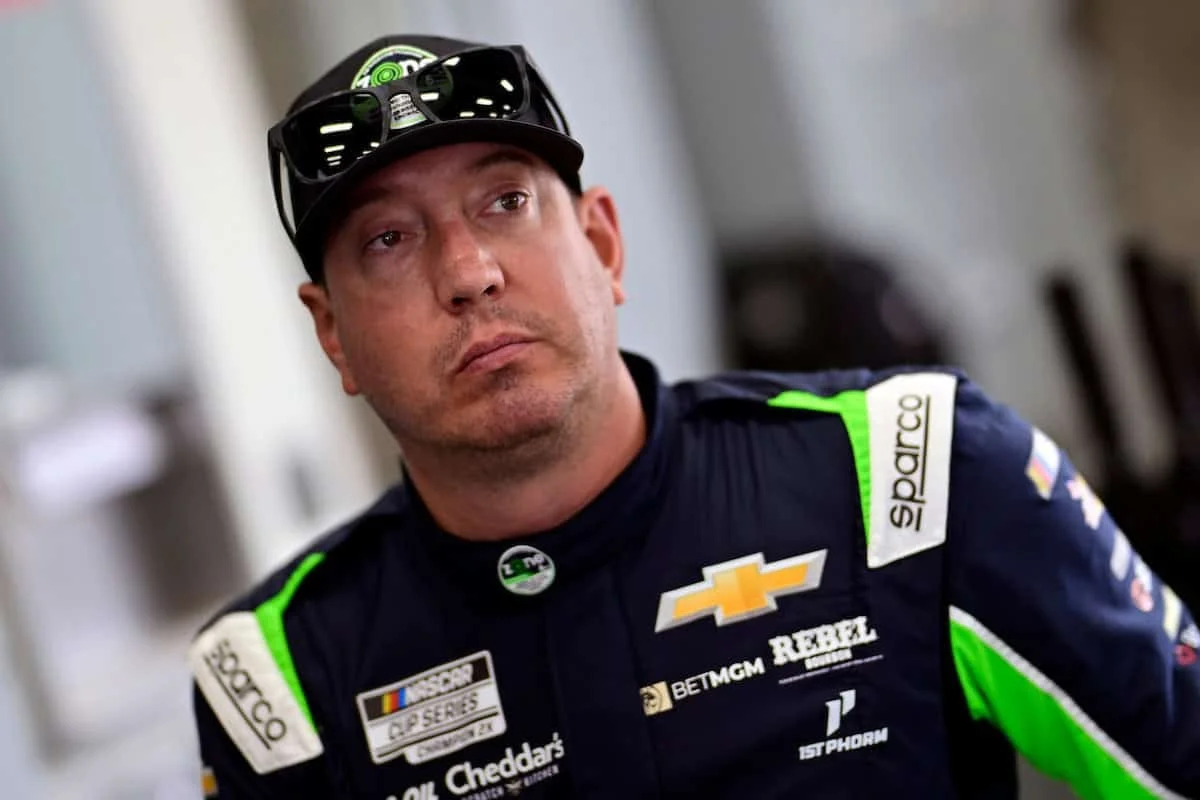
Kyle Busch, once a dominant force in NASCAR with two championships and more than 60 Cup victories, has faced significant difficulties adapting to the Next Gen car since its introduction in 2022. Known for his aggressive driving style that thrived in previous car models, Busch has struggled to navigate the newer vehicle’s tighter handling and reduced setup flexibility. His trademark approach, which allowed him to push the limits with more margin for error, is now often causing him to lose control and spin out, particularly in the 2025 season.
Richard Childress Racing’s efforts have yet to provide Busch with a car capable of matching his driving style. This adaptation struggle has contributed to a scarcity of wins and several poor finishes, contrasting sharply with his previous successful seasons. Veteran driver Kevin Harvick openly criticized Busch’s difficulty adjusting, emphasizing that overdriving the Next Gen car often leads to loss of control.
Harvick Highlights Busch’s Weekly Struggles and Loss of Control
On a recent episode of Happy Hour, Kevin Harvick addressed the recurring issues Kyle Busch faces with his No. 8 RCR Chevrolet. Harvick explained Busch’s problem as a mismatch between his usual pushing style and the demands of the Next Gen car. He said,
“Kyle Busch turns things around almost weekly, unfortunately. He got a little spin again this week. I think the Kyle Busch question is, it’s going to be tough. You know. I think their cars are just off. I think that. Kyle, being Kyle, wants to push it faster, further than, and make things try to go faster, and when you do that in this car, you spin out,”
Harvick’s remarks reflect the pattern of Busch’s season, marked by spins at several tracks, including Darlington’s Southern 500 and the Enjoy Illinois 300 at Gateway. These incidents reveal the difficulty of extracting speed from a car that offers less forgiveness than previous generations, especially when Busch attempts to drive aggressively as he always has.
Harvick further expanded on the challenge by stating,
“He’s just in a tough spot right now with where the cars are performing, and it seems like it goes overboard almost on a weekly basis. You know, with the spinouts and things that have happened because there’s just no cushion there and you can’t make the thing do more than it’ll do. That’s hard because he’s not been programmed that way for his whole career.”
This assessment summarizes the core of Busch’s problem: the Next Gen car’s aerodynamic profile offers less sideforce and requires precise handling, leaving almost no margin for error. Busch’s former advantage of aggressive driving within a forgiving car framework now often results in mistakes and poor finishes, a sharp contrast to his past success during the Gen-5 and Gen-6 eras.
Impact of Next Gen Car’s Design on Busch’s Driving Approach
The Next Gen car’s engineering limits driver input to a stricter window, which conflicts with Kyle Busch’s instinctive style of pushing the car beyond typical limits. In past eras, the car’s sideforce and tire degradation gave Busch room to “dance on the edge,” helping him secure multiple victories. However, the stiffer chassis and lower horsepower of the Next Gen model demand more precise control, penalizing any assertiveness that exceeds the car’s capabilities.
Busch’s 2024 campaign reflected this adjustment struggle, featuring twelve finishes of 20th place or worse—a downturn not seen since 2015. His frustrated reaction during a crash at the Charlotte Roval in 2023, when he exclaimed, “This car s*cks,” illustrated the tension between his expectations and the vehicle’s limitations. Harvick’s analysis points to a fundamental incompatibility between Busch’s setup preferences, which aim to maximize speed aggressively, and the current capabilities of RCR’s Next Gen car, which trails behind competitors like Hendrick Motorsports, Joe Gibbs Racing, and 23XI Racing in development.
The cycle of spins and subpar performance continues because Busch remains wired to push beyond the Next Gen car’s strict boundaries, which the vehicle simply cannot accommodate.
Richard Childress Racing’s Broader Performance Troubles
Kyle Busch is not alone in facing setbacks this season; his Richard Childress Racing teammate, Austin Dillon, also struggles with the team‘s underperforming Next Gen Chevys. Although Dillon secured a critical playoff spot with a win at Richmond, his 2025 results have been inconsistent, featuring an average finish just over 20th place and a typical starting position around 19th. Busch missed the playoffs again, with similar average finishing positions that underline the team’s overall competitive challenges.
The Enjoy Illinois 300 at Gateway showcased the difficult season both drivers endure. Busch qualified and finished 22nd, while Dillon dropped from 15th to 18th over the race. Richard Childress himself acknowledged the issues live during the Dover race broadcast, noting that their cars were not performing up to par and promising improvements, though tangible progress has yet to emerge.
Austin Dillon’s frustration was evident during the Gateway event when, according to reporter Toby Christie, he said over the radio,
“Quit telling me how to drive. I’m driving a piece of s**t. I’m trying to hang onto it.”
After the race, Dillon added,
“We didn’t come here with a good race car for some reason. All of our cars were pretty off today; we just missed it.”
Despite these difficulties, Dillon acknowledged his team’s effort by stating,
“But this No. 3 Dow DayGlo Chevrolet team did a great job executing with what we had. We got stage points and finished the best we possibly could right there.”
Dillon finds himself just 11 points shy of advancing to the Round of 12 heading into Bristol, where improving his average finish and grabbing another top-five finish will be vital for his playoff survival.
Implications for Richard Childress Racing’s Future and Playoff Prospects
The ongoing difficulties for both Kyle Busch and Austin Dillon highlight a broader crisis at Richard Childress Racing amid the Next Gen era. The team must solve significant performance issues if they hope to contend seriously in the playoffs and regain a competitive edge. Busch’s struggles with adapting his aggressive driving approach to a less forgiving car, combined with RCR lagging behind other top teams in Next Gen development, have resulted in frustrating and disappointing results for a once formidable contender.
Success in forthcoming races will depend on Busch and Dillon’s ability to modify their driving styles, refine car setups, and work with RCR engineers to close the developmental gap. How well the team adjusts over the remainder of the season may determine their chances of making a deep playoff run and restoring their status within the NASCAR Cup Series.
