
As Richmond Raceway gears up for another race weekend, the intense 2008 feud between Dale Earnhardt Jr. and Kyle Busch is once again in the spotlight. This highly charged NASCAR moment remains a defining event in both drivers’ careers, with Earnhardt now reflecting on the choices he made during that pivotal race.
The rivalry between Earnhardt and Busch reached a boiling point during the Richmond race in 2008. After Denny Hamlin, who dominated the early stages, was taken out of contention, the battle tightened exclusively between Earnhardt and Busch. In the closing laps, Busch made contact, spinning Earnhardt with only three laps remaining, triggering chaos and tension on the track.
Although Clint Bowyer ultimately claimed victory, the aftermath of this incident lingered heavily for both drivers. Over time, they addressed the conflict, culminating in a joint discussion in 2018 on Earnhardt’s podcast, where the two revisited the Richmond incident in a more conciliatory setting over doughnuts and beer. Despite these efforts, clips and memories of their confrontation continue to resurface, especially as the Richmond race weekend approaches each year.
Dale Earnhardt Jr.’s Reflection on a Missed Strategic Opportunity in Richmond
During a recent episode of the Dale Jr. Download podcast, Earnhardt shared his candid thoughts on how he might have handled the 2008 Richmond race differently. When asked whether a change in approach could have yielded a better outcome, the NASCAR Hall of Famer offered a contemplative analysis of his decisions on the track.
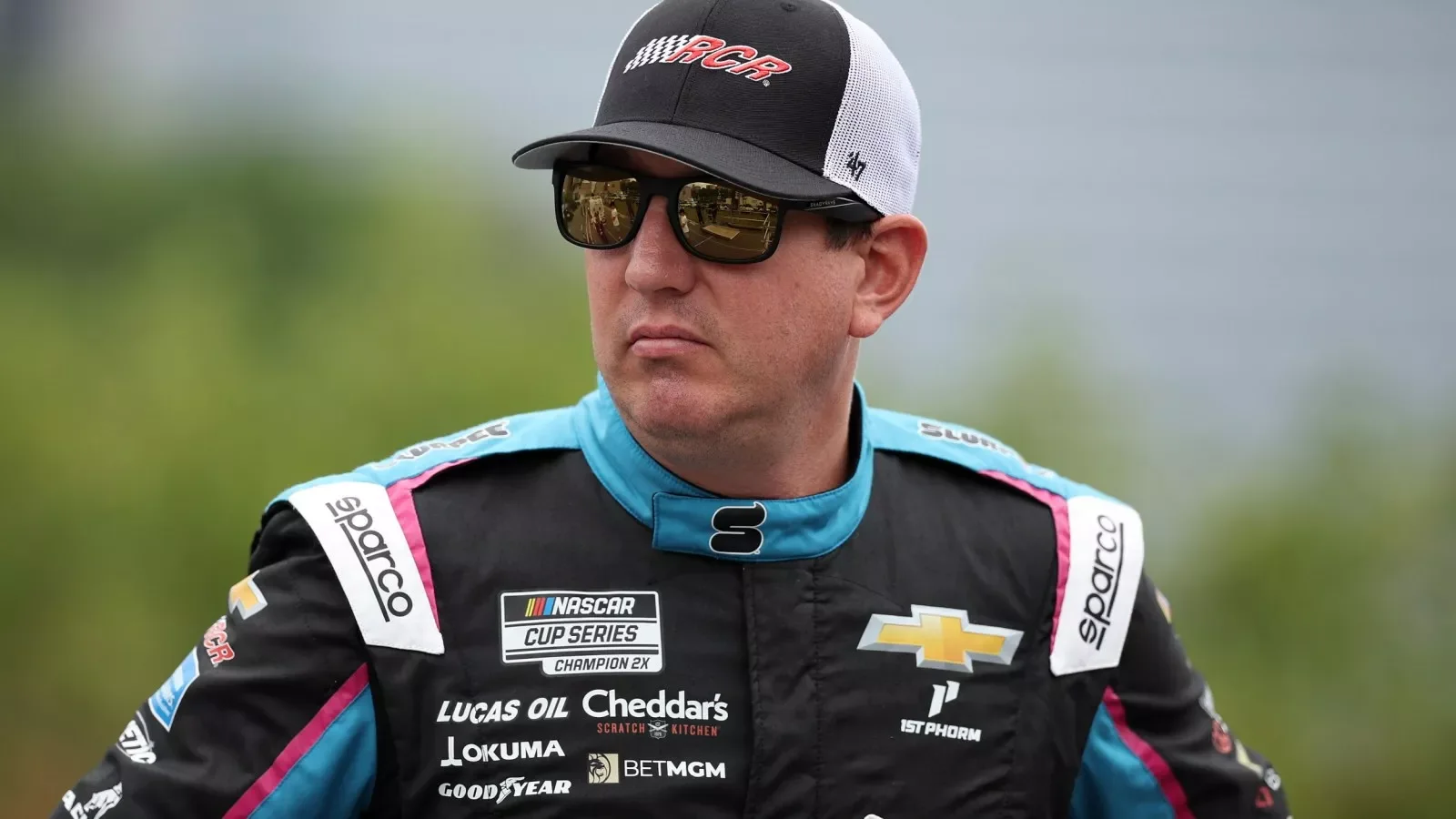
We fired off on a restart. Kyle spun his tires, and I ran the top immediately. I should have ran the bottom for about two or three corners to see if I could, you know, make the bottom work,
Earnhardt said.
Earnhardt detailed his belief that choosing the bottom lane instead could have altered the race’s dynamic by controlling the line and the airflow around Busch. This tactic, he suggested, would have forced Busch into a less advantageous position.
I should have ran the bottom. I gave him the bottom and he drove right up to my back bumper. Maybe a couple of laps go by, and I’m able to do something different,
Earnhardt added.
I think if I could have ran the bottom for a couple of corners, kept him in some dirty air, he would have had to move up. Then I could have moved up. If we go maybe four, five more laps, I think he doesn’t have so much speed comparable to me, and I’m able to do something because I was a little bit, I was in front of him, right?
The Emotional Undercurrents Behind the Rivalry
Earnhardt also acknowledged the strong emotions underlying the heated encounter, reflecting on the animosity that existed between him and Busch at the time. He noted that tensions were fueled by misunderstandings about their career trajectories.
I was a little bit better up until we got our tires cooled down on that restart. I know that wasn’t intentional. There was a lot of animosity between me and Kyle back then. He feels like that I had taken his ride, which really wasn’t exactly how that all played out.
—Dale Earnhardt Jr.
This candid insight highlights how personal feelings influenced the on-track rivalry, which went beyond just competition to the perceptions and emotions of the drivers involved.
Why the 2008 Richmond Incident Still Resonates for NASCAR Fans and Drivers
The 2008 Richmond confrontation remains a defining moment in NASCAR history, illustrating how split-second decisions and personal tensions can shape racing legacies. As Richmond Raceway once again hosts races, this episode reminds fans and drivers alike about the high stakes and emotions inherent in the sport.
Earnhardt’s reflections suggest that a different strategic choice could have changed not only the outcome of the race but possibly the nature of his relationship with Busch moving forward. Their eventual reconciliation shows growth beyond the rivalry, while the incident itself continues to serve as a significant chapter in NASCAR’s narrative.
Looking ahead, the Richmond weekend often revisits this moment, keeping alive the intensity and drama that helped define both drivers’ careers and contributed to the rich history of the sport.
