
Kyle Busch, one of NASCAR’s most celebrated racers, has introduced a disciplined approach to parenting that greatly shapes his son Brexton’s swift ascent in junior motorsport. The dynamic between Kyle and Brexton Busch exemplifies how the right support and high expectations can propel young talents to thrive under demanding conditions.
A Racing Legacy and Early Start for the Next Generation
As the son of Tom Busch, Kyle Busch began competing at just 13, rapidly launching his own storied racing journey. For Brexton, the racing legacy began even sooner; at only 10 years old, he is already a fixture in the junior racing scene with numerous achievements. Kyle Busch implements what could be described as a “no-nonsense” approach to fostering his son’s progress, ensuring that momentum and focus remain constant in Brexton’s development as a competitor.
Kyle Busch’s Hands-On Mentorship and Parenting Rule
The journey to racing success is not solely about the thrill of speed; it’s also a rigorous test of both physical stamina and mental resilience. Busch, with his wealth of Cup Series experience, is adamant that accountability is essential for any developing racer—including his own child. He frequently reinforces the concept that consistency in handling both wins and setbacks is crucial, and he makes it clear that learning from mistakes is non-negotiable for Brexton’s growth.
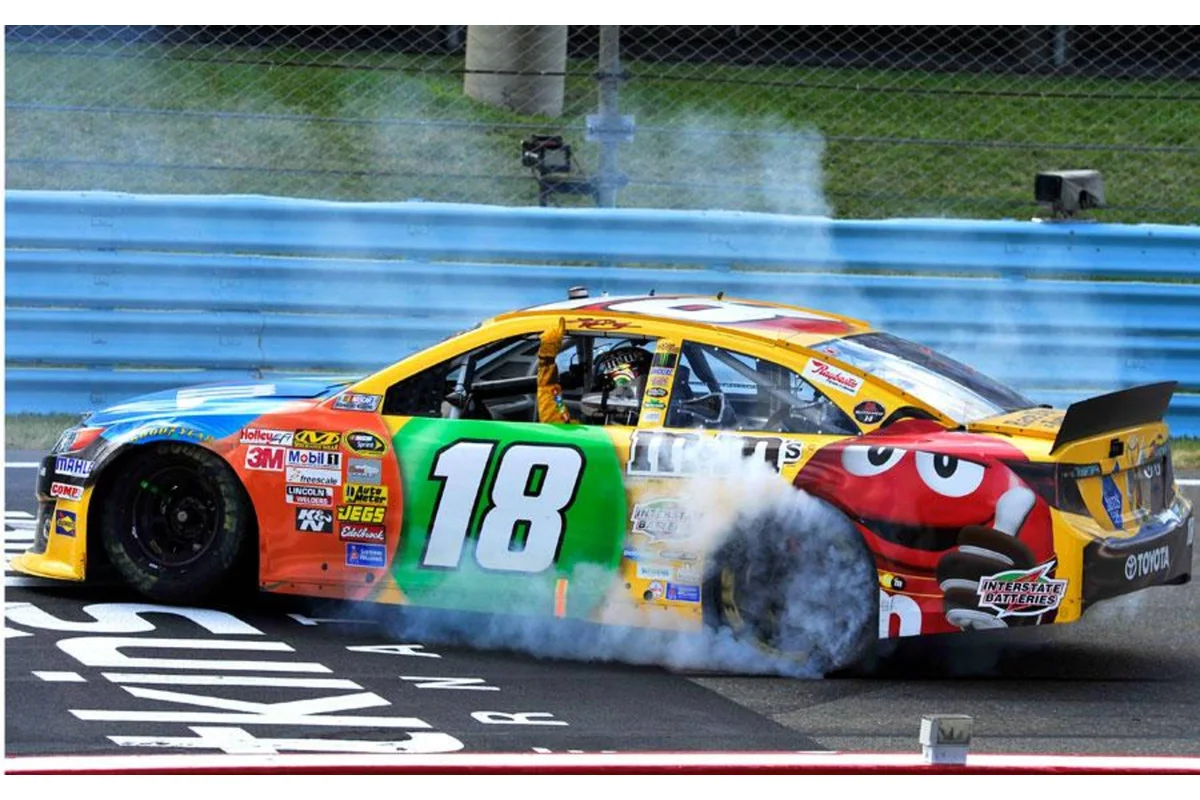
“Well, I mean, honestly, it wasn’t too bad. Like, we were six, we were eighth. Like, that was pretty good. We should have finished 15th, but honestly, we finished sixth. So, like, you know, we overachieved for the day,”
Busch remarked on the Burn Boot Camp Podcast.
Despite good results, Kyle does not allow either himself or Brexton to sidestep responsibility after challenging outings. The father-son conversations are direct, especially when Brexton blames external factors. Kyle is determined to instill self-accountability and honest self-reflection—a core element of his parenting philosophy.
“Brexton has a, I wouldn’t say he has a problem, but he grew up a lot in his racing thinking he’s perfect. And it’s the car’s fault. And I’m like, ‘No, no, no. We ain’t starting that sh*t. No way.’ So, we had to start setting some boundaries […] you need to figure out when you screwed something up, you need to be able to have self- admittance [and] accountability, right? And take ownership of that,”
said Kyle Busch.
Building Confidence Through Experience and Emotion
Not all learning moments arrive from triumph, and Brexton Busch’s education on the racetrack includes emotional lows as well as high points. When mistakes happen, Kyle emphasizes growth through understanding and accepting one’s own errors—a trait he openly encourages. Busch further explained that drivers are at their best when they trust their instincts, sometimes cautioning his son about overthinking critical situations on the track.
“Race car drivers are best when they don’t think; they’re best when they just react. A couple of years ago, I had him thinking too much. I was like, ‘You have to stop thinking. You just have to do. Because if it doesn’t happen, then I’m wrong and I’m an idiot,”
Busch revealed during an interview with Jeff Gluck.
This philosophy became especially evident at the Tulsa Shootout: when Brexton finished third, he was visibly upset, having poured all his focus into winning. Such moments, although difficult, are also signs of a budding competitor who is internalizing his father’s lessons on resilience and determination.
Early Results Point Toward a Promising Future
Brexton’s record is quickly becoming impressive in its own right. Drawing from his training with Kyle, Brexton has competed across several junior motorsport divisions, including Jr. Sprint Cars, Bandolero Cars, Outlaw Karts, and Micro Sprints. His growing mastery of dirt track racing became evident with his win in the INEX Bandolero Bandits National Championship, logging victories at high-profile tracks like Charlotte and Nashville Fairgrounds.
The accolades continued as Brexton claimed around 48 race wins and secured 126 top-10 finishes in 2024 alone, all while balancing the demands of school. One of his standout achievements was winning the Junior Sprint A-Main at the 2025 Tulsa Shootout, a moment that drew attention to his potential as a rising star.
Although leading the race again this year, Brexton was ultimately surpassed by two other drivers, underscoring the unpredictable nature of racing and the constant opportunity for growth—principles that Kyle Busch’s parenting rule reinforces.
The Road Ahead for the Busch Family
As Kyle Busch continues to compete in the Cup Series with Richard Childress Racing, his focus on disciplined parenting and clear expectations sets a benchmark for nurturing talent within a competitive environment. The younger Busch’s rapid ascent and consistent performance suggest that it may only be a matter of time before his name appears among the ranks of NASCAR’s leading drivers.
The story of the Busch family highlights the impact of structured, demanding guidance when paired with genuine support and racing expertise. The application of Kyle Busch parenting rule has not only fueled Brexton’s early achievements but may very well shape the future of motorsports’ next generation.

