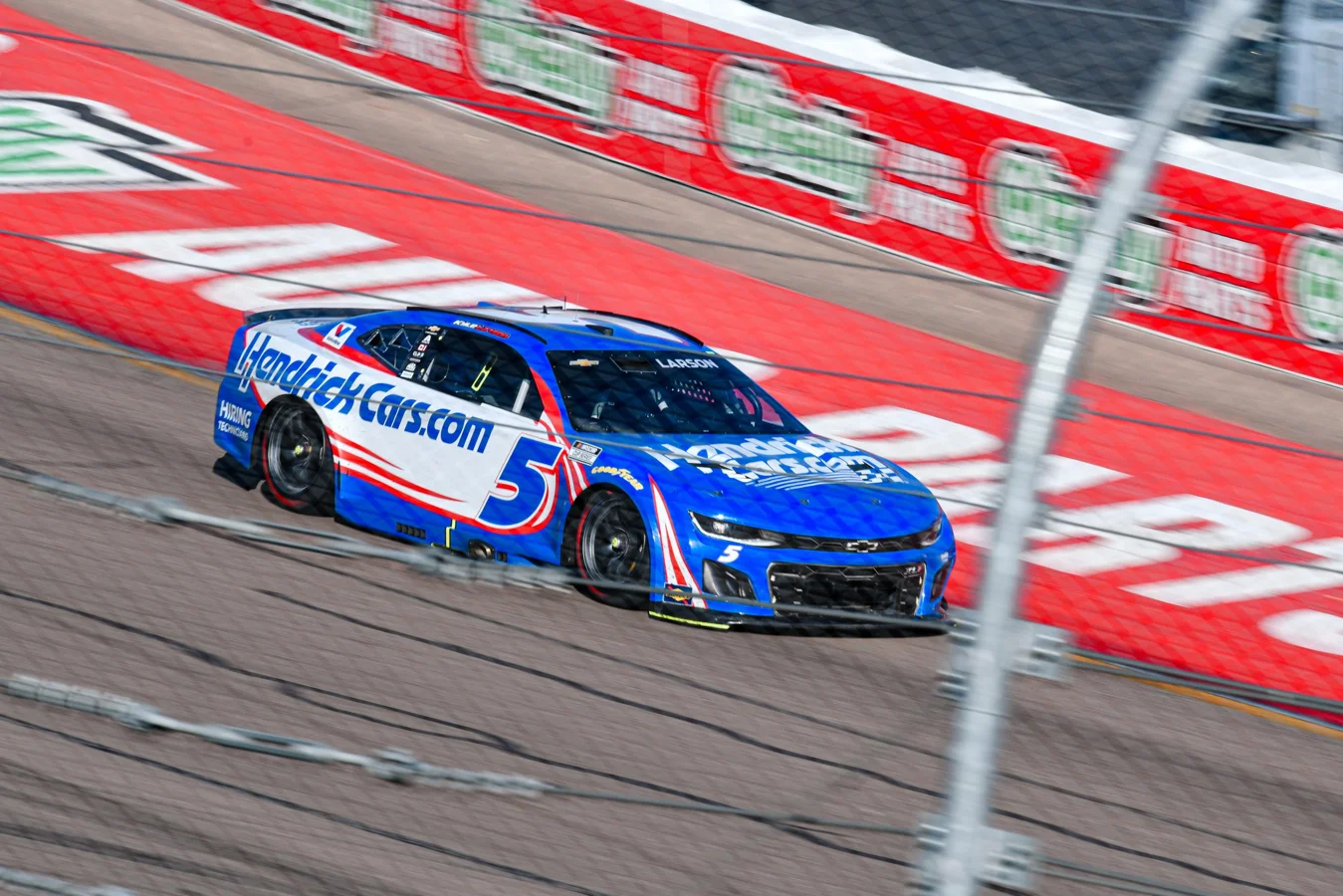
In the Grant Park 165 race on the Chicago street course, a high-profile incident occurred when Kyle Larson’s aggressive move caused Bubba Wallace to spin out in Turn 11. This moment drew immediate attention due to the drivers’ past tensions and the challenging nature of the course. Denny Hamlin, co-owner of 23XI Racing, later provided a detailed explanation that reframed Larson’s maneuver as a calculated risk inherent to the demanding conditions of street racing.
Understanding the Challenges of Chicago’s Unique Street Course
The Chicago street circuit, known for its tight corners and limited passing chances, forces drivers to attempt bold overtakes that would be unusual on traditional oval tracks. When Wallace’s No. 23 Toyota spun after contact with Larson’s No. 5 Chevrolet, many speculated on intent given the history between the two drivers. However, Denny Hamlin addressed the situation on his Actions Detrimentalpodcast, emphasizing the often unavoidable risks in such tight racing environments.
“It’s the risk that you run by dive bombing in there,”
Hamlin stated, describing Larson’s assertive attempt to pass Wallace. He further clarified,
“A lot of times, you can catch people off guard by doing that, but if they don’t see you, it can really cause a massive pileup.”
Hamlin also shed light on the communication limitations teams face during these rapid exchanges. Spotters have very little time to perceive and relay sudden moves to drivers, especially on street courses where the view is restricted and split-second reactions are essential.
Image of: Kyle Larson
“There’s just not enough time for the spotter to see the lunge into the corner, expect to process it, press the button, tell the driver, the driver then to process it to leave that extra car width—it’s asking a lot.”
This complexity further explains how incidents like the Larson-Wallace contact occur without malicious intent.
Even Wallace himself acknowledged the nature of the incident as part of racing on such a demanding track. He remarked,
“You know, late call on the 5 that got us spun. Hated that. Just when you think everything’s going OK, but we were able to jump ship and switch up plans, put us right back in the race.”
How the Incident Impacted Playoff Contenders and the Competitive Field
For Wallace, finishing 28th was a significant setback as he hovered close to the playoff cutline prior to the race. The Chicago event proved challenging not only because of Larson’s involvement but also due to multiple crashes affecting his race. Later struggles with Alex Bowman added to the drama, bringing renewed focus on Wallace’s on-track battles. Despite previous conflicts between Wallace and Bowman, the latter segment dissolved any lingering hostility through mutual respect post-race.
Bubba Wallace Addresses Post-Race Tension With Alex Bowman
Wallace’s tussle with Bowman during the race brought additional tension, especially after some hard racing that led to Wallace’s spin following contact with Bowman on Lap 70. Their prior history at Chicago increased expectations for conflict, but Wallace chose to downplay resentment.
“I was passing cars, having fun, showing that we keep improving and keep building confidence. We’ll be fine. So hate to see it end that way. It was fun. Fun with the 48. No love lost, all good,”
Wallace told NASCAR.com, indicating a mature approach despite the hard racing and contact.
The Broader Context of Aggressive Driving in Chicago NASCAR Events
The Chicago street course consistently rewards bold moves due to its restrictive layout, which reduces safe passing opportunities. Drivers often take calculated risks to gain position, aware that mistakes can lead to significant consequences. Larson’s move on Wallace is emblematic of this reality rather than a personal vendetta or reckless behavior. Hamlin’s insights illustrate the fine line drivers tread between aggression and caution on such tracks.
This race highlighted the ongoing tensions and complex dynamics between prominent drivers but also showcased the sportsmanship and understanding that follow intense moments. Wallace’s ability to adapt quickly after being spun and his level-headed reactions with both Larson and Bowman demonstrate the competitive respect existing among the field.
Potential Implications for Upcoming NASCAR Races and Rivalries
With the playoffs approaching, every incident and position matters, intensifying rivalries seen at Chicago. Drivers like Larson, Wallace, and Bowman remain central figures whose interactions could influence future race outcomes. The Chicago street race serves as a reminder of how tactics, split-second decisions, and relationships off the track contribute to narratives that fans follow closely.
Denny Hamlin’s perspective encourages a more nuanced understanding of what happens on street circuits and may impact how similar incidents are analyzed in the future. The competitive intensity at Chicago and other unique circuits can be expected to drive more aggressive racing, requiring teams and drivers to communicate and react faster than ever.
Our Reader’s Queries
Q. Is Kyle Larson’s wife?
A. Kyle Larson and Katelyn Sweet are well-known in the racing world. Larson met Sweet at a race close to Elk Grove, California, where he grew up. Sweet was raised in Grass Valley, and her brother, Brad Sweet, is also a professional race car driver.