
A delayed caution during the conclusion of the Chicago Street Race involving Cody Ware’s severe crash has stirred controversy regarding NASCAR’s safety procedures. Ware suffered a 93 mph head-on collision at Turn 6, becoming trapped in tire barriers and communicating over the radio that he needed assistance, while the race continued without caution for 35 seconds until Shane van Gisbergen crossed the finish line. This delay in response has brought renewed scrutiny to NASCAR’s handling of similar incidents, particularly relating to the Kyle Larson NASCAR delayed caution protocol.
Dale Earnhardt Jr.’s Podcast Reveals NASCAR’s Reasoning Behind Delay
In a post-race discussion on the Dale Jr. Download podcast, Dale Earnhardt Jr.’s producer, Andrew Kurland, shared NASCAR’s explanation for the delayed yellow flag. He stated,
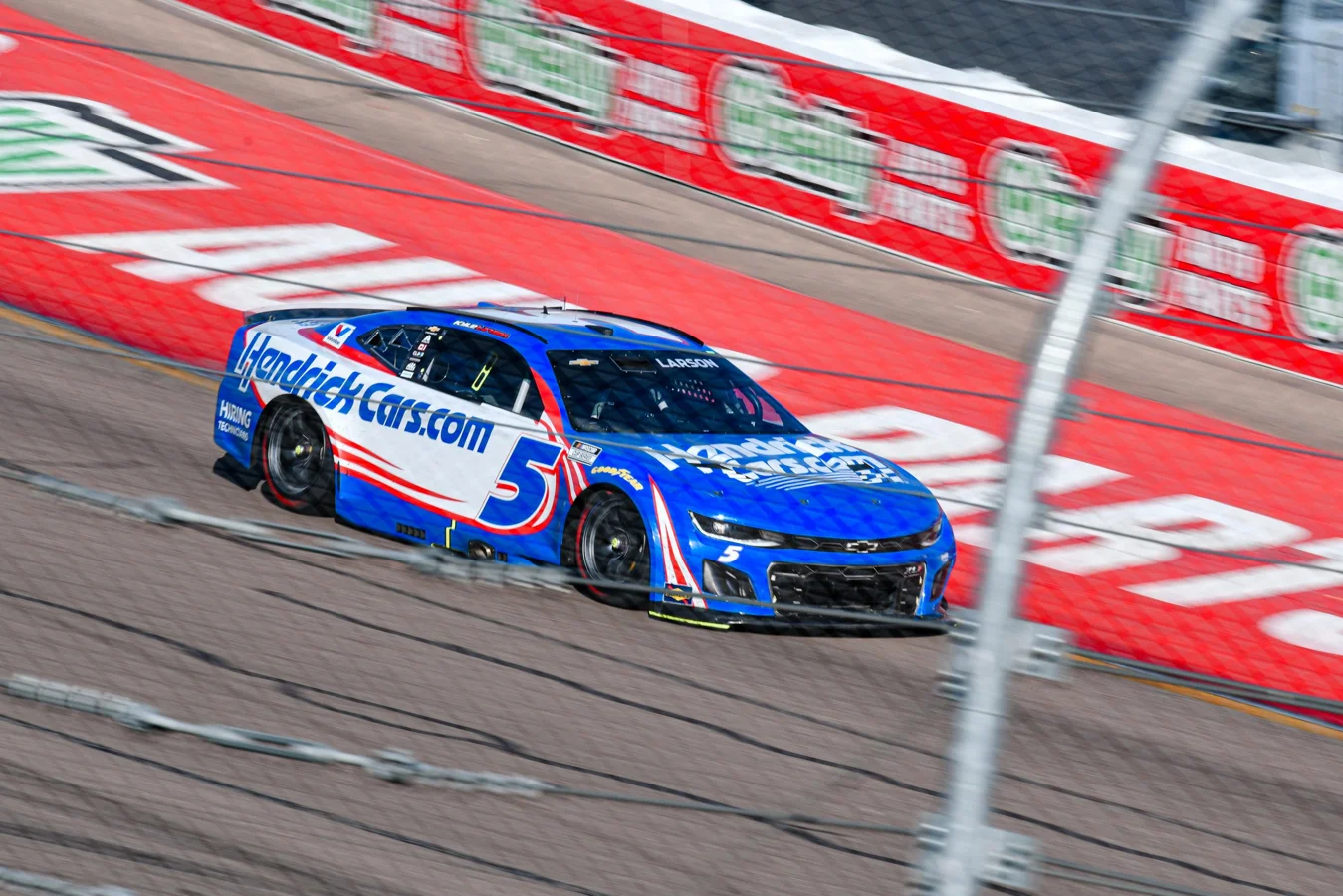
“I talked to NASCAR about this after the race, and they referenced that they gave Larson the same opportunity to attempt to back out, but didn’t. So, they were giving him [Ware] the chance.”
This approach is intended to prevent unnecessary race interruptions when a car appears capable of self-recovery.
However, Ware’s crash was markedly different due to a brake rotor failure that caused a near-vertical impact with the tire barrier, embedding his No. 51 Ford deeply. Earnhardt Jr. acknowledged the similarity on paper but stressed the severity of Ware’s collision, saying,
“We didn’t know he hit it. When you look at that, he was stuffed in the tires pretty good, but so was, you know, Larson last year, right?”
Despite the severity, NASCAR’s race director initially assessed the vehicle as salvageable, leading to a standardized response that failed to consider the magnitude of Ware’s crash.
The delayed reaction has also been met with criticism from other drivers, including Denny Hamlin, who commented on his podcast,
“They’re saying they didn’t see how big the hit was. That, I don’t understand. You were not doing your job officiating if you don’t see. It’s one thing to look over and say, ‘Oh, there’s a car over there.’ You’ve got to know how they got there.”
Hamlin suggested that the threat of rain might have played a role in the delay, though NASCAR has denied this.
Echoing these concerns, Earnhardt Jr. expressed frustration over the oversight, stating,
“My biggest problem is that none of us knew. NASCAR didn’t know. I didn’t know. And that’s where we don’t have enough bodies in place. That would be a very easy place to have someone standing, that’s a spotter for debris, wrecks, or anything else. A car stuck in a barrier, right?”
Identifying Shortcomings in Race Safety Monitoring Amid Chicago Incident
Earnhardt Jr. highlighted flaws in how the Chicago Street Course is monitored, especially at key track sections. He explained,
“That part of the racetrack where you have the turn one coming and driving. You have turn one and turn six, like, they’re right there together. You could have one person, able to, you know, basically look at almost 20% of the racetrack, and cover all those spaces.”
He urged that spotters be empowered to immediately report severe crashes, emphasizing,
“My problem is we absolutely should have known the minute he hit that wall, that he hit it at 100 mph, and it was violent. … It was a matter of how quick can that person get on the button to NASCAR to the tower and say, ‘Wreck. Hard wreck. Hard wreck!’”
The delay in issuing a caution flag potentially jeopardized Ware’s safety. His mother, Lisa Ware, later confirmed he was very bruised but okay. Observers noted stark differences from Larson’s 2024 event, which involved minor glancing contact, contrasted with Ware’s catastrophic crash. This failure to differentiate impact severity has brought NASCAR’s current incident response procedures into question.
In the aftermath, NASCAR faces growing demands to improve safety measures by introducing impact sensors or assigning dedicated spotters to monitor high-risk zones more effectively.
Our Reader’s Queries
Q. Is Kyle Larson better than Verstappen?
A. Larson probably can’t defeat Verstappen in F1, but he’s more adaptable than anyone else worldwide. Bianchi points out that Larson stands out due to his varied accomplishments. He succeeds in many different kinds of cars.
Q. Is Kyle Larson’s wife?
A. Kyle Larson and Katelyn Sweet are a well-known couple in the racing world. Larson first met Katelyn at a race close to his hometown, Elk Grove, California. Katelyn grew up in Grass Valley, near where Larson is from. Her brother, Brad Sweet, is a professional race car driver as well.
