
The debate surrounding the NASCAR Next–Gen car has continued since its 2022 introduction, with opinions sharply divided among prominent figures in the sport. Designed to modernize the Cup Series by incorporating features like independent rear suspension, composite bodies, low-profile tires, and a symmetrical chassis, the Gen 7 car aimed to reduce costs, balance competition, and update technology.
While some drivers and teams welcome the changes, claiming the car has brought closer competition and opportunities for more teams to contend, others argue that the new design has diminished important elements like tire wear, braking variation, and strategic diversity that once made NASCAR racing compelling. The sharp contrast between these viewpoints was recently highlighted during an exchange between Hendrick Motorsports driver Kyle Larson and NASCAR analyst Dale Earnhardt Jr.
Dale Earnhardt Jr. Challenges the Racing Quality Delivered by the Next-Gen Car
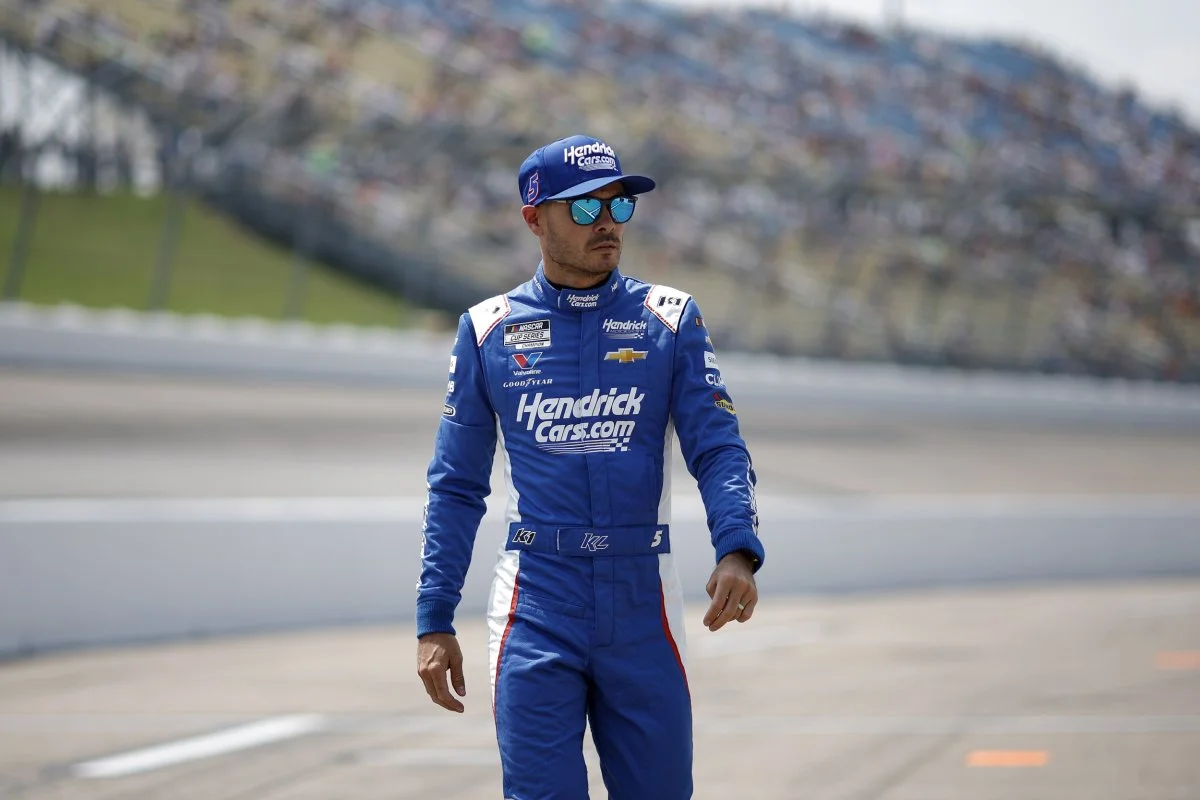
Kyle Larson has emerged as one of the most successful drivers adapting to the Next–Gen car, accumulating 16 wins since its debut, including three victories and 14 top-10 finishes so far this season. Positioned fifth in the Cup Series standings, Larson has publicly praised the car’s performance and competitiveness.
However, Dale Earnhardt Jr. expressed a much more critical perspective during his podcast, The Dale Jr. Download. While he respects Larson and values his views, Earnhardt Jr. believes the car falls short in producing racing that matches NASCAR’s historic standards, especially at road courses and short tracks.
I don’t know, man. I mean, Kyle’s… Kyle has—uh, Kyle… I really, really respect Kyle. Think the world of him. Um, and I appreciate his opinion but I would just disagree that the car doesn’t produce what I expect,
Earnhardt Jr. stated.
Again, going back to 75 years… I know Kyle’s been around a long time. The car doesn’t produce the kind of racing that I know we are capable of at road courses and short tracks,
he added.
The car does not produce the type of racing that I think should be our standard and I know what we’re capable of at road courses and short tracks. And I would not stop at trying to achieve amazing, great racing at those style of tracks until we achieved it. I wouldn’t stop trying to get there. And I don’t think we’re there. And I think it’s mainly due to the racecar. Right.
Earnhardt Jr.’s concerns extend beyond mere race outcomes; he focuses on the style and substance of the racing itself. He has argued for years that the Next–Gen car resembles more of a sports car than a traditional stock car, pointing to design changes such as the diffuser, larger brakes, and wider tires as factors that reduce tire degradation and limit the role of strategy in races.
Contrasting Views on the Future of NASCAR Racing
Kyle Larson sees the Next–Gen car as an exciting and competitive machine that delivers close racing, while Earnhardt Jr. believes significant improvements are still necessary. According to Earnhardt Jr., road courses and short tracks have historically provided NASCAR’s most thrilling contests, but the current car design has yet to meet that benchmark. His insistence on pursuing better racing quality highlights an ongoing tension between innovation and tradition within the sport.
As NASCAR continues to evaluate the Next–Gen car’s impact, perspectives like those of Larson and Earnhardt Jr. will play a crucial role in shaping future developments. The dialogue underscores the challenge of balancing technological progress with maintaining the core elements that have defined NASCAR’s appeal over decades.
