
Kyle Larson, known for his speed and skill in the NASCAR Cup Series behind the wheel of the No. 5 Hendrick Motorsports Chevrolet Camaro, shared surprising insights about his experience driving regular street cars. Despite his confidence on the track, Larson finds driving on public roads to be more intimidating and unpredictable than racing at high speeds. This contrast came to light in a recent conversation about his experiences driving through traffic in Los Angeles after a visit to Mexico City.
Why Street Driving Feels More Hazardous to Larson Than Racing
In an interview with TMZ Sports, Larson explained that despite slower speeds on the street compared to the racetrack, the nature of street driving often feels more dangerous. He described the typical pace of city roads, with most vehicles traveling between 65 and 75 miles per hour and some aggressively passing at 80 or 85 miles per hour. This, he said, can feel faster than being on a race track where speeds reach around 190 miles per hour, but the environment is more predictable.
You’re all kind of going within 65 to 75 miles an hour,
Larson said.
Some might go ripping by you at 80-85 miles an hour. To me, that sensation sometimes feels faster than the racetrack. Because, on the racetrack, you’re racing at 190 to 195 miles an hour. It’s not like cars are zipping past you or you’re zipping by somebody. So, that’s where the sensation comes from, to me.
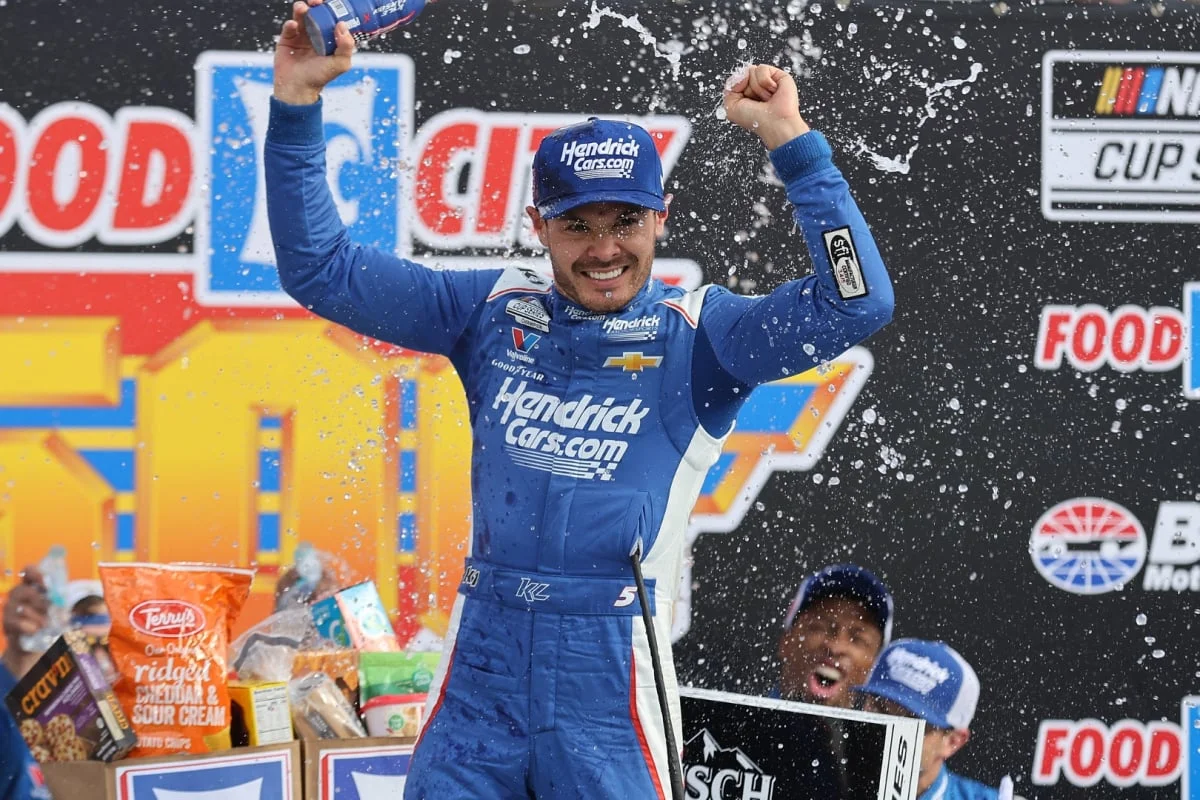
He further elaborated on why driving on public roads can feel scarier than racing:
It’s not hard at all to get back into a street car and go drive home after the race. If anything, sometimes it feels faster, scarier, and more dangerous because you don’t know who you’re on the road with.
Larson’s remarks highlight how the unpredictability of other drivers on the road creates a risk that sets street driving apart from the controlled environment of a racetrack.
Insights from Denny Hamlin on Navigating Public Roads
Fellow NASCAR driver Denny Hamlin, a veteran at Joe Gibbs Racing, shares a perspective that complements Larson’s thoughts. Hamlin suggests that since professional drivers experience intense speed on the track, they generally do not feel the need to push their limits on public streets. However, he does express frustration when other drivers behave recklessly during everyday driving.
During a 2019 interview with Jeff Gluck, Hamlin explained the nuances of dealing with questionable driving moves on the road compared to the racetrack:
Yes and no. I’d say a little more on the track, because they know how to drive. But some are inexperienced and don’t know that it is a jerk move. So I don’t know. I think they’re equally as frustrating.
Hamlin’s take emphasizes a clear difference in driving conditions and the mindset needed to face challenges both on race tracks and public roads. His respect for professional driving skills contrasts with the unpredictability of inexperienced or careless drivers on everyday streets.
The Contrasting Realities Between Racing Tracks and Public Roads
The experiences of Kyle Larson and Denny Hamlin underline how professional race car drivers recognize a profound difference between the racetrack and public road driving. While racetrack conditions are highly controlled, allowing drivers to anticipate and respond precisely to others, street driving involves a level of uncertainty that can evoke greater fear and caution. Larson’s reflection on the sensation of speed and danger during street driving helps explain why even top racers approach everyday traffic with respect and heightened awareness.
Understanding these perspectives offers insight into how professional drivers adapt to varying driving environments, highlighting the added challenges of street car driving despite their expertise behind the wheel of powerful race machines.
