
Kyle Larson expressed strong criticism of the film Talladega Nights during a recent podcast, arguing that while it is entertaining, it ultimately damaged the reputation of NASCAR. Speaking on Julian Edelman’s Games With Names podcast, Larson shared his belief that the movie transformed the sport into something less serious in the eyes of many fans.
Nearly two decades ago, Talladega Nights depicted a memorable finish at the Talladega Superspeedway where Ricky Bobby and Jean Girard ran to the finish, with Bobby’s friend Cal Naughton Jr. declared the winner after a crash involving much of the field. The film became a beloved comedy to many, including Larson initially, yet he thinks it contributed negatively to how NASCAR is perceived.
Kyle Larson’s critique of Talladega Nights’ impact on NASCAR
Despite enjoying the movie himself, Larson voiced concerns that Talladega Nights affected NASCAR’s image in a harmful way. He stated,
I liked the movie. Think it did not do anything good for our sport. I think it turned our sport into a joke, unfortunately,
—Kyle Larson, NASCAR driver. He added,
That’s gotta be one of the most popular racing movies. … But the rest of the world, I feel like that’s what they think of our sport now.
—Kyle Larson, NASCAR driver. This reflects Larson’s perception that the film’s popularity may have skewed public understanding of NASCAR, turning it into an object of ridicule beyond the circle of real fans.
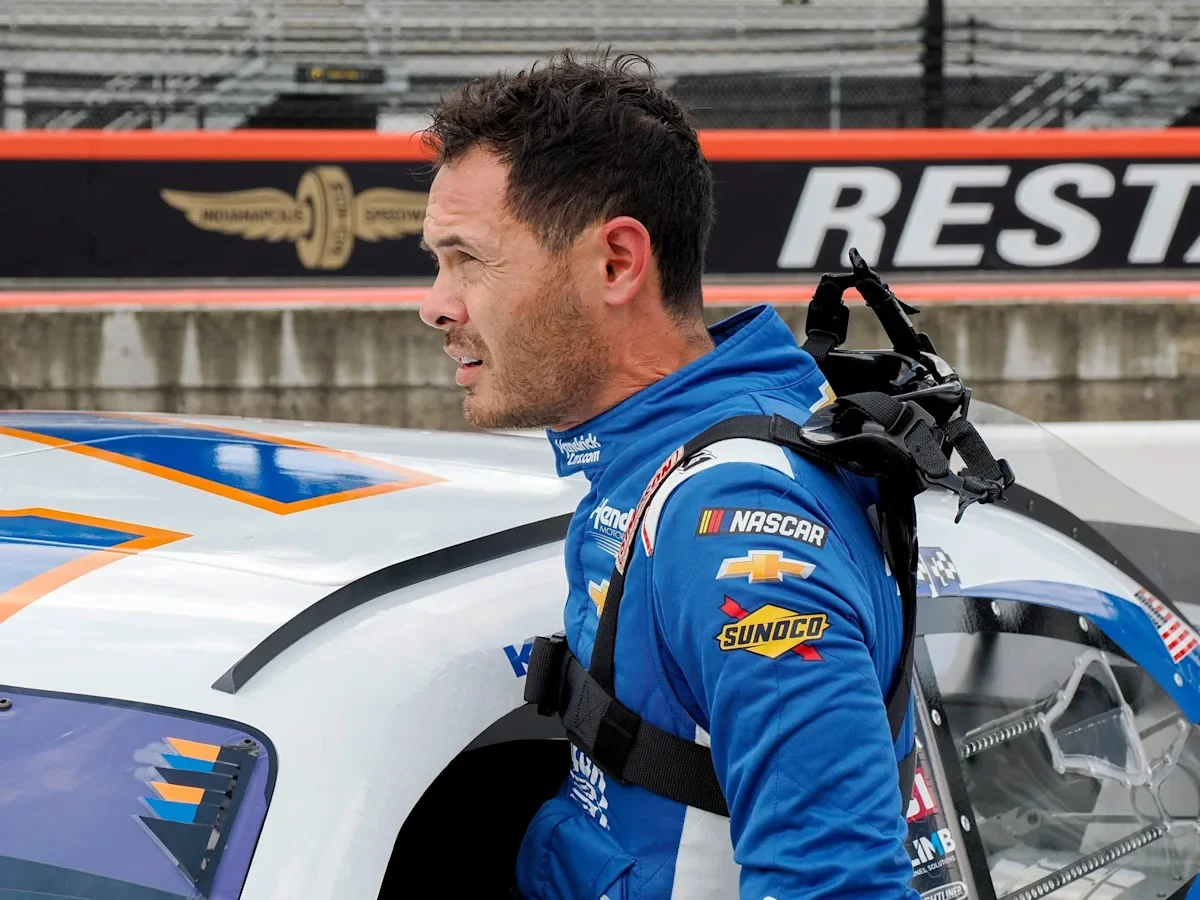
When it premiered in 2006, Talladega Nights was a commercial success, earning $163 million globally and capitalizing on NASCAR’s peak popularity. That same year, the Daytona 500 drew a record 19.4 million viewers, the highest in the sport’s history. The movie’s quotes, such as Reese Bobby’s famous line
if you ain’t first, you’re last
have become iconic, still featured on apparel regularly, illustrating the film’s deep cultural reach.
The enduring legacy of Talladega Nights in popular culture
Today, Talladega Nights remains a frequently aired film on cable television, ensuring it continues to reach new audiences. Its comedic portrayal of NASCAR has embedded itself in popular culture, which Larson implies might be why many outsiders see the sport as a source of humor rather than a serious competition. This duality highlights the complex relationship between entertainment and sports representation.
Kyle Larson’s hopes for a new NASCAR film project
Beyond his criticisms, Larson expressed enthusiasm about the prospect of a fresh NASCAR-themed movie. Referencing the success of F1: The Movie, Larson talked about the excitement surrounding a potential sequel to the 1990 film Days of Thunder. Producer Jerry Bruckheimer recently revealed that a new installment is in development, continuing the legacy of the original story about a young driver named Cole Trickle, portrayed by Tom Cruise.
Larson shared his interest in being part of this upcoming project, telling Edelman,
I was with Jeff Gordon the other night and he’s good friends with Tom [Cruise] and he went to premiere of Mission Impossible,
—Kyle Larson, NASCAR driver. He added,
He’s like, ‘We’re doing it. We’ve got to do another Days of Thunder.’ I hope they do it. … I would absolutely be in it. I would like to be in it.
—Kyle Larson, NASCAR driver. Larson’s hopes indicate a desire within the sport to produce films that celebrate NASCAR in a serious and respectful way.
What the future holds for NASCAR’s image in film
Larson’s reflections suggest that while NASCAR has enjoyed moments of mainstream cultural attention, often through movies, the portrayal has sometimes veered towards comedy that undercuts the sport’s competitive integrity. The upcoming Days of Thunder sequel represents an opportunity to reshape this narrative with a fresh storyline backed by a respected producer and high-profile talent. For Larson and others in NASCAR, a film that honors the sport’s intensity and dedication could help improve its image among broader audiences.
As NASCAR continues to engage new fans and grow its following, how the sport is depicted on screen will play a vital role in shaping public perception in the years ahead.
