
Kyle Larson has openly criticized the 2006 comedy film Talladega Nights: The Ballad of Ricky Bobby, arguing that it has negatively affected NASCAR‘s reputation by turning the sport into a laughing stock. His comments have sparked a debate about the film’s influence on the perception of stock car racing and its lasting legacy among fans and drivers alike.
Talladega Nights, starring Will Ferrell, follows the fictional story of NASCAR driver Ricky Bobby as he navigates the highs and lows of his racing career. The film is known for exaggerating many NASCAR stereotypes in a comedic fashion, which has contributed to its evolution as a cult classic that introduced the sport to new audiences.
Understanding the context of Kyle Larson’s criticism and its limitations
While Larson’s viewpoint reflects frustration with how NASCAR is portrayed, it overlooks the fact that Talladega Nights has become one of the most quoted and beloved racing films ever made. The movie’s humor, although exaggerated, captures the unique, sometimes eccentric spirit of NASCAR that has defined it for decades.
The championship itself embraces a certain level of absurdity: drivers racing in largely oval tracks, occasional scuffles between competitors, pre-race rituals like prayers, and catchphrases such as “boogity boogity boogity” that add to its charm. Race events often sport whimsical titles like the 2021 “Buschy McBusch Race 400” or the “SpongeBob SquarePants 400,” all of which highlight NASCAR’s readiness to not take itself too seriously.
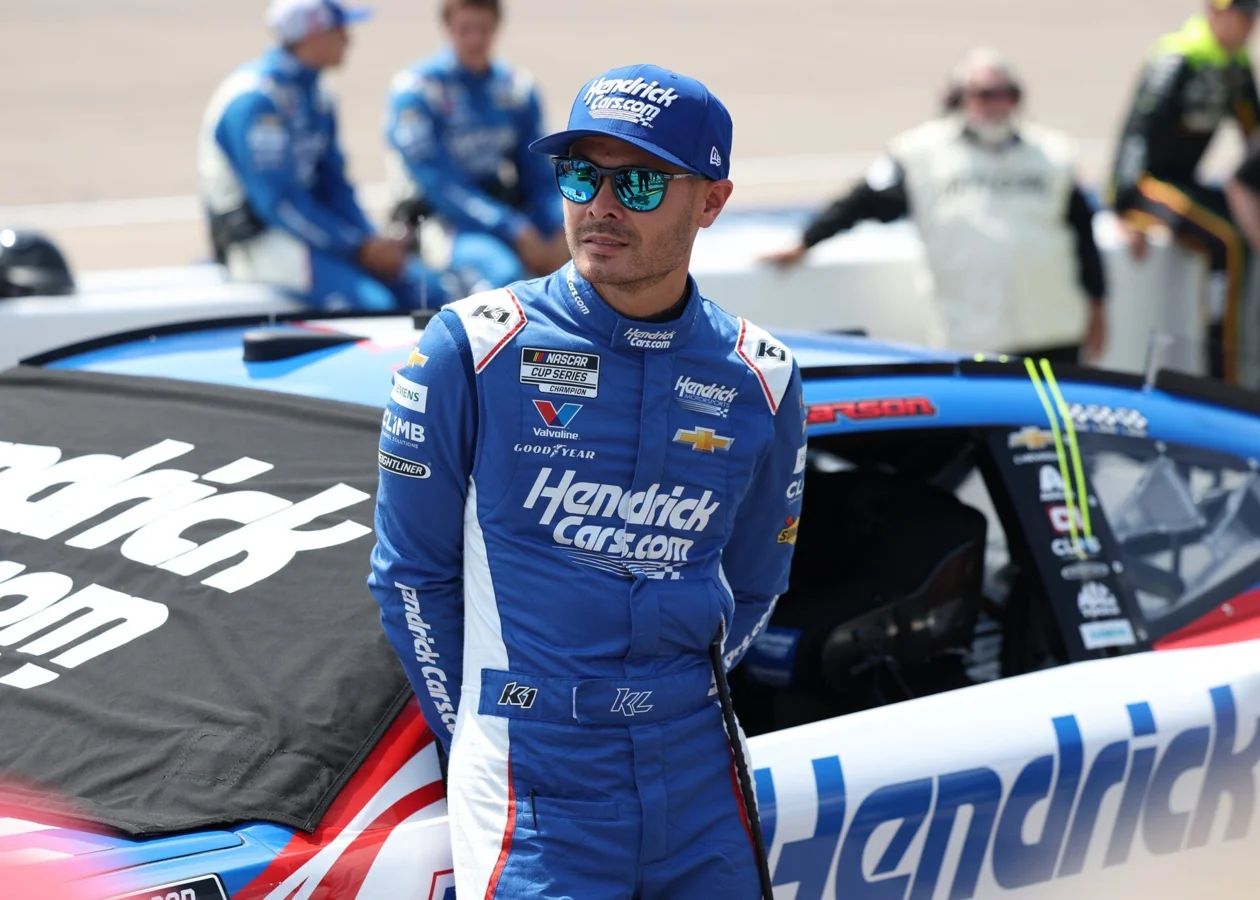
Despite the comedy, NASCAR remains a highly competitive sport with physically demanding athletes and a devoted fan base. The lightheartedness depicted in Talladega Nights corresponds with the reality that the series has always entertained itself through a blend of passion, humor, and spectacle.
The first part of the movie is just a lot of jokes about NASCAR, like ‘what do I do with my hands’ and all of that stuff,
Dale Earnhardt Jr., who appeared in the film as one of the active drivers at the time, explained on his podcast in February.
And it’s all just quick, witty jokes about our sport – which was really fun, the self-deprecation of NASCAR.
Even though it was a joke, we can definitely handle being the butt of the joke. I didn’t mind it, I thought it was good for NASCAR, I thought it put us in front of a new audience. Yes, it poked fun at us, but I don’t know that it was detrimental to NASCAR. If anything it improved our popularity out of our own bubble.
The affectionate satire and broader motorsport commentary within the film
One of the film’s strengths is its affection for motorsport, which extends beyond NASCAR. The movie’s villain, Jean Girard, played by Sacha Baron Cohen, caricatures European Formula 1 drivers as cold and arrogant, which adds a layer of satire to the global racing scene. This balanced critique suggests the film’s intent was not solely to mock NASCAR but to playfully exaggerate motorsport culture as a whole.
Unlike serious racing films, Talladega Nights uses humor to connect with audiences. For example, Brad Pitt’s recent Formula 1 biopic aimed for gravitas but received mixed reviews, with many finding its portrayal unintentionally comical. Similarly, the 1990 classic Days of Thunder, focused on NASCAR and starring Tom Cruise, was criticized by drivers for its unrealistic depiction of racing, highlighting the challenge Hollywood faces when tackling motorsport drama.
Kyle Larson’s own past controversy—his 2020 suspension after using a racial slur during a live stream of a sim race—further complicates his criticism. Reinstated after six months, Larson is now one of NASCAR’s most recognized figures, making his pointed remarks about the film somewhat ironic. If Talladega Nights were to have a sequel today, the storyline might plausibly include a young, outspoken driver challenging an older racing legend—much like Larson’s journey within the sport.
How NASCAR embraced Talladega Nights and benefited from its cultural impact
Dale Earnhardt Jr. emphasized that the film helped NASCAR extend its audience beyond the usual fans during a peak period for the sport. NASCAR was willing to allow its brand to be portrayed in an exaggerated and satirical manner, which brought authenticity to the scenes and endeared the sport to more casual viewers.
This acceptance of humor is echoed in how NASCAR has commemorated the film over the years. In 2009, driver Carl Edwards famously mimicked a Talladega Nights finish by running across the line after crashing out of the Aaron’s 400, while admitting on Larry King’s talk show,
I’m kind of a Will Ferrell fan
.
Special paint schemes and tributes have continued, and the film’s 20th anniversary in 2026 is expected to be a celebrated milestone within the NASCAR community. These gestures illustrate the sport’s fondness for the film despite Larson’s negative view.
Why the debate about the film’s legacy matters for NASCAR’s future
Larson’s criticism invites reflection on how NASCAR is perceived at a time when its popularity has declined compared to two decades ago. Yet, dismissing Talladega Nights as harmful overlooks its role in engaging fans and adding color to the sport’s narrative.
The movie’s mix of humor and heart remains a unique cultural touchstone, reminding everyone involved in the sport that while racing demands intense dedication and sacrifice, there is also room for playfulness and self-awareness. In many ways, embracing that duality has helped NASCAR maintain its identity and attract followers who appreciate both the thrill and the quirks of stock car racing.
