
The Belgian Grand Prix at Spa-Francorchamps turned contentious as officials delayed the race start due to persistent wet weather conditions, sparking criticism from Lewis Hamilton. The seven-time world champion joined Max Verstappen in expressing frustration over the postponement, arguing that the race could have begun earlier despite the damp track. This debate highlights tensions around Formula 1’s approach to safety and race management under challenging weather.
Weather Challenges Lead to Postponed Start at Spa-Francorchamps
The Spa-Francorchamps circuit has a history of unpredictable and difficult weather, which again affected the Belgian GP’s smooth execution. Officials postponed the race start while waiting for improved track conditions and reduced visibility risks. In 2021, similar rain complications led to a race being abandoned after two laps behind the Safety Car, with half points awarded. This time, the FIA opted to delay until the track was nearly dry before allowing the cars onto the circuit. The wet-to-dry transition created a strategic dilemma for teams and drivers alike.
Hamilton’s Car Setup Undermined by Delay
Lewis Hamilton started the race from the pit lane after Ferrari configured his SF-25 car specifically for wet-weather conditions, anticipating a waterlogged track. However, as officials waited for the track to dry, his specialized setup lost its advantage. Hamilton pointed out that the traditional standing start should have been used rather than a rolling start, especially given the near dry line at the resumption. His comments made clear that the timing of the race commencement significantly impacted strategy and on-track performance.
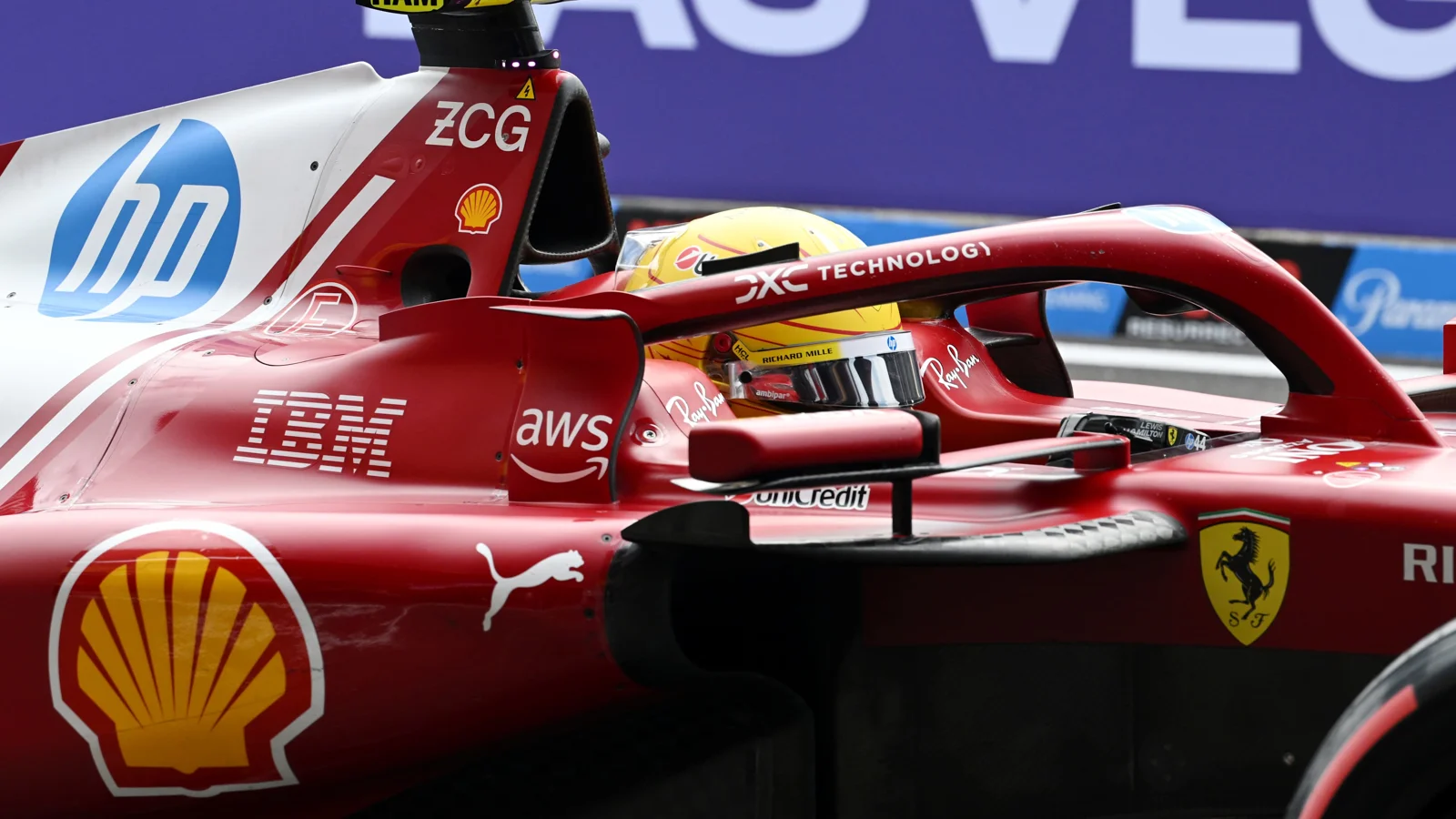
Yeah, my car was set up for [the wet-weather racing conditions]. They waited for it to dry. Definitely could have done a standing start. Especially at the end there. It was almost a dry line. So definitely could have done it.
—Lewis Hamilton, as quoted by MotorsportWeek
Shared Frustrations Between Hamilton and Verstappen
Lewis Hamilton’s criticisms closely mirror those voiced by Max Verstappen, who was openly displeased with the delays. Verstappen condemned the cautious approach taken, claiming Formula 1 lost the chance for an exciting wet race. Both drivers, as fierce rivals and top competitors, voiced frustration at the FIA’s cautiousness, which they believe diminished the race’s competitive spirit. Their public airing of grievances points to a deeper debate about balancing safety with maintaining the thrill and challenge of racing under variable weather.
Hamilton Voices His Discontent During the Race
The tension from the delay was not limited to post-race remarks. Hamilton revealed the impatience he felt while circulating behind the Safety Car in his SF-25, describing a sense of frustration as officials repeatedly delayed starting the competition. He claimed that the FIA overreacted to concerns that emerged during the British Grand Prix, where visibility issues had caused problems. Hamilton’s insight as a veteran racer adds weight to the opinion that caution may have been excessive on this occasion.
We obviously started the race a little too late, I would say. I kept shouting, it’s ready to go, it’s ready to go. And they kept going round and round and round. So I think they were probably overreacting from the last race — where we asked them not to restart the race too early because visibility was bad.
—Lewis Hamilton
Balancing Safety and Competition at Spa-Francorchamps
Despite the criticisms by Hamilton and Verstappen, safety remains paramount in Formula 1, especially on a demanding circuit like Spa-Francorchamps. The delays aimed to prevent any major accidents resulting from hazardous conditions. Both drivers are well known for their competitiveness and willingness to race in challenging environments, which puts them at odds with the FIA’s cautious approach. The ongoing dialogue suggests a complex balance between risk and entertainment in the sport’s future decisions.
Looking ahead, the debate sparked by the Belgian GP’s delayed start could influence how race officials handle adverse weather conditions. Drivers such as Hamilton, Verstappen, and others may push for clearer protocols that allow races to begin sooner when conditions permit, preserving the competitive integrity while prioritizing safety.
Our Reader’s Queries
Q. Is Lewis Hamilton vegan?
A. Formula 1 driver Lewis Hamilton openly talks about his passion for veganism. He is also involved in investing in plant-based businesses.
Q. Why did Lewis Hamilton quit?
A. Hamilton is said to have moved from Mercedes to Ferrari because they offered him a longer contract and higher salary. Additionally, he wanted to change teams as he hadn’t won any races in 2022 or 2023, and aimed to restart his career with Ferrari.
Q. Why is Lewis Hamilton so rich?
A. Forbes recognized him as one of the top-earning athletes in 2025, with total earnings of $80 million. His income increased after he joined Scuderia Ferrari, F1’s oldest and most successful team, this year. His ambassador roles with Lululemon and Dior also contributed to his financial growth.
Q. Max Verstappen: Who has the bigger net worth in 2025? Lewis Hamilton, with a net worth of $300 million, surpasses Max Verstappen’s $200 million. Hamilton’s wealth is from Formula 1 earnings, endorsements, smart investments, and properties.
A. To find out if Max Verstappen has more wealth than Lewis Hamilton, compare their earnings, endorsements, and investments. Both are successful Formula 1 drivers with substantial incomes, but exact figures can vary over time and depend on different sources.
