
Lewis Hamilton began his first season with Ferrari aiming to compete immediately for the Formula 1 drivers’ championship, yet he has faced significant struggles throughout 2024. Hamilton’s efforts to overcome the Italian team‘s issues have not translated into consistent race victories, leading George Russell, his former teammate at Mercedes, to suggest that Hamilton’s intense mindset could be hindering progress at Ferrari. This discussion centers on the Lewis Hamilton counterproductive mentality at Ferrari and its impact on the team’s overall performance.
Despite his relentless attempts to address Ferrari’s persistent difficulties, Hamilton’s campaign has been marred by strategic errors from Maranello and a car performance that falls short of expectations. As a seven-time world champion, anything less than winning races weighs heavily on him, fueling a desire to push harder, sometimes beyond what the team can sustainably deliver. Russell emphasizes that this striving for perfection may inadvertently undermine Ferrari’s efforts to achieve steady improvements.
How Hamilton’s Mindset May Be Affecting Team Dynamics
George Russell, having raced alongside Hamilton at Mercedes, believes that the seven-time champion’s all-or-nothing approach places excessive pressure on both himself and the Ferrari team. Russell notes that Hamilton views finishing second as a form of failure, which leads him to push relentlessly. This high-intensity drive might exceed Ferrari’s current capabilities, causing friction and diminishing returns.
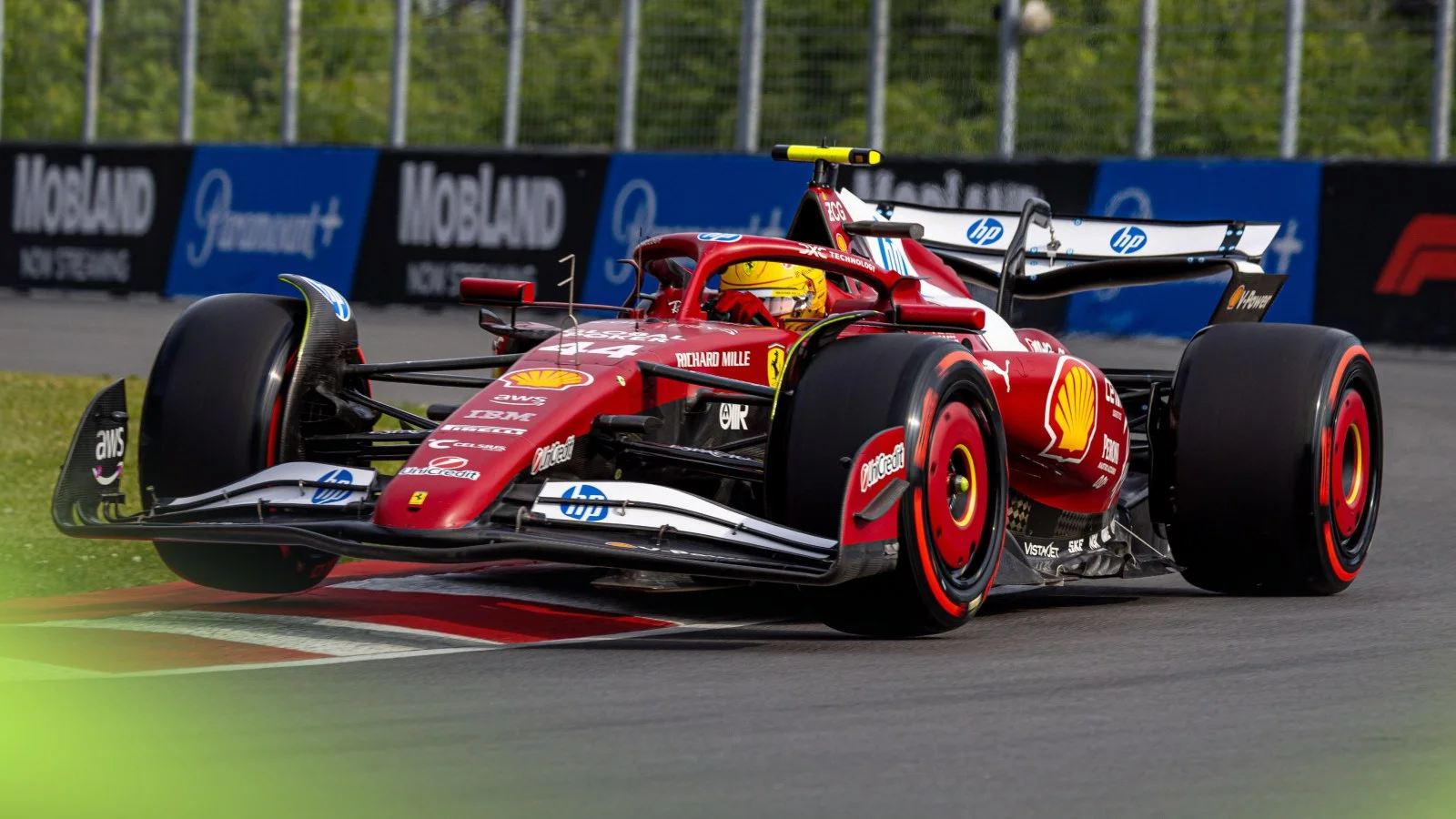
Russell commented on this issue:
“I think when you’re a seven-time World Champion, anything less than victory is failure, and you’re probably pushing yourself and your team over the top to achieve beyond the potential, to try and achieve these great results, and potentially it’s counterproductive.”
—George Russell
This view suggests Hamilton’s mindset, while forged through years of championship success, may be counterproductive in a team still rebuilding to be competitive.
Recalling Hamilton’s Peak Performance at Mercedes
Looking back at Hamilton’s time alongside Russell at Mercedes, the younger driver recalls how competitive Hamilton was during his final seasons with the Silver Arrows. Russell admits he was surprised by Hamilton’s level of performance during their shared years, noting that even in challenging seasons, Hamilton consistently demonstrated his “A-game.” This starkly contrasts with the difficulties Hamilton now faces at Ferrari, where podium finishes have become increasingly rare, and frustration grows.
Russell reflected on Hamilton’s performance last year, saying:
“So, I don’t know. For sure, what I saw last year was that when he was on his A-game, he was a real competitor to me and he was driving amazingly.”
—George Russell
This contrast illustrates the gap between Hamilton’s previous form and his current struggles, shedding light on the complexities affecting his adaptation to Ferrari.
Russell’s Perspective on Hamilton’s Struggles with the SF-25
Russell further theorizes that Hamilton’s difficulties stem from trying to compensate for limitations in Ferrari’s SF-25 car. The team’s current machinery has shown flaws, and attempting to push beyond the vehicle’s boundaries might be backfiring. Russell warns that Hamilton’s habit of driving beyond the car’s reliable range could exacerbate performance issues instead of resolving them.
These insights point toward a delicate balance Ferrari must seek between managing Hamilton’s ambitions and extracting maximum potential from the SF-25. Unfortunately, overextending to meet championship expectations may be impairing consistent progress during this transitional phase.
Ferrari’s Urgent Need for Performance Improvements
As the 2024 season progresses, Ferrari faces pressure to reverse its disappointing form if it hopes to remain competitive in both the drivers’ and constructors’ championships. Hamilton, reportedly frustrated, might consider an early departure from the team should results fail to improve. This speculation places additional urgency on Ferrari to address performance deficits and deliver strategic clarity that supports Hamilton’s championship aspirations.
For Ferrari, the challenge lies in reconciling Hamilton’s drive for top-level success with the current development pace of their car and team operations. Without a swift turnaround, the team’s hopes for restoring its winning ways could be jeopardized, affecting both Hamilton’s legacy and Ferrari’s standing in the sport.
What the Future Holds for Hamilton and Ferrari
George Russell’s observations underscore the tension between Hamilton’s championship mindset and Ferrari’s capability at this stage. The Lewis Hamilton counterproductive mentality at Ferrari serves as a cautionary tale about the dangers of pushing too hard amid imperfect conditions. Going forward, Ferrari must find a path to harness Hamilton’s experience and determination effectively while moderating pressures that could undermine their performance goals.
How Hamilton and Ferrari adapt over the coming races will shape whether the team can close the gap to its rivals and whether Lewis Hamilton can reestablish himself as a race winner in an unfamiliar environment. With expectation levels high and patience thin, this partnership faces its defining moments in 2024.
