
Lewis Hamilton has openly criticized recent changes in Formula 1, highlighting the challenges posed by the sport’s increasing car weight and diminished engine noise. Speaking ahead of the 2026 regulation updates, the British driver contrasted today’s cars with those from Michael Schumacher’s era, emphasizing the qualities that made Schumacher’s Ferrari cars iconic.
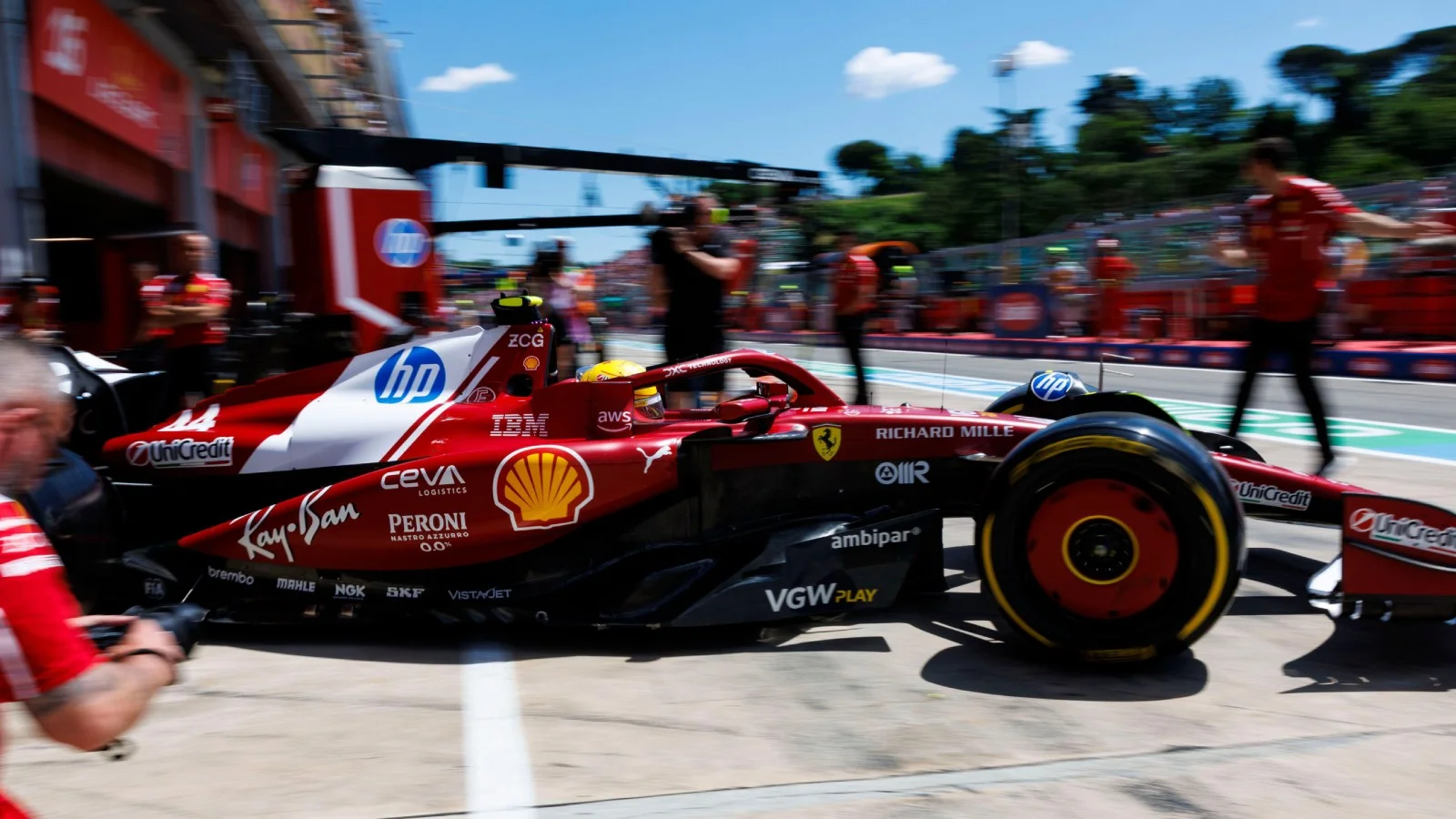
Since joining Ferrari, Hamilton has faced a tough start to the season in Italy. While showing progress with a fourth-place finish at Imola, he has generally struggled to match the pace of teammate Charles Leclerc outside of sprint races. A large part of Hamilton’s difficulties is linked to the introduction of ‘ground effect’ cars in 2022, which have resulted in heavier, more challenging vehicles to drive, complicating the drivers’ efforts to hit optimal tyre performance windows consistently.
Hamilton Questions the Direction of Formula 1’s Technical Changes
In a recent interview with Sky Italia, Hamilton expressed his concerns about the current path Formula 1 is taking regarding car design and performance. He acknowledged the possibility of improvements next year but conveyed skepticism about the ongoing trend of heavier cars affecting racing quality and speed.
“I don’t think it’s going in the right direction, personally,”
Hamilton said.
“Maybe I’ll be surprised next year. Maybe we will arrive and the cars are really nice. With the direction we’re going, we’re going slower. The cars are getting heavier.”
I mean, next year, I guess they are getting lighter, but this generation of car is the heaviest car that I’ve raced.
While the FIA claims that upcoming 2026 regulations will produce shorter, more agile cars roughly 30 kilograms lighter, most drivers have noted little difference in simulations so far. The forthcoming changes will focus mainly on engine updates rather than aerodynamics.
Anticipated Engine Changes and the Return of Richer Sounds
The 2026 regulations will require Formula 1 cars to run on 100 percent sustainable fuel, a move aligned with global environmental goals. There is also ongoing discussion about reintroducing more powerful multi-cylinder engines—such as V8s, V10s, or even V12s—which could also restore some of the sport’s lost auditory spectacle.
Hamilton welcomes this prospective shift because he deeply misses the intense engine sounds of earlier eras, especially the raw noise of Schumacher’s Ferrari cars. He reflected on the contrast between the vibrant mechanical roar of the past and the quieter modern V6 hybrid engines.
“For me, I miss the sound. When you hear a V12 Ferrari, it’s like, it’s the passion,”
he commented.
“Soon as we started with V6s — whilst it’s a good direction to go for the world in terms of sustainability, I think it’s been positive in that respect.”
But you can’t get away with the fact that the sound is not the same as it was when you watch Michael Schumacher’s car from 2003 come past, and it’s like, ‘ah!’
Rekindling Memories of Schumacher’s Legendary Machines
Hamilton recently had a reminder of those iconic engine sounds when Mick Schumacher, son of Michael, performed demo runs in some of his father’s championship-winning Ferrari cars. The visceral experience resonated with Hamilton, who has shared moments on social media appreciating the classic sound of racing cars from previous decades.
In a viral moment from the 2020 Abu Dhabi Grand Prix, Hamilton’s post-practice interview was briefly interrupted by the unmistakable scream of Fernando Alonso’s 2005 Renault during a demo run, further emphasizing how much the current generation of cars lacks that distinctive noise.
“That sounds is so good man… I mean… oh,”
Hamilton said.
“It’s the greatest sound of a racing car ever.”
I hate that they got rid of it!
The Impact of Hamilton’s Views on Formula 1’s Future
Hamilton’s remarks underscore a wider debate within Formula 1 about maintaining a balance between sustainability and preserving the sport’s traditional excitement. As the FIA prepares for significant regulatory changes, the concerns voiced by a seven-time world champion carry weight with fans and stakeholders alike.
While the focus on environmental responsibility is gaining priority, the challenge lies in ensuring new regulations do not strip away the sensory and competitive elements that defined earlier eras. Hamilton’s invocation of Schumacher’s Ferrari legacy serves as a reminder of what many fans and drivers consider the golden age of Formula 1.
With the 2026 changes still on the horizon, attention will intensify on whether Formula 1 can produce cars that combine improved agility and sustainability without sacrificing the driving thrills and powerful engine sounds that have long captivated audiences worldwide.
