
Lewis Hamilton’s initial season driving for Ferrari has revealed unexpected difficulties, signaling a surprising turn in his Formula 1 career. After a series of disappointing outcomes, including recent races in Hungary and Zandvoort, Hamilton has encountered setbacks that contrast sharply with his previous performances.
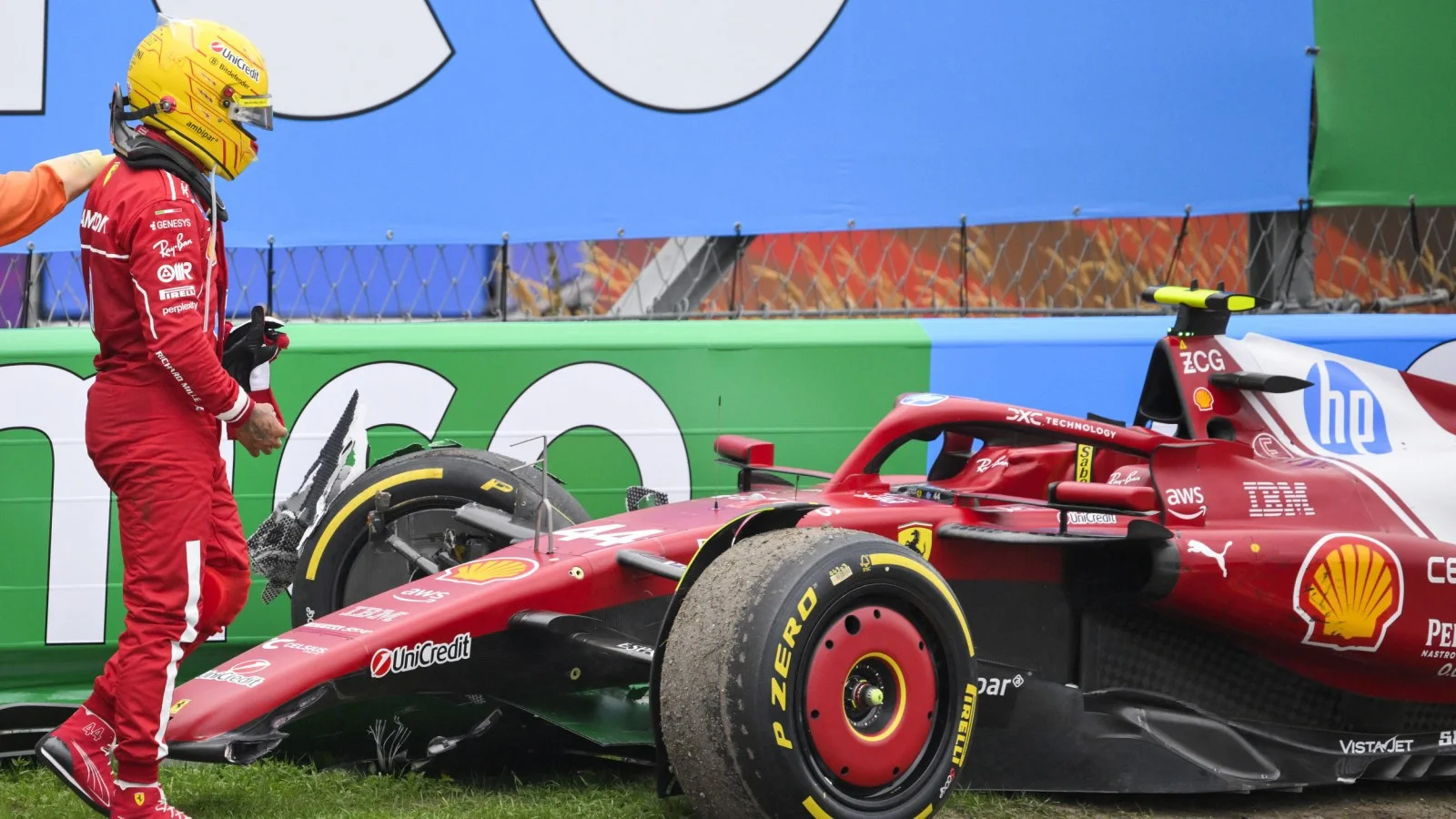
At the Dutch Grand Prix, Hamilton made a rare mistake when he crashed at Turn 3, resulting in his first retirement since the United States GP last year. This error underscored the challenges he faces with his new team and raised questions about his adjustment to Ferrari’s environment.
Jacques Villeneuve, the 1997 Formula 1 World Champion, provided insight into Hamilton’s situation during an interview with ComeOn Ontario. Villeneuve highlighted how Hamilton’s experience at Ferrari has differed drastically from his time in previous teams.
Do champions give up when the going gets tough or do they become stronger? Lewis has hit a hurdle that he wasn’t used to and hasn’t experienced,
—Jacques Villeneuve, 1997 F1 World Champion
Villeneuve explained that Hamilton had spent much of his career in a dominant car, surrounded by conditions that allowed him to win without needing to be at his absolute peak all the time. He noted,
“Even some of the championships he’s won he didn’t even need to be the best Lewis. He was that good.”
I think that Ferrari has come as a shock to him. But he is better than the results he’s been getting.
—Jacques Villeneuve, 1997 F1 World Champion
Prospects of Hamilton’s Future Success at Ferrari
The significant question for Hamilton is whether he can regain his top contender status, especially looking ahead to the 2026 season, which will introduce new technical regulations and offer him a chance to contribute more directly to his car’s development. This shift may prove crucial for his performance trajectory.
Villeneuve reflected on Hamilton’s past career moves, suggesting his ability to overcome adversity remains intact, though Ferrari presents a unique set of challenges. He cited Hamilton’s early years at McLaren as a period marked by intense competition and political obstacles, which Hamilton successfully navigated.
Can he overcome that hurdle and become a success again? Of course he can,
—Jacques Villeneuve, 1997 F1 World Champion
Villeneuve also pointed to Hamilton’s transformative impact at Mercedes, where many doubted his potential to succeed initially.
“When he went to Mercedes, we thought, ‘What a big mistake.’ But he managed to turn the team around to himself,”
he said.
Despite Hamilton’s proven resilience, Ferrari’s environment remains a tougher challenge to master, according to Villeneuve, who believes Hamilton was unprepared for the team’s demands.
And I don’t think he was expecting that and he wasn’t ready for it. So it just depends how much energy he has left to give it.
—Jacques Villeneuve, 1997 F1 World Champion
Implications for the Upcoming F1 Seasons
Hamilton’s difficulties highlight the complexities Ferrari presents to even the most skilled drivers. As the 2026 regulation changes approach, his input on the car’s design could offer a vital opportunity to regain competitiveness. Observers will watch closely to see if Hamilton can harness his experience and overcome the current obstacles to return to winning form.
With Ferrari‘s demanding atmosphere contrasting with Hamilton’s prior experiences at McLaren and Mercedes, his ability to adapt will be a key factor in his remaining years in Formula 1. The season ahead will be pivotal in determining whether this new chapter can deliver better results for the seven-time world champion.
