
Lewis Hamilton’s move to Ferrari has been marked by significant challenges, with the seven-time World Champion amassing only 41 points and sitting seventh in the championship standings as the season progresses. Despite the hype and high expectations surrounding his switch, Hamilton continues to lag behind teammate Charles Leclerc, struggling particularly with the handling of the SF-25, which seems plagued by a loose rear end causing instability during races.
The problem revolves around Hamilton’s inability to fully connect with the car, as he frequently reports a feeling that the SF-25 is unbalanced and “loose” beneath him. This loose rear end affects his confidence when navigating corners, as the car doesn’t respond in the way he expects when turning, leaving him frustrated and increasingly demoralized after each race weekend.
Rob Smedley, who served as a Ferrari employee from 2004 to 2013 and has vast knowledge of the team’s technical intricacies, offered insight on Hamilton’s ongoing difficulties. Speaking on the F1 Nation podcast, Smedley attribute much of the trouble to the car’s rear instability. He explained,
Smedley emphasized that when dealing with medium to high-speed corners requiring rapid turn-in, a solid rear end is crucial. He added,
This technical flaw appears to undermine Hamilton’s ability to push the car to its limits, whereas Leclerc seems more adept at managing the instability, at least over single laps.
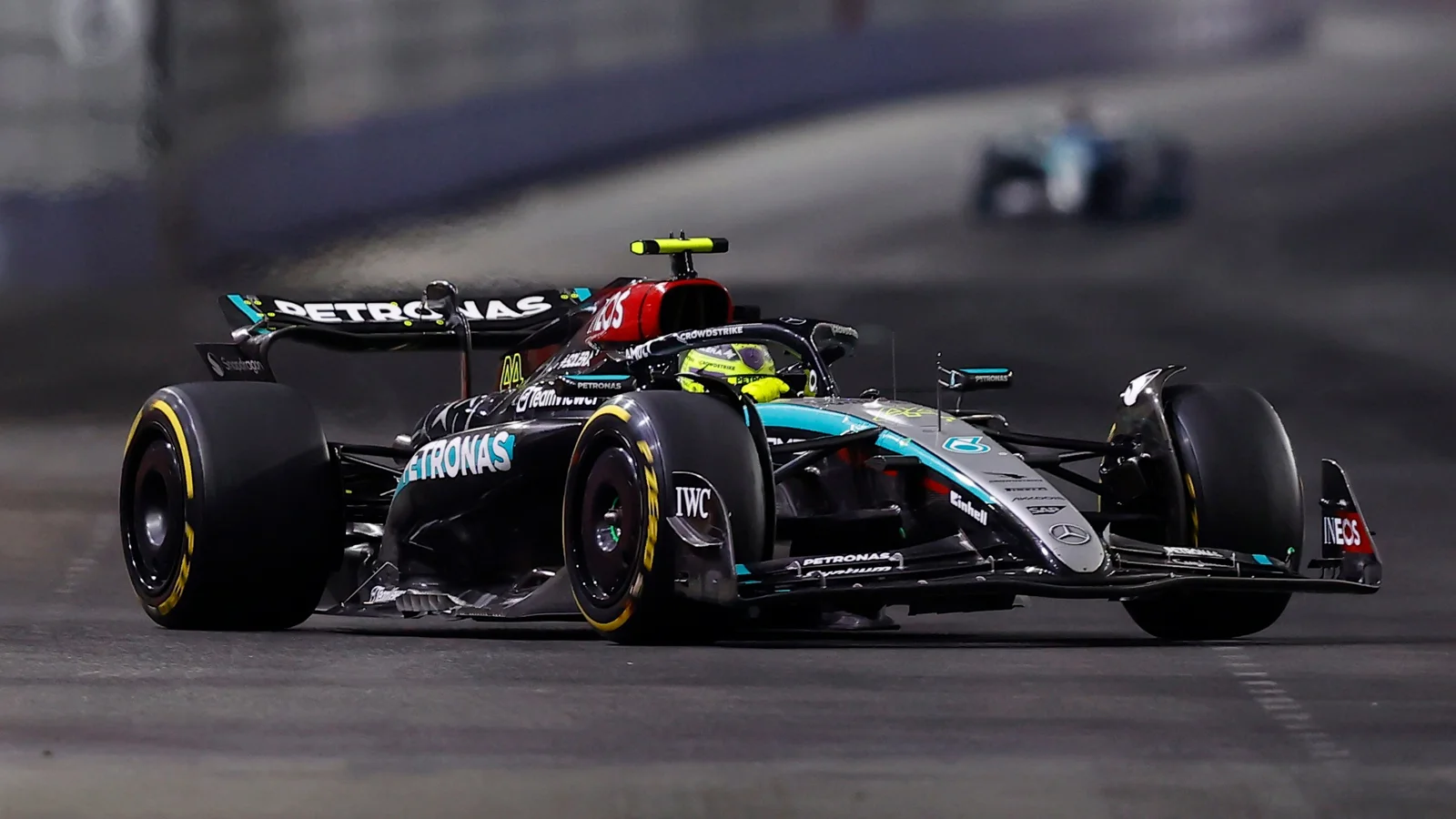
Beyond the rear stability, Smedley mentioned a broader lack of overall performance in the Ferrari SF-25, insisting that the issues are not isolated to one component but involve a series of small deficits.
he said. The team faces the daunting task of finding incremental improvements across multiple areas, hoping these combined gains will translate into better qualifying and race results.
Performance improvements of just two to three-tenths of a second per lap could significantly boost Ferrari’s competitiveness, according to Smedley.
he remarked, underscoring how tight the competition and technical demands remain in Formula 1.
These fine margins are key not only for race outcomes but also for the morale of drivers struggling with the car’s handling. A more stable rear end and improved balance would likely give Hamilton a much-needed confidence boost, allowing him to extract greater performance and feel more comfortable behind the wheel.
As the season unfolds, the pressure on Ferrari to address these shortcomings mounts, with Hamilton’s well-being and success hanging in the balance. The former team expert’s analysis highlights the restless nature of F1 development and the unrelenting pursuit of perfection that defines the sport. For Hamilton and Ferrari, the challenge remains fierce; whether they can overcome these technical flaws and narrow performance gaps will determine how the season—and Hamilton’s tenure at Ferrari—unfolds in the coming months.
