
Lewis Hamilton was at the center of controversy during the Monaco Grand Prix qualifying when he impeded Max Verstappen on the track. The incident occurred while Hamilton was completing a preparatory lap on fresh soft tires, and Verstappen was approaching behind him. Hamilton’s race engineer, Riccardo Adami, informed him that Verstappen was on a slow lap, which influenced Hamilton’s decision to maintain his line. This misinformation triggered Hamilton’s frustration upon realizing Verstappen was actually pushing hard, resulting in a heated exchange over the radio.
Throughout their recent battles on the circuit, the seven-time world champion and the Dutch driver have generally maintained respect, but this misunderstanding added tension during the high-stakes qualifying session. The narrow and crowded Monaco track, the shortest on the calendar, intensifies issues related to traffic and impeding, making such misunderstandings more likely and consequential.
Details of the qualifying incident involving Hamilton and Verstappen
During the first qualifying session (Q1), where all 20 drivers share the tight circuit simultaneously, multiple impeding incidents emerged. The FIA flagged Hamilton’s obstruction of Verstappen as the earliest significant case. When Hamilton’s engineer told him Verstappen was slowing, Hamilton assumed the Dutchman was on a cooldown lap and that there was no need to deviate from his ideal line. However, Verstappen was actually preparing for a flying lap, causing him to unexpectedly overtake Hamilton on the outside.
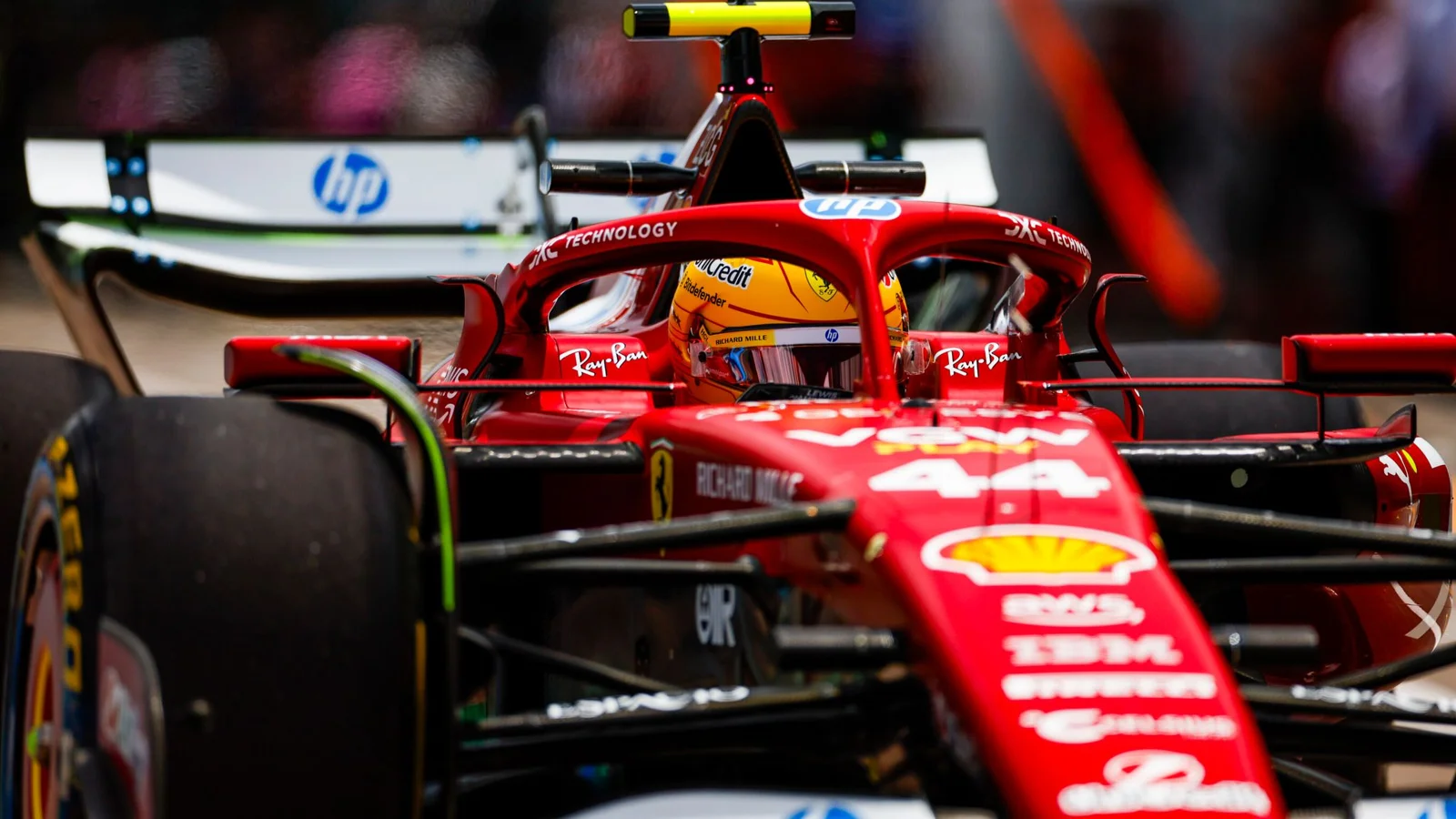
Hamilton’s frustration was audible over the radio in a strong outburst, saying,
“You said he was slowing down, man. For f**k sake! Did he slow down?”
—Lewis Hamilton, Driver
This tense exchange highlighted the critical importance of accurate communication between drivers and their teams, especially on a circuit where track position is vital and overtaking is notoriously difficult.
Ongoing challenges with Hamilton’s Ferrari SF-25 affecting qualifying efforts
Lewis Hamilton’s struggles during this season have extended beyond the Monaco incident, particularly with the Ferrari SF-25’s one–lap pace. Despite amassing 104 career pole positions and starting the Sprint race in China from the front, Hamilton has not been consistently competitive in qualifying throughout the year. The team has openly acknowledged that extracting maximum performance in qualifying remains a key weakness.
Hamilton reflected on the challenges, stating,
“I was in the simulator on Monday. I was there nice and early Monday morning. It’s really incredible to see. Probably people don’t realize, but the engineers and mechanics, it does not stop. They go straight from the track, you go home Sunday night and they’re in the factory the next day. It just does not stop, they’re churning through the data. Yes, there’s lots of, lots of positives, as we said last weekend to take from it. There’s still areas that we need to improve on.”
—Lewis Hamilton, Driver
He added further insight on the team’s struggle in qualifying:
“Clearly, our qualifying has been our biggest weakness so far this year. We’re not extracting the performance from the tyres, and that’s something we are working on.”
—Lewis Hamilton, Driver
Potential consequences and impact on Monaco GP starting grid
Hamilton managed to qualify fourth for the Monaco Grand Prix, a respectable position on this challenging street circuit. However, his impeding incident with Verstappen has drawn the attention of race officials, and he faces the possibility of a grid penalty. Such a penalty could alter his starting position and impact Ferrari’s strategy and prospects in the race.
This event underscores the fine margins and high tensions that define Formula 1 qualifying, particularly at Monaco, where a small mistake or miscommunication can have significant repercussions. With both Ferrari and Red Bull pushing hard amidst a tightly contested championship fight, maintaining precision on and off the track remains crucial for both drivers and teams moving forward.
