
The Formula 1 community gathered in Monte Carlo for the exclusive pre-screening of Brad Pitt’s highly anticipated $300 million F1 movie directed by Joseph Kosinski. World champions Lewis Hamilton and Fernando Alonso were present at the event ahead of the Monaco Grand Prix, showcasing their support for the film. However, four-time world champion Max Verstappen and fellow driver Lance Stroll were notably absent from the premiere held just a short walk from Verstappen’s home.
While Verstappen’s absence at this high-profile event raised eyebrows, the Dutch driver was not occupied with pressing Formula 1 commitments at the time. Instead, he was participating in a Twitch sim racing session with Team Redline, underscoring his passion for virtual racing over glitzy Hollywood occasions. During the stream, Verstappen competed under the pseudonym “Franz Hermann,” a name he also used earlier in May when testing a Ferrari GT3 at the Nürburgring Nordschleife.
Reasons Behind Verstappen’s Premiere Absence
Max Verstappen’s choice to skip the movie premiere fits his character as someone often detached from mainstream F1 glamour. His recent personal milestone—the birth of his daughter with partner Kelly Piquet ahead of the Miami Grand Prix—may have also contributed to his priorities around this time. Nevertheless, Verstappen’s decision to focus on simulation racing rather than attend a Hollywood screening reflects his ongoing disinterest in the sport’s entertainment aspects.
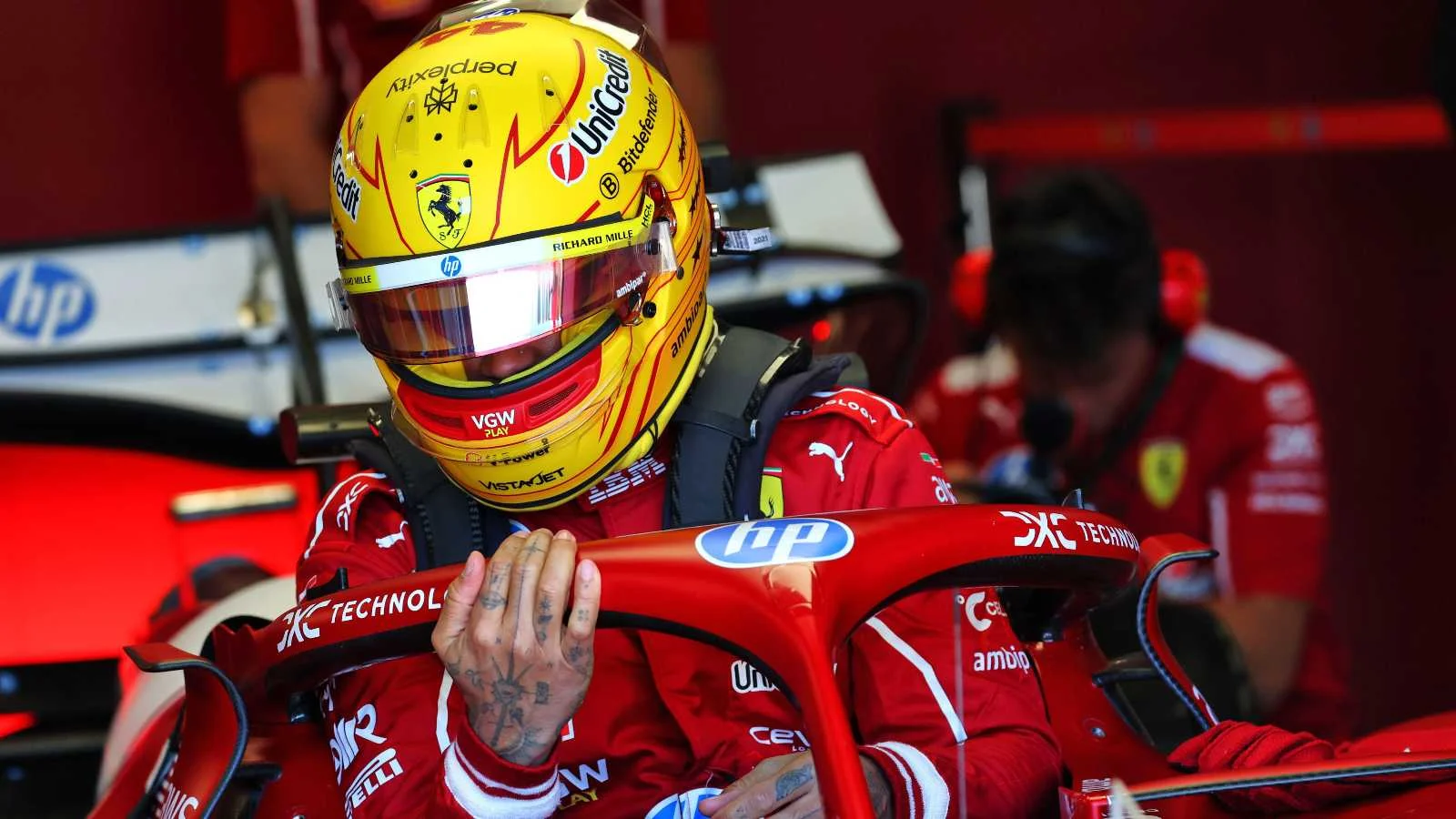
Verstappen has frequently distanced himself from the increased commercialization and media hype surrounding modern Formula 1. His refusal to participate in Netflix’s “Drive to Survive” documentary series highlights his frustration with fictionalized rivalries and dramatized narratives that do not align with his straightforward, results-focused approach.
Verstappen’s Criticism of F1’s Media and Entertainment Shift
Over the years, Verstappen has been vocal about his disapproval of F1’s media portrayal. In 2023, he expressed his dissatisfaction by stating,
“I watched two episodes, but I was not very impressed. It’s just not my thing, faking rivalries.”
He further explained his reluctance to participate in interviews and reality-style coverage, emphasizing his preference for authenticity and straightforward facts rather than manufactured drama.
You don’t really see a lot of me in Drive to Survive because I don’t like doing it. So yeah, you probably don’t get the right side of me because it’s just an interview. I’m just sitting down in a dark room, and I hate that! —Max Verstappen, F1 World Champion
During a boycott of the series in 2021, Verstappen criticized the show’s approach, saying,
“I understand this needs to be done to boost the popularity of F1 in America, but for my part, I don’t like to participate in it, being a racing driver.”
He added that previous seasons misrepresented his words and fabricated rivalries, undermining his trust in such productions.
I have decided not to participate anymore and to no longer give interviews. Then you have no more material to show. I’m not one of those people for dramatic shows. I just want facts and real things that happen. —Max Verstappen, F1 World Champion
Verstappen’s View on Modern F1 Venues and Events
Max Verstappen’s criticism extends beyond media portrayals to the current F1 calendar itself. When the Las Vegas Grand Prix was added, he mocked it as predominantly a spectacle rather than a serious sporting event. He described Monaco as the “Champions League” of racing, contrasting it with venues like Vegas, which he likened to a “National League” in comparison.
Verstappen shared his affection for traditional race tracks like Spa and Monza, praising the electric atmosphere created by fans and the intrinsic challenge of these historic circuits. He stated that the passion and emotions found on such tracks fuel his motivation every time he races.
It’s more about the proper race tracks, Spa, Monza. Seeing the fans there is incredible and when I jump in the car I am fired up and I love driving around these places. —Max Verstappen, F1 World Champion
Lewis Hamilton’s Influential Role in the Film’s Production
Unlike Verstappen, Lewis Hamilton played a significant role in Brad Pitt’s F1 movie. Hamilton serves as an executive producer, heavily involved in ensuring the film’s authenticity and respect for the sport’s culture. His presence at the premiere not only highlighted his enthusiasm for the project but also underscored his commitment to bridging the gap between F1 and broader audiences.
Hamilton’s engagement with the film is part of his wider efforts to elevate the sport’s profile through collaboration with Hollywood and other media outlets. His involvement contrasts sharply with Verstappen’s avoidance of showbiz and scripted entertainment, signaling diverging attitudes between the two champions about the future of Formula 1’s image.
Filming Dynamic and Drivers’ Participation
The production of the film has taken place alongside the current Formula 1 season, integrating real-life racing elements with the movie’s narrative. Trailers already show Brad Pitt and co-star Damson Idris lined up on the grid with Verstappen and other drivers, indicating the film’s ambition to capture F1’s authenticity. This blending of fiction and reality underlines the film’s high-profile nature within the motorsport community.
Despite Verstappen’s refusal to associate publicly with the film premiere, his physical presence was required on set. In contrast, Hamilton’s executive producer credit showcases an active partnership in the movie’s creative process, underscoring his influential status in the F1 paddock.
The Broader Impact on Formula 1’s Public Image
The contrasting responses from Verstappen and Hamilton to the F1 movie premiere reflect wider tensions in Formula 1’s evolving identity. While the sport seeks greater global exposure and entertainment value, as embraced by Hamilton, some drivers like Verstappen maintain a purist focus on racing itself. This dichotomy illustrates the challenges F1 faces balancing sporting integrity with commercial growth.
Hamilton’s leadership in bringing film and media closer to F1 could encourage fresh fans and diversify the sport’s audience. Meanwhile, Verstappen’s rejection of Hollywood-style dramatization reaffirms a commitment to racing tradition and authenticity that resonates strongly with longtime supporters.
As the film releases on June 25, it will be interesting to observe how these differing attitudes influence fan and driver engagement with cinema’s portrayal of Formula 1, as well as the sport’s future direction on and off the track.
