
Lewis Hamilton’s long-anticipated move to Ferrari for 2025 was expected to be the sport’s defining story. Instead, the early stages of his first season in red have been marked by frustrations, missed podiums, and comments that have left fans and team leaders searching for explanations. Hamilton remains a global superstar and seven-time champion, but his transition has been anything but seamless. Ferrari, meanwhile, admits it underestimated the scale of the challenge. The promised revival has yet to materialize in full.
Key Highlights
-
Hamilton has yet to score a grand prix podium with Ferrari in 2025
-
A sprint race win in China and third in Miami remain his best results
-
Team boss Fred Vasseur admits Ferrari “stupidly” underestimated the adaptation needed
-
Hamilton’s frustrations have spilled out publicly, including calling himself “useless” in Hungary
-
Ferrari is addressing small details step by step to improve competitiveness
Early Struggles and Mixed Results
Hamilton’s Ferrari tenure has so far been defined by inconsistency. While he captured a sprint victory in China and followed it with a third place in the Miami sprint, he has not reached the podium in any grand prix. His highest qualifying performance remains fourth, taken in Monaco and Austria, although penalties and setbacks turned promise into disappointment. In Monaco, he was dropped from fourth to seventh after a three-place grid penalty for impeding Max Verstappen, ending hopes of a breakthrough. Hungary proved to be a low point. After falling in Q2, Hamilton described himself as “useless” and even remarked Ferrari should consider a driver change as Charles Leclerc stormed to pole. His raw self-criticism grabbed attention, but Ferrari’s focus is on supporting Hamilton through the adjustment period.
Fred Vasseur’s Candid Assessment
Ferrari team principal Fred Vasseur admitted that the scale of Hamilton’s challenge had been underestimated both by the team and the driver himself.
“Lewis and I, we collectively, probably underestimated the change of environment, and the fact that he spent, for me, 20 years in the same team.” – Fred Vasseur
Vasseur pointed out that Hamilton had effectively been within the same Mercedes culture since 2006, first at McLaren and then at Mercedes. The continuity of language, engineering staff, and operational approach meant Hamilton had never faced such a dramatic cultural shift.
“And then he arrived at Ferrari. And we were stupidly expecting that he will have everything under control.” – Fred Vasseur
Vasseur contrasted Hamilton’s limited team-switching experience with that of Carlos Sainz, who adapted quickly by racing for Toro Rosso, Renault, McLaren, Ferrari, and now Williams within eight years. Hamilton, he argued, was simply not accustomed to the demands of starting over in a new structure.
Adapting to Culture and Detail
Cultural differences between Ferrari and Hamilton’s previous teams have been a defining hurdle. Vasseur noted that while Ferrari and Mercedes both compete at the front, the operational culture differs more than the transitions Hamilton experienced before.
“Culturally speaking, there is a bigger difference between Ferrari and Mercedes than between Mercedes and McLaren. And this we underestimated.” – Fred Vasseur
Vasseur said Hamilton began showing improved control from races in Canada, Spain, the UK, and Austria. Even in Spa, despite a poor qualifying, his race pace was strong. Hungary, by contrast, was undone by finer margins. Vasseur underlined how even tiny details can make the difference between top-tier performance and midfield anonymity.
“If you are struggling with the brakes because they are a bit different compared to what you were used to deal with, then you are speaking about half a tenth. And half a tenth is the difference between getting into Q3 or not.” – Fred Vasseur
He explained that Ferrari is addressing issues point by point. Familiar faces from Mercedes, including technical chief Loic Serra, deputy team principal Jerome D’Ambrosio, and Hamilton’s performance engineer Luca Diella, have aided the process by offering continuity and perspective.
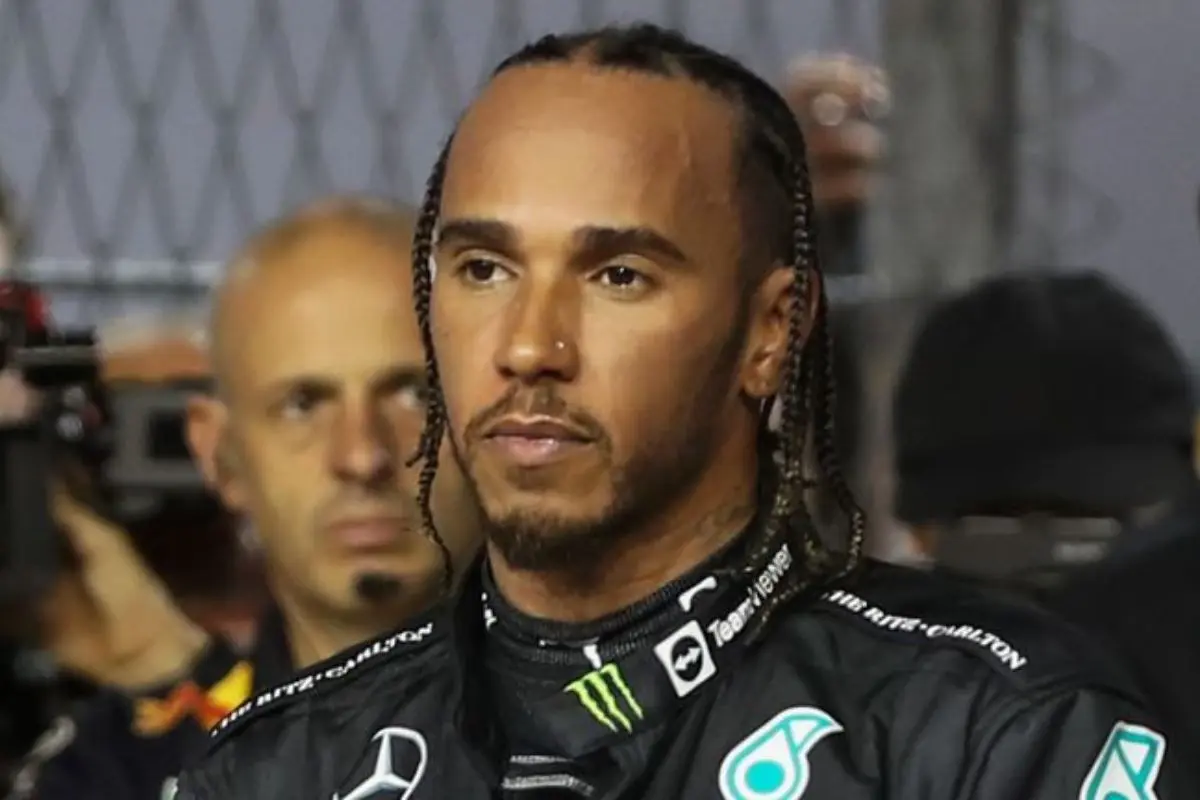
Hamilton’s Demanding Standards
Hamilton’s self-critical approach, while harsh, does not alarm Vasseur. The team boss insists this is consistent with how top drivers push themselves and their teams.
“He’s like this, and sometimes he was also like this at Mercedes. For me, it’s not a drama. I understand the philosophy, and the fact that he’s very, very demanding with me, with the engineers, with the mechanics, but mainly with himself.” – Fred Vasseur
Vasseur compared Hamilton’s approach to Nico Hulkenberg in F3, noting that extreme demands are acceptable so long as the driver holds themselves accountable first. Hamilton’s Hungarian outburst, then, was more a reflection of his own inner standards than a genuine call for replacement. Ferrari’s leadership remains steadfast in supporting him through the adaptation process.
News in Brief: Lewis Hamilton’s Ferrari Struggles
Lewis Hamilton’s Ferrari switch has produced tension rather than triumph so far. Despite sprint highlights in China and Miami, he has yet to secure a grand prix podium. A penalty in Monaco, self-criticism in Hungary, and inconsistency have defined his campaign. Ferrari boss Fred Vasseur admitted the team “stupidly” underestimated the challenges, noting cultural differences and Hamilton’s limited experience switching teams. The team is addressing small details with support from familiar ex-Mercedes staff.
ALSO READ: Lewis Hamilton Drives $58M Profit for Ferrari Despite Struggles in 2025 F1 Season
