
The ongoing debate over minimum weight regulations in MotoGP has intensified, featuring two sharply opposing views. Honda rider Luca Marini insists that lighter racers have an unfair advantage, while former rider Dani Pedrosa challenges this claim, arguing that the reality is more complex than Marini suggests. This dispute highlights critical concerns about fairness and safety that have echoed throughout recent race seasons.
Luca Marini’s Perspective on Weight and Performance
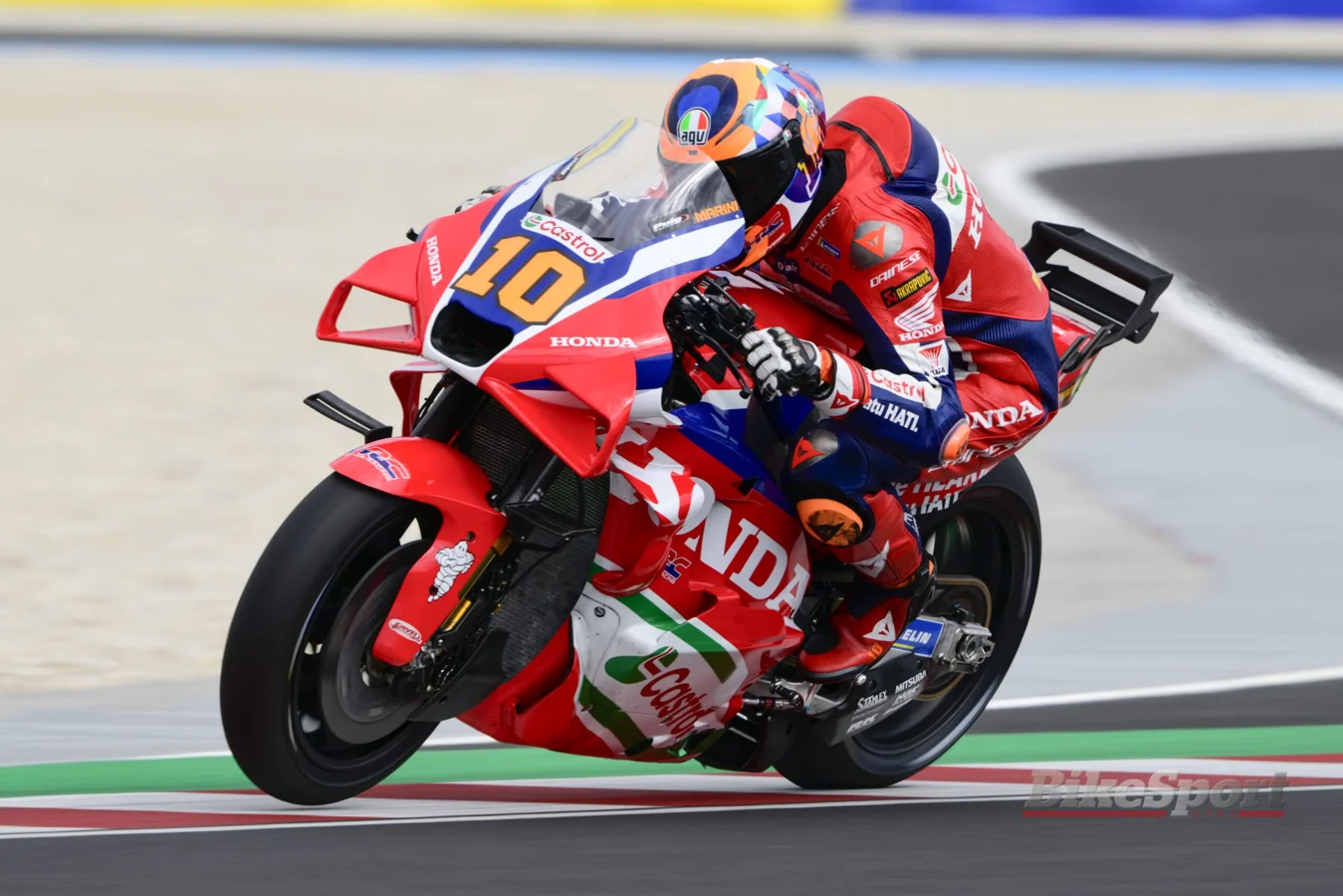
Luca Marini, who stands 1.84 meters tall and weighs around 70 kilograms, has been vocal about the challenges taller riders face due to the sport’s physical demands. He points out that physics favors lighter riders, forcing competitors like him to follow extreme weight-loss programs just to remain competitive. Marini blames this imbalance for pushing riders toward unhealthy practices as they strive for marginal speed gains.
“Today, many riders are shedding pounds because it allows them to go faster,”
Marini said during a recent interview, referencing past events such as Misano, where Pedrosa allegedly benefited from weight-related advantages by being the only rider able to use softer tires because of his smaller build.
Marini proposes enforcing a combined minimum weight for both rider and motorcycle, a system used in other motorsports, to level the playing field.
“Lighter riders should simply train a bit harder to gain weight, while those above a certain height should not be allowed to lose weight,”
he argued, insisting this change would restore fairness across all riders.
Dani Pedrosa’s Counterarguments on Rider Weight
Dani Pedrosa, standing at only 1.58 meters, responded firmly against Marini’s claims, explaining why the issue is more nuanced. He challenged the notion that lighter riders have a straightforward advantage by focusing on two key points: muscle power and aerodynamics.
Regarding physical strength, Pedrosa stated that heavier riders generally have more muscle mass, enabling them to better cope with high G-forces and control the motorcycle effectively.
“Even if the smaller rider weighs less, the larger rider possesses significantly more muscle power,”
he said, underlining the importance of strength in handling the demanding machines.
On aerodynamics, Pedrosa argued that smaller riders face their own disadvantages.
“While it is true that adapting aerodynamics is more challenging for taller riders, smaller riders are also more vulnerable to turbulence and less capable of cutting through the air,”
he pointed out, highlighting that size affects airflow in complex ways, not just through simple height differences.
Summarizing his position, Pedrosa insisted Marini’s reasoning was inverted, stating:
“We’re essentially burdening smaller riders to control heavier motorcycles with less force. It defies common sense. Smaller riders on powerful machines are perpetually at a disadvantage.”
The Broader Implications of the Weight Debate
This dispute sheds light on two very different experiences within the sport: Marini’s struggle with the pressure to lose weight for slight speed advantages, and Pedrosa’s career-long challenge of mastering machines that demand exceptional strength and control. The reality likely lies between these extremes, acknowledging that lighter riders benefit in acceleration whereas taller riders gain better stability and power.
With tensions running high, the debate has caught the attention of the FIM, the sport’s governing body, which will ultimately decide whether to implement new rules. This issue has parallels in World Superbike (WSBK), where weight regulations provoked controversy, notably for lighter riders like Alvaro Bautista, who has since seen his prominence decline.
The outcome of this debate holds significant potential to reshape MotoGP competition by addressing fairness and safety concerns that influence riders’ careers and team strategies across the globe.
