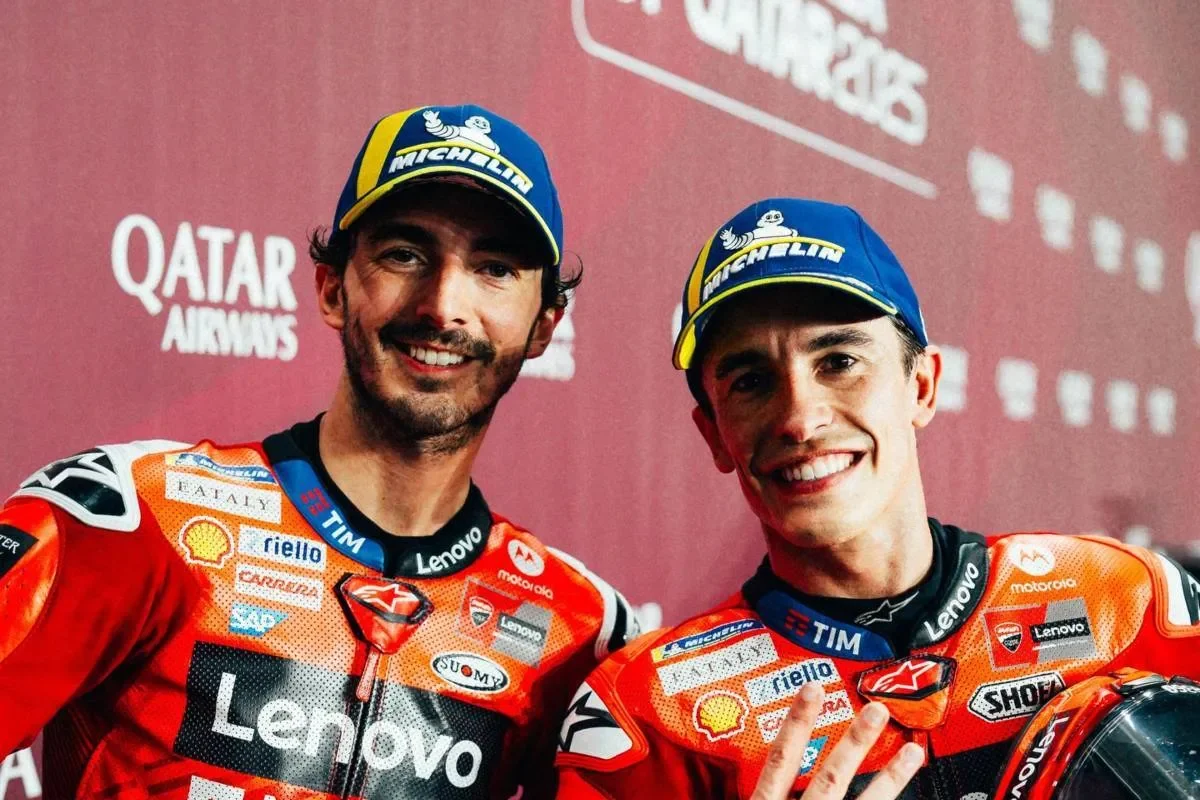
Marc Marquez has outlined Ducati’s approach to machine development for the 2026 MotoGPseason, emphasizing careful compromise and targeted improvements following a dominant season. His insights into the process highlight the team’s focus on refining their competitive edge without sacrificing key bike performance attributes.
Balancing Performance Gains with Trade-Offs
Improving a MotoGP bike like the Desmosedici involves making difficult decisions about which areas to enhance, always seeking the right balance. As Marquez explained, every adjustment that might boost one aspect of performance often comes with a corresponding cost elsewhere. He emphasized that the real challenge for riders and engineers such as Francesco Bagnaia and VR46’s Fabio di Giannantonio is to find the mix that leads to gains at all circuit types, not just a single venue.
Marquez elaborated on the complexity of honing the Desmosedici’s handling, especially regarding the crucial front-end feel desired by many riders. He commented,
“I mean, of course, you always try to improve. And yeah, in a bike, if you have a better front feeling, then… because the front tyre is always the most critical one for a rider,”
Marquez, MotoGP rider. Still, he noted that improvements in front-end stability could reduce rear grip, demanding further compromises.
Incremental Development Strategy for 2026
With a history of championship-winning performance, Ducati is not seeking radical change for the 2026 MotoGP season. Marquez reinforced that their current base model is strong, and only minor upgrades are targeted. He stressed the importance of measured evolution over dramatic shifts, stating,
Image of: Marc Marquez
“We cannot expect, or we cannot find, a big step from one [single] area because in the end we can choose the wrong direction.”
Marquez, MotoGP rider. This philosophy comes after Ducati’s decision in pre-season testing to return to a bike specification closer to their reliable GP24, rather than pushing ahead with an all-new GP25 engine.
Despite these considered changes, Bagnaia and Di Giannantonio continued to experience inconsistency with the 2025 bike. Marquez, however, showcased the effectiveness of Ducati’s calculated improvements by leading his debut season at the factory team with a string of victories.
Turning Point: The Aragon Test’s Impact
The critical shift in confidence for Marquez and Ducati was cemented during the post-race test at Aragon. He identified this moment as the technical high point of the season, confirming,
“Yes, since the Aragon test, we made a step,”
Marquez, MotoGP rider. Marquez revealed that the enhancements were primarily in bike setup and aerodynamics, which made the machine increasingly comfortable to handle.
He further clarified the collaborative approach within the Ducati camp, noting,
“And what we did was only be closer to the other Ducati riders,”
Marquez, MotoGP rider. By aligning his bike’s geometry and dimensions with those of his teammates, the Spaniard transitioned from an initially challenging ride to a more user-friendly machine. Marquez described the effect:
“So in the first part of the season I was riding with a different bike, more nervous, but [after the Aragon test] it’s a bike that is easier to ride.”
Marquez, MotoGP rider.
Looking Ahead: Marquez’s Return and Ducati’s Aspirations
Marc Marquez’s season was interrupted by injury shortly after securing his ninth grand prix title at Motegi, but he is scheduled to return for Ducati at the season-opener in Sepang next February. The momentum from his fourteen-race win streak, spanning from Aragon to Hungary, sets high expectations for the future.
Marquez’s approach to Ducati development for 2026, focused on careful, incremental improvement and avoiding dramatic shifts, places significant weight on the importance of team collaboration and technical balance. The lessons learned from 2025 are likely to shape the evolution of the Ducati Desmosedici as the team aims to extend its leadership in the fiercely competitive MotoGP field.