
Marc Marquez has ignited anticipation in the MotoGP community with his imminent return to the track, piloting a Ducati Panigale at the Aspar Circuit near Valencia this Thursday and Friday. This calculated move marks Marquez’s first significant appearance since a serious shoulder injury nearly 100 days ago during the 2025 Indonesian Grand Prix, and signals Ducati’s cautious approach as their champion eases back into racing while prioritizing his recovery.
Road to Recovery After Injury at Indonesian Grand Prix
The comeback unfolds at the Aspar Circuit in Guadassuar, close to Valencia, a venue owned by Jorge Martinez and favored by top riders for its modern facilities and demanding profile. The decision for Marquez’s return on this specific track reflects Ducati’s focus on safety and readiness, with the manufacturer’s team manager Davide Tardozzi on-site to oversee preparations. Instead of the formidable MotoGP Desmosedici, Marquez will ride a Ducati Panigale V2—a bike prepared for both support and challenge, yet far less taxing than the V4, allowing Marquez to gauge his strength without overextending his healing shoulder.
Marquez’s younger brother, Alex Marquez, will join him on a Panigale, and additional elite riders are expected at the closed event. The serious atmosphere encapsulates Ducati’s intentions: every detail, from the choice of motorcycle to the presence of key team members, aims to balance the push for results with the need to avoid a setback. Ducati, remembering Marquez’s devastating near-end to his career from a major crash in 2020, wants to ensure there’s no repeat, reinforcing the commitment to his health over performance.
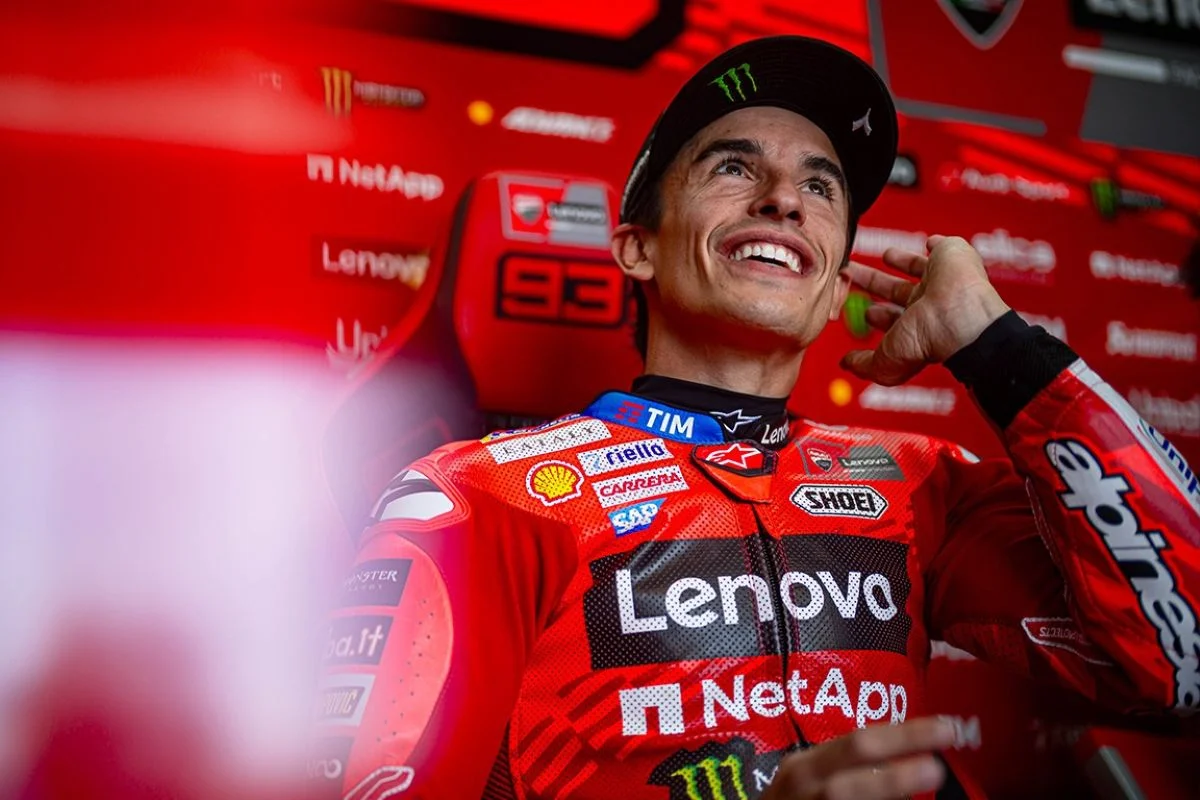
The Incident and the Pause That Followed
Just months ago, on September 28, 2025, Marquez captured the world championship title in Japan, reinforcing his status as a racing legend. However, fate twisted abruptly during the Indonesian Grand Prix when a collision with Marco Bezzecchi fractured his right shoulder once again. The injury, initially thought to be minor, eventually required surgery, abruptly cutting short his season and shrouding his future in uncertainty. Since then, Marquez’s only stint on a motorcycle came on December 23, riding cautiously over gravel at Alcarràs, underscoring the lengthy journey back to a truly competitive scenario.
Ducati’s Strategy: Gradual Return Before Full MotoGP Engagement
Ducati’s plan is deliberate: Marquez’s first significant rides will take place aboard the Ducati Panigale V2, which produces a more manageable 155 horsepower compared to the 220 horsepower of the MotoGP-ready V4. By choosing a less demanding machine, Ducati and Marquez aim to avoid the irresistible urge to push beyond physical limits before his shoulder is fully rehabilitated. This approach underlines the message that the ultimate objective is not a quick return, but a sustainable comeback that ensures Marquez’s long-term participation in MotoGP and maximizes his winning potential in the upcoming 2026 season and beyond.
High-Stakes Testing at Aspar Circuit With Key Support
The test session at the Aspar Circuit is more than just another day of riding. The presence of Davide Tardozzi—a recognized figure in Ducati’s MotoGP strategy—demonstrates how seriously the team is treating this phase. With the Aspar Circuit’s safety features and demanding braking zones, Marquez can assess his physical condition under conditions that closely simulate race situations. During this pivotal test, Alex Marquez stands alongside him as both a brother and competitive peer, providing both moral support and an immediate performance benchmark.
The event has also attracted the attention of fellow world-class riders, heightening the session’s importance within the paddock. For Marquez’s rivals and the broader MotoGP world, this low-profile approach on a street-legal Ducati Panigale is as calculated as it is bold, signaling that Marquez’s ambitions are measured and long-term rather than reactionary.
Looking Ahead: Official Ducati Presentation and Possible Additional Tests
The next major milestone is Ducati’s official presentation on January 19 in Madonna di Campiglio. There, fans, media, and sponsors will receive updates on Marquez’s progress and the latest from the team. Should his Valencia outing proceed smoothly and his shoulder show further improvement, a subsequent test is planned for late January at Portimão, where all Ducati MotoGP riders—including Marquez—may ride the Panigale V4S during Superbike testing. This gathering would mark a significant progression from his post-injury test rides, referencing Marquez’s participation in a similar preseason session before joining Ducati Gresini two seasons prior. Every step, however, remains contingent on medical evaluations and Marquez’s ongoing recuperation.
The Implications of Marquez’s Tactical Comeback
Marquez’s choice to return with the Ducati Panigale V2 instead of diving straight into MotoGP machinery sends a clear message to his competitors and the racing community. The calculated, restrained comeback—underscored by the presence of figures like Tardozzi, and rooted in the hard lessons of past injuries—shows a champion who values longevity and dominance over short-term spectacle. This strategic pause has set the MotoGP world abuzz, as those within and outside the paddock speculate about the wider implications for the 2026 season. Rivals, sponsors, and fans alike are bracing for a potentially seismic shift in the competitive landscape once Marquez returns to full strength and aggression on the racetrack.
