
In 2024, Adrian Newey expressed concerns that Max Verstappen has been subjected to biased scrutiny by the British media, similar to the way Sebastian Vettel was previously criticized. Newey, a veteran design engineer, believes that Verstappen is unfairly portrayed due to his aggressive driving style, contributing to a distorted public image.
With a career spanning over four decades in Formula 1, Newey has worked closely with both Sebastian Vettel and Max Verstappen at Red Bull. He engineered vehicles that helped each driver secure four world championships. Despite their on-track success, Newey observed that the two share a common experience of being misunderstood and demonized by media outlets, especially within Britain.
Newey Discusses the Impact of British Media on Driver Perceptions
On the High Performance Podcast in September 2024, Newey elaborated on what he sees as a pattern of negative coverage from British journalists toward Verstappen and Vettel. He suggested that this partiality may be rooted in a nationalistic bias affecting how the media frames their stories globally.
“From the outside, I’m not sure people fully appreciate and understand Max, just like they didn’t with Sebastian. There’s this sort of demonization both of them suffered at times, which is very unfair,” Newey said.
“And maybe that’s also a little bit of the British media, if I’m honest. Sky [Sports] has a huge influence around the world. Although viewing isn’t truly international, their coverage is quite nationalistic, dare I say, and that can have an influence. It’s this thing that now with journalism, typically. There is that trend to sort of either put people on a pedestal or knock them down,” he added.
Newey emphasized Verstappen’s intellect and racing ability, noting that his skill extends beyond mere speed to an intricate understanding of race dynamics and car management.
“I think that he’s very intelligent, and he’s got an incredible ability to… It feels as if he can drive the car automatically. He doesn’t, of course, but he can drive the car and has so much processing power left over that he can then think a lot about how he’s driving the car, how he’s looking after the tires, and what he might need to do with the settings.”
Verstappen Responds to Media Questions Amid Penalty Pressure
Max Verstappen has recently faced criticism for his on-track aggression, including a 10-second penalty for causing a collision with George Russell during the 2025 Spanish Grand Prix. Alongside this penalty, he received three points on his racing license, bringing his 12-month total to 11 points—just one point shy of a potential race suspension.
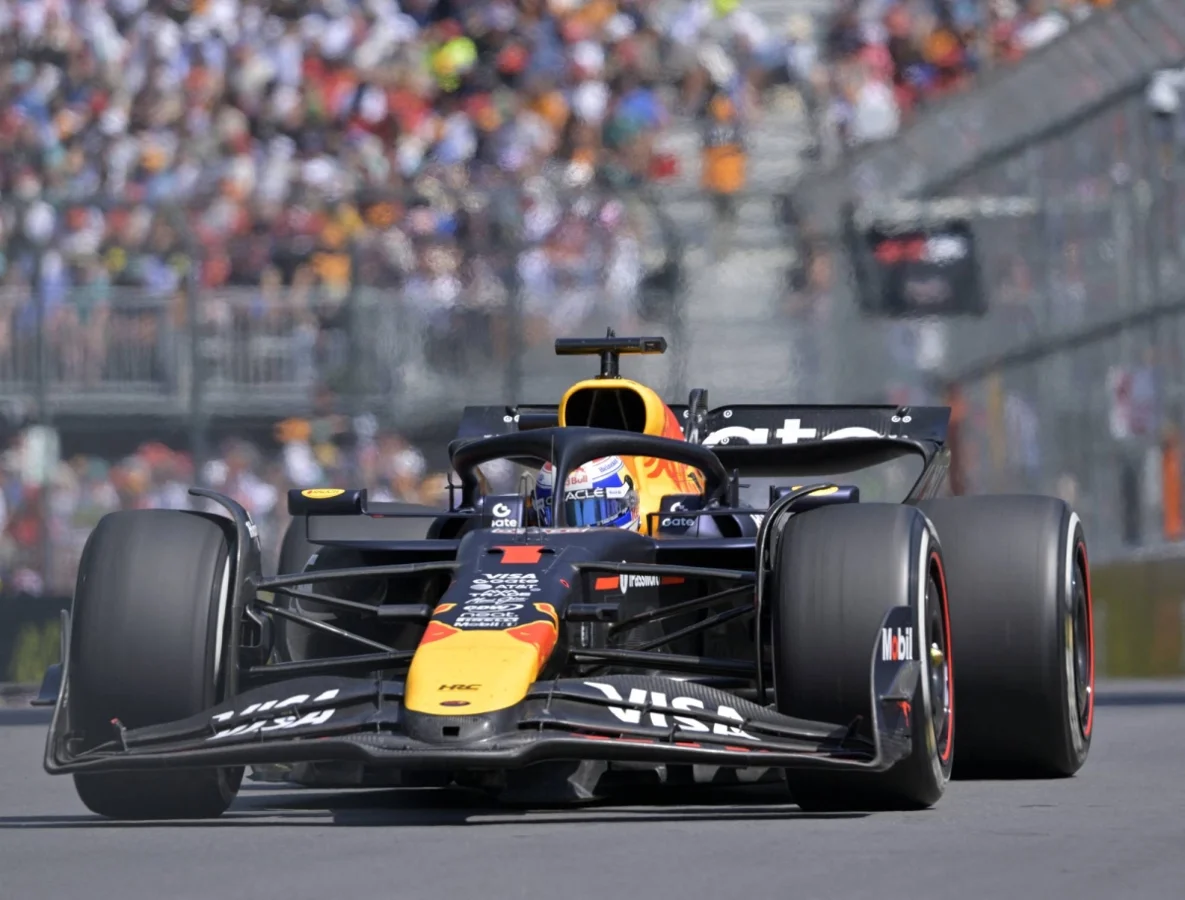
During the Canadian Grand Prix on June 15, Verstappen was repeatedly questioned about the prospect of a race ban, a line of inquiry that frustrated him deeply. He openly expressed his annoyance with the British media for focusing on what he considered trivial and unproductive questions.
“A waste of time. It’s just childish. Like I said, it’s a waste of time. I really don’t have anything to do with that at all. They probably don’t have anything better to ask, I don’t know,” Verstappen told Racingnews365.
Because his penalty points will not decrease until after the upcoming Austrian Grand Prix, Verstappen must remain particularly cautious in upcoming races to avoid further sanctions.
Implications of Media Bias and Verstappen’s Race Future
The ongoing media scrutiny and the accumulation of penalty points place Max Verstappen under significant pressure both on and off the track. Adrian Newey’s comments highlight how media representation can influence public perception, potentially affecting a driver’s reputation beyond their sporting achievements. As Verstappen navigates these challenges, the tension between media narratives and his performance will continue to shape his career and the sport’s broader discourse.
