
Max Verstappen’s recent performances in Formula 1 have led to heightened comparisons with Michael Schumacher, particularly following a challenging 2025 season marked by dramatic changes at Red Bull Racing. The Max Verstappen Schumacher comparison has gained traction after Ralf Schumacher stated that Verstappen possesses many of the qualities that made Michael Schumacher a legend, raising questions about Verstappen’s place in the sport’s history.
Red Bull’s Leadership Shake-up and Verstappen’s Early Season Struggles
The 2025 Formula 1 season became a true test of grit for Max Verstappen after Red Bull Racing underwent significant turbulence. At the British Grand Prix in Silverstone, team principal Christian Horner was unexpectedly dismissed, with Laurent Mekies stepping in as his replacement. This abrupt transition led to uncertainty within the team, disrupting their longstanding rhythm and placing added pressure on Verstappen and his support crew to remain competitive in a changing environment.
Ralf Schumacher pointed to the turmoil and timing of the decision, stating,
“You could clearly see what happened at Red Bull. Helmut Marko said it himself: people decided too late to send away Christian Horner.”
– Ralf Schumacher, Former F1 Driver. Verstappen not only contended with the off-track drama; he also dealt with a car that, by Red Bull standards, was failing to meet expectations throughout the European leg of the season.
Turning the Tide with Upgrades and Team Unity
Verstappen’s fortunes shifted midway through the year. When Red Bull introduced a crucial upgrade—a new car floor—at Monza, Verstappen recaptured his competitive edge, returning to his dominant ways on the track. Although he staged a strong comeback, Verstappen narrowly missed out on tying Michael Schumacher’s record for five consecutive drivers’ championships, finishing just two points behind in the standings.
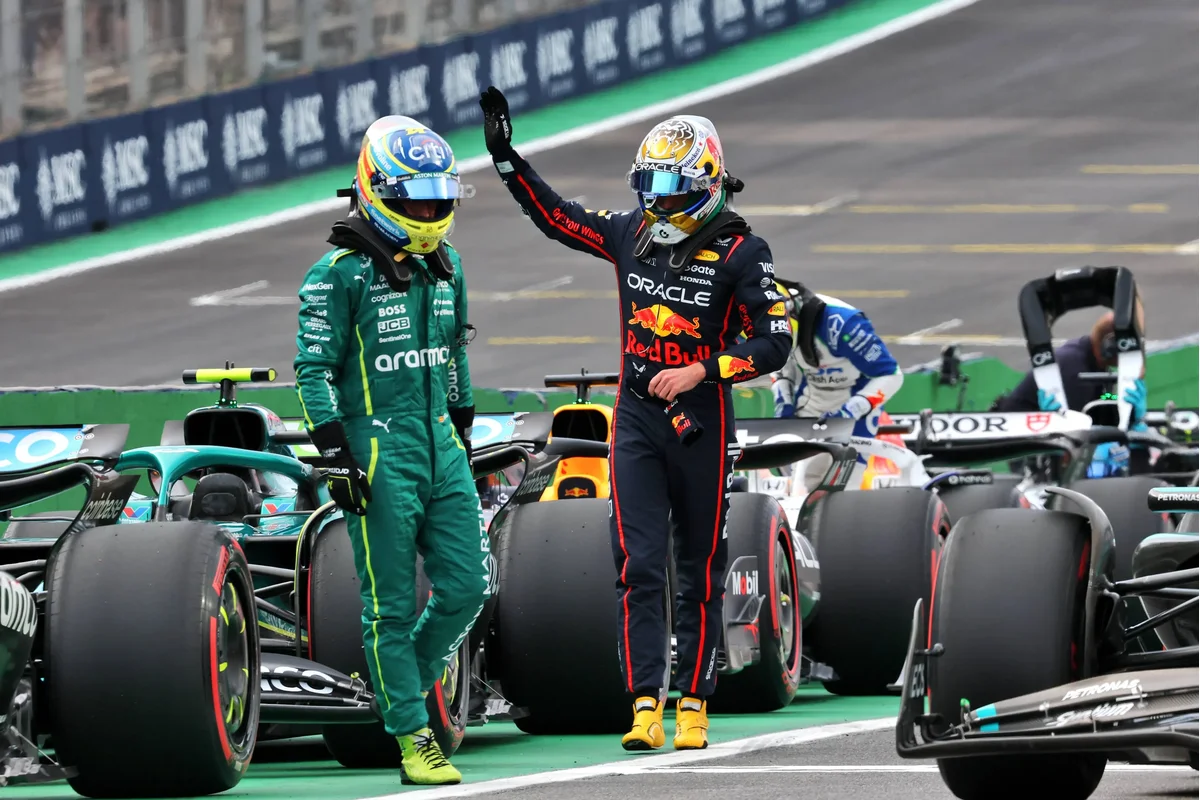
Still, Red Bull’s loss of momentum to McLaren prompted urgency within the team. As Mekies acclimated to his leadership role and technical enhancements paid dividends, Verstappen went on to win seven out of the final nine races of the season. This late surge highlighted Verstappen’s capacity to inspire and organize the team, echoing leadership qualities once seen during Michael Schumacher’s tenure with Ferrari.
Ralf Schumacher reflected on this transformation, saying,
“What has emerged from that is otherwise quite remarkable. The team has grown into a real unit, especially with Laurent Mekies and the team of engineers around Verstappen.”
– Ralf Schumacher, Former F1 Driver. The unity within Red Bull Racing became a driving force behind Verstappen’s late-season victories and his dominance over teammates such as Yuki Tsunoda and Liam Lawson.
The “Michael Gene” and Verstappen’s Legacy
Beyond technical prowess, Verstappen’s influence goes deeper. Ralf further emphasized Verstappen’s intangible qualities by remarking,
“Max has been able to bring that extra something, that skill and that aura that Michael also had.”
– Ralf Schumacher, Former F1 Driver. These attributes—poise under pressure, unifying leadership, and the ability to bring out peak performance in both himself and his team—have reignited debates about whether Verstappen could become the new torchbearer of Schumacher’s legacy.
While Verstappen continues to evolve as a driver and leader in Formula 1, speculation mounts about whether he will rise to the status of being the true heir to Michael Schumacher’s throne or will be remembered as just another exceptionally gifted driver. The Dutch driver’s recent surge and clear demonstration of championship qualities signal that the Max Verstappen Schumacher comparison is no longer just a talking point but a compelling narrative shaping the future of Formula 1.
