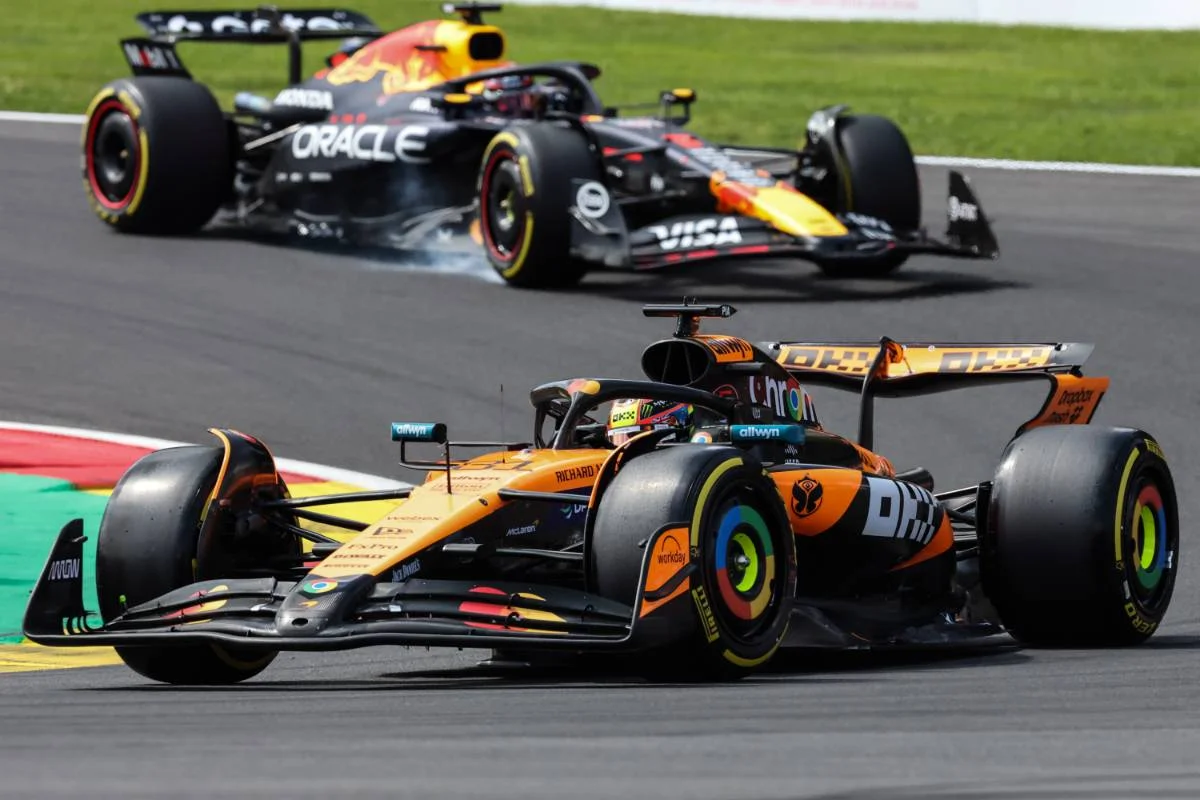
Max Verstappen, now a four-timeFormula 1 World Champion, made a groundbreaking entrance into the sport in 2015 as its youngest-ever competitor, racing for Red Bull’s junior team at the Australian Grand Prix. At just 17 years and 166 days old, Verstappen skipped the traditional path through Formula 2, fast-tracking directly to F1, a move that shaped the future of FIA super licence regulations.
Although Verstappen’s first race ended prematurely due to an engine failure, the bold decision to place a teenager in a top-tier event triggered a re-evaluation of the rules governing driver eligibility, a consequence still felt in F1 today through regulatory reforms designed to balance youthful talent with safety and experience.
Laurent Mekies Explains FIA’s Reaction to Verstappen’s Early F1 Entry
Laurent Mekies, the current Red Bull Racing team principal, revealed the significant influence Verstappen’s early debut had on the FIA’s approach to driver licensing. Mekies, with a long career starting as a race engineer for Minardi in 2002 and later chief engineer at Toro Rosso, witnessed firsthand the circumstances surrounding Verstappen’s arrival.
Before joining Red Bull‘s leadership, Mekies transitioned to the FIA, where Verstappen’s entry as a 16-year-old prodigy spurred a major revision of the super licence system. Reflecting on this period, Mekies said:
Image of: Max Verstappen
“I moved to the FIA and because of Max we completely had to rethink the super license systems. Obviously you never have only one reasons to to do such a deep work but it was very much a strong trigger of it.”
—Laurent Mekies, Red Bull Racing Team Principal
FIA’s Age and Experience Criteria Updated After Verstappen’s Debut
Following Verstappen’s debut, the FIA increased the minimum age to obtain a super licence, an essential qualification any driver needs to participate in an F1 event. This safety-driven move aimed to ensure that drivers had accumulated sufficient experience before stepping into the sport’s highest tier. The decision reflected concerns over maturity and preparedness, particularly after witnessing such a young driver compete at the pinnacle of motorsport.
However, in 2024, the FIA partially reversed this age restriction. They introduced a clause allowing drivers as young as 17 to obtain a super licence at the sole discretion of the governing body, provided they have demonstrated exceptional ability and maturity in lower formula competitions. This change shows the FIA’s willingness to balance safety with recognition of extraordinary talent.
The updated provision states:
“at the sole discretion of the FIA, a driver judged to have recently and consistently demonstrated outstanding ability and maturity in single-seater formula car competition may be granted a Super Licence at the age of 17 years old.”
—FIA ruling on super licence requirements
Red Bull’s New Junior Star Follows Verstappen’s Pathway
In a full-circle moment, Red Bull recently sought a similar exemption for their young prospect Arvid Lindblad. The team requested special dispensation for Lindblad to receive a super licence despite being below the typical age limit. In June 2025, the FIA granted this request, reflecting the legacy of Verstappen’s trailblazing entry into F1.
Seventeen-year-old Lindblad debuted at the British Grand Prix, sharing the track during the first practice session (FP1) with Verstappen, who remains Red Bull’s lead driver. Lindblad’s early involvement highlights how Verstappen’s impact on FIA regulations continues to shape the integration of promising young talent into Formula 1.
Long-Term Effects on Formula 1 and Talent Development
Max Verstappen’s rise from a teenage rookie to a dominant world champion is a landmark story in Formula 1 history, but his early F1 debut forced the FIA to reconsider protocols designed to protect drivers and ensure competitive standards. The regulatory changes following Verstappen’s entry have since influenced how teams nurture and accelerate young drivers.
Beyond rule changes, Verstappen’s debut underscored the evolving nature of Formula 1, where exceptional talent can demand flexibility in rigid systems. This evolution has opened doors for other young drivers, such as Lindblad, to break into the sport earlier than previously allowed, provided they meet the stringent criteria set by the FIA.
As Formula 1 moves forward, balancing safety, experience, and raw talent will remain a challenge for regulators and teams alike, but Verstappen’s impact shows that exceptions can spark positive change in how the sport attracts and manages its future stars.