
Max Verstappen has expressed his desire for Formula 1 to revert to the lighter and smaller cars seen in the late 2000s and early 2010s when the sport introduces new regulations in the 2026 season. He believes that adopting elements from those earlier designs will improve racing quality and address current challenges with overtaking and car size.
The 2026 season will feature significant modifications to the chassis and powertrain rules, including smaller cars equipped with active aerodynamics and a power unit split evenly between combustion and electric power. These technical adjustments aim to counteract the trend of increasingly large F1 cars, which Verstappen argues have hindered closer competition on track.
Challenges and Aspirations for Engine and Car Design
Verstappen emphasized that to return to lighter cars, the engine regulations must also change, as current engines, though highly efficient, contribute to larger car sizes due to their dimensions and cooling needs. The cars now require more substantial cooling systems, making them longer and heavier.
“What is the most important is lighter cars, smaller cars,”
said Verstappen, highlighting the link between engine design and vehicle weight.
He further suggested that a car resembling those from around 2010, when naturally aspirated V8 engines were standard and cars weighed roughly 180kg less, would benefit the quality of racing.
“I think if we can get a similar type of car like they were in the 2010 era, or even before, that would be nice, because I think it will help the racing. But at the end of the day, I’m not the one deciding.”
—Max Verstappen, Red Bull Racing
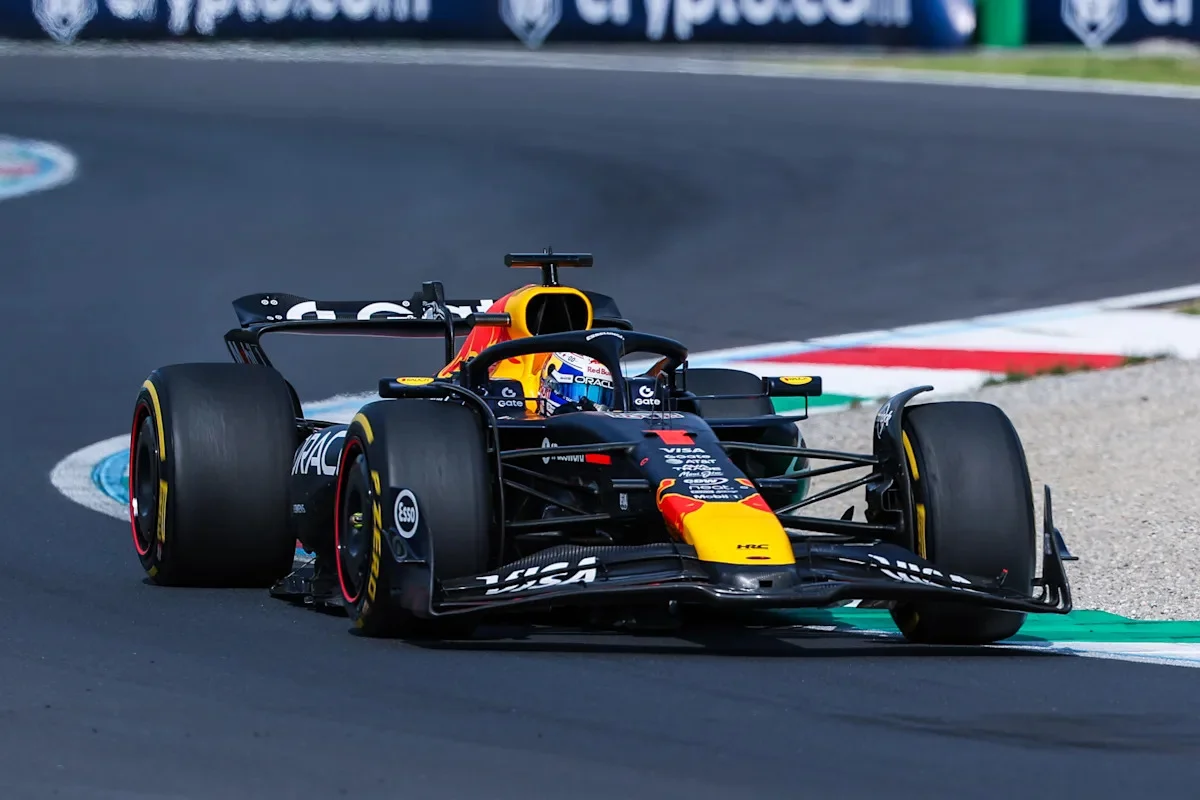
Red Bull’s Upcoming Engine Development Amid Regulatory Uncertainty
Red Bull Racing faces the additional difficulty of developing its own power unit for the first time in 2026 after previously relying on Honda since 2019, and before that on Renault, Ferrari, and Cosworth. This transition adds uncertainty about the team’s competitiveness, especially as some expect the new regulations to favor Mercedes, which is viewed as having a strong engine program.
Verstappen remained cautious about making predictions, noting the complexity of the forthcoming season and the lack of clear indicators regarding team performance.
“It’s a big question mark, for sure, but honestly I think there are not many people that can say right now, ‘yes, we are going to be really, really good’,”
he said.
He acknowledged the difficulty of the challenge Red Bull faces in combining their own engine with an entirely new car but also described it as an exciting opportunity that could allow Red Bull to be less reliant on external engine suppliers.
“I know it’s a big challenge what we are doing, with also bringing our own engine, but it’s also quite an exciting challenge. It also gives us the best opportunity of being competitive instead of being dependent on another car manufacturer that is willing to give us an engine.”
Anticipating a Difficult Start to the 2026 Season
The new regulations present technical complexities that will require teams to integrate their power units with the car chassis carefully. Verstappen anticipates that the opening races will be demanding as teams adapt to these changes.
“I think the first few races will be very challenging for everyone to integrate everything very well, from the power unit to the car and the behaviour in general, so hopefully it can give you some interesting races.”
Significance of Regulation Changes for Formula 1’s Future
The push towards lighter, smaller cars is part of Formula 1’s ongoing efforts to make racing closer and more exciting by enabling easier overtaking and reducing aerodynamic turbulence. Verstappen’s comments reflect widespread concern about the current generation of larger cars impeding race quality. The introduction of active aerodynamics and a new power unit formula aims to create a more sustainable and competitive future for the sport.
How well teams like Red Bull, Mercedes, Ferrari, and others adapt to these technical changes will shape the championship dynamics as the 2026 season unfolds, with the complexity of integrating new engines and chassis designs likely to produce unpredictable results early on.
