
Max Verstappen has once again become the center of attention following the Austrian Grand Prix, where fresh rumors of a possible move away from Red Bull have surfaced. The reigning four-time world champion, facing an unexpectedly difficult season, appears to be exploring options beyond his current team.
This season has tested Verstappen’s usual dominance as mechanical and performance issues with the Red Bull RB21 have challenged the driver’s winning streak, fueling speculation that he might seek new opportunities elsewhere within the Formula 1 paddock.
Mercedes Interest in Verstappen: A Strategic Move for the 2027 Season?
Amid ongoing frustrations at Red Bull, reports have emerged about conversations between Max Verstappen and Mercedes team principal Toto Wolff. These exchanges have ignited conjecture that Verstappen could join the Brackley-based squad in the future.
Mercedes currently fields George Russell and rookie Kimi Antonelli, both contracted only through the end of this year. Russell, a product of Mercedes’ junior program, is enjoying the most successful stage of his career, having solidified his role as the team’s lead driver. Antonelli is demonstrating promise as a developing talent in his debut season with the team.
From a performance perspective, neither driver’s seat appears in immediate jeopardy since both have delivered strong results, with Russell notably taking on leadership responsibilities with ease. Nevertheless, the expiration of their contracts keeps the door open for driver lineup changes after 2024.
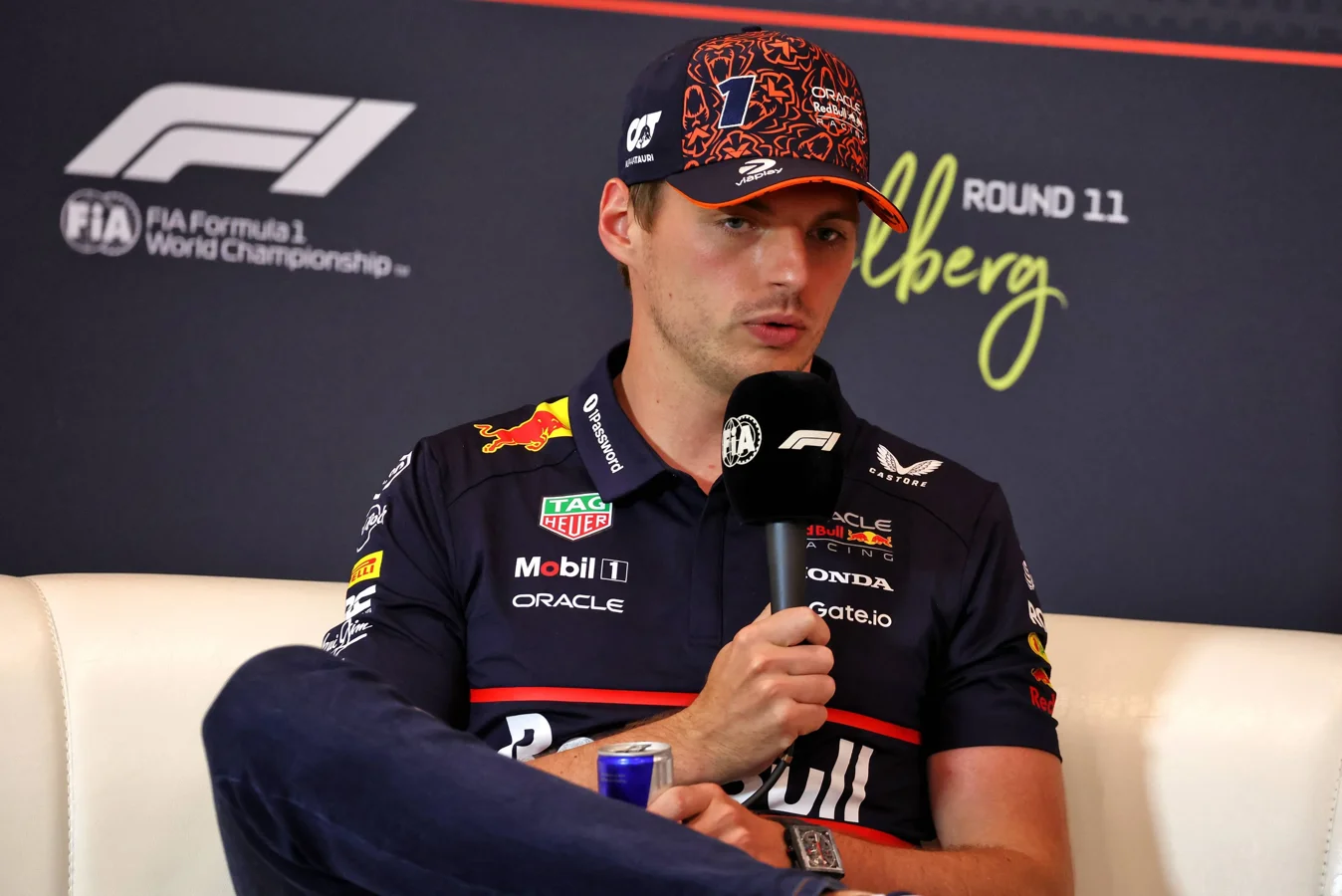
Any direct negotiations or exploratory talks between Wolff and Verstappen’s camp remain largely confidential, leaving room for interpretation and fueling media speculation.
“It’s only normal that conversations with the likes of Verstappen are ongoing,”
George Russell commented.
“But from my side, if I’m performing as I’m doing, what have I got to be concerned about? There are two seats in every Formula 1 team.”
—George Russell, Mercedes Driver
Some question why Verstappen would engage with a rival team despite holding a long-term contract with Red Bull. A plausible explanation is that these talks serve as strategic maneuvers, influencing leverage for contract negotiations across multiple parties.
Linking Verstappen to Mercedes potentially affects contract discussions with Russell and Antonelli, especially bolstering Russell’s bargaining position by injecting uncertainty into Mercedes’ driver plans. Concurrently, Verstappen’s rumors of departure from Red Bull could strengthen his position for a renegotiated deal, despite the Dutch driver’s current contract running until the end of 2028.
Verstappen has not yet met the performance threshold required to activate any exit clauses, reportedly needing to fall below fourth place in the driver standings after the Hungarian Grand Prix to do so.
Red Bull and Mercedes Leaders Respond to Transfer Speculation
Christian Horner, Red Bull’s team principal, has downplayed the rumors surrounding Verstappen’s future, dismissing them as external noise. He emphasized confidence in the current contractual situation and the driver’s commitment to the team.
“We know what the situation is with Max,”
Horner stated.
“We know what the contracts are with Max, and the rest is all noise that’s not coming from here.”
—Christian Horner, Red Bull Team Principal
Meanwhile, Verstappen’s manager, Raymond Vermeulen, is likely engaging with teams across the grid as part of his duties to safeguard his client’s interests ahead of the looming changes to F1 regulations.
With the sport on the cusp of sweeping technical adjustments in aerodynamics and power unit specifications next season, the competitive landscape promises significant upheaval. As such, proactive discussions about future options and team strategies are natural as drivers and managers prepare for an uncertain era.
Why Red Bull’s New Power Unit Project Adds Complexity to Verstappen’s Options
Red Bull’s recent decision to develop its own power unit after Honda’s withdrawal from Formula 1 adds another layer of complexity. Competing against established manufacturers like Honda, Ferrari, and Mercedes, who have deep pedigrees and substantial resources, Red Bull faces an uphill battle in maintaining an engine advantage.
The success of this new engine program remains unknown, making it risky for Verstappen to commit early to a long-term future when team competitiveness in 2026 is not guaranteed. This context supports the idea that Verstappen’s discussions with other teams could be a measure to keep future avenues open rather than an immediate plan to leave.
Experts consider it more sensible for Verstappen to delay any major decisions until after the 2026 season, when the performance order shaped by the new regulations becomes clearer.
Exploring Options Beyond 2026 Could Be a Tactical Approach
It is plausible that current talks involving Verstappen and Mercedes are not aimed at a 2026 transfer but are exploratory discussions about the 2027 season and beyond. The existence of performance clauses in contracts suggests that if Red Bull fails to deliver competitiveness next year, Verstappen could become a free agent and able to negotiate moves.
Encouraging transparency within Mercedes, Toto Wolff has acknowledged the need to explore future scenarios within the sport, while reaffirming his satisfaction with the current driver lineup.
“People talk, people explore and most important is that in our organisation we are transparent, but it doesn’t change a millimetre of my opinion of George, his abilities or anything else,”
Wolff said.
“But it doesn’t change anything of what I said before, about George or about Kimi or about the line-up that I’m extremely happy of having.”
—Toto Wolff, Mercedes Team Principal
Notably, this is not the first time Verstappen’s future has been linked with a move away from Red Bull. Earlier in 2024, rumors connected him with Aston Martin, especially around the Saudi Arabian Grand Prix, where reports suggested he was close to joining the Silverstone-based team on a lucrative deal.
As with the Mercedes situation, those talks likely reflect strategic information gathering rather than a guaranteed transfer, helping Verstappen’s camp assess all potential opportunities well in advance.
The Implications of This Rumored Driver Shuffle in Formula 1
The unfolding rumors about Max Verstappen’s potential transfer to Mercedes highlight the uncertainty surrounding driver contracts and team lineups as Formula 1 moves toward a period of significant change. With contracts of key Mercedes drivers expiring soon and Red Bull’s new engine project yet to prove itself, a realignment of top drivers for 2027 remains possible.
Should Verstappen shift teams, it would represent one of the sport’s biggest moves, shaking the grid’s structure and intensifying competition. Yet for now, these discussions primarily serve as tactical positioning rather than confirmation of imminent change.
As the 2026 season unfolds and teams’ competitiveness becomes clearer under new regulations, fans and insiders alike will closely watch developments surrounding Verstappen’s status and the broader driver market.
Related coverage: Max Verstappen Mercedes Transfer Rumors 2 · Max Verstappen Mercedes Transfer Rumors 3
