
Max Verstappen’s new F1 arch nemesis rivalry is intensifying as George Russell emerges as the leading challenger in the 2025 season, signaling a shift away from the longstanding tension between Verstappen and Lewis Hamilton. Since 2021, when Verstappen and Hamilton clashed fiercely for the world championship, the landscape of Formula 1’s rivalries has evolved notably. This change comes amid Verstappen’s continued dominance and Hamilton’s struggle to remain competitive.
Verstappen first earned his place among Formula 1’s legendary rivalries by battling the seven-time world champion Hamilton in 2021, a season marked by numerous collisions and last-lap drama. However, following Mercedes’ decline in performance starting in 2022, the intense Hamilton-Verstappen rivalry faded as the Dutchman claimed clear control, leaving Hamilton unable to seriously challenge until mid-2024. With Ferrari’s current resurgence failing to offer Hamilton a path back to winning races, Verstappen’s primary competitor has quietly shifted.
Understanding the Rising Tensions Between Verstappen and Russell
The friction between Max Verstappen and George Russell first became public during the 2024 Qatar Grand Prix, after an on-track impeding incident escalated into a heated media dispute. Although Verstappen initially secured pole, he was penalized with a grid drop for driving too slowly on his cooldown lap, obstructing Russell and thereby handing the pole position to the Mercedes driver.
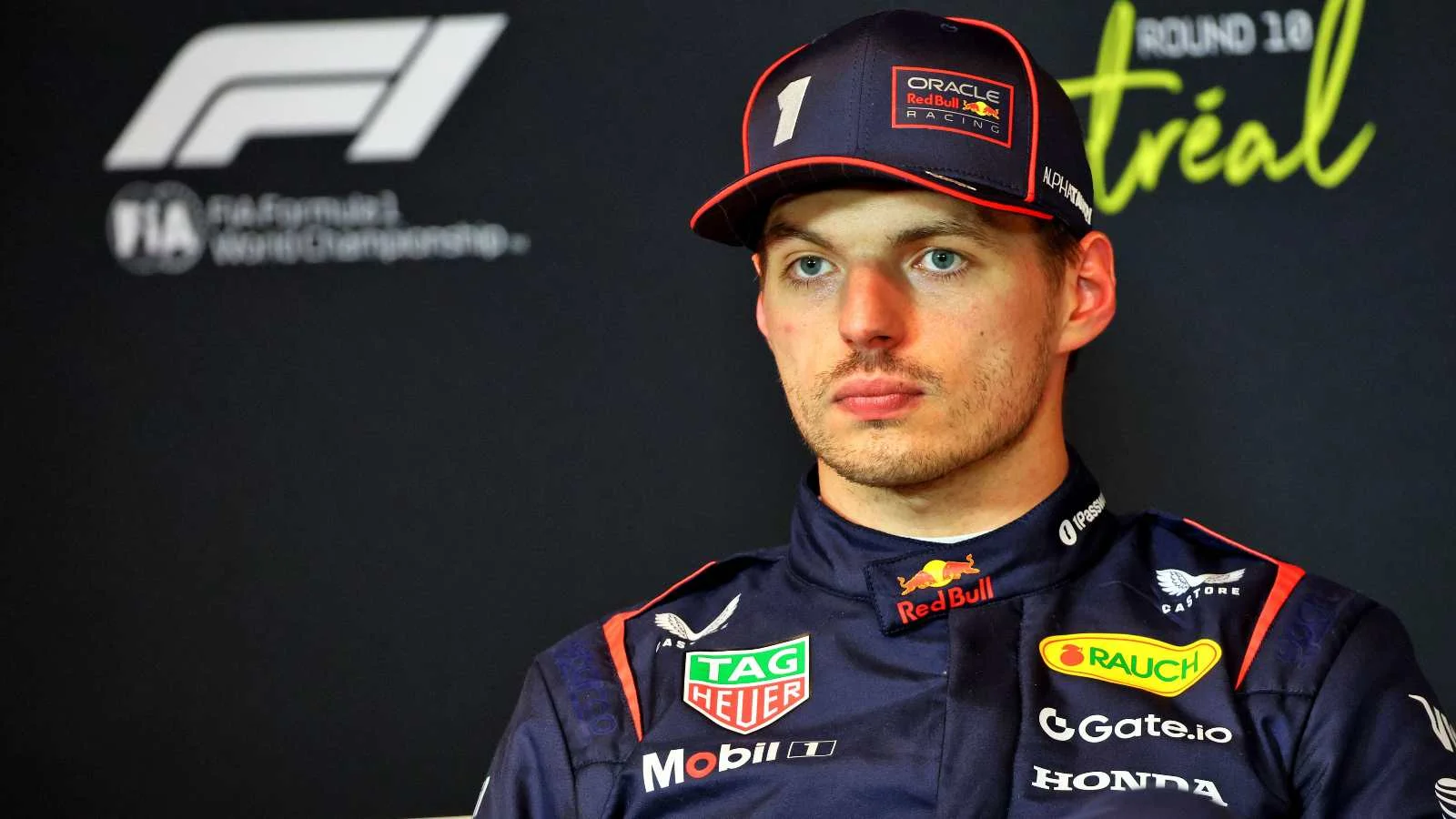
Following the penalty, Verstappen openly criticized Russell’s actions in the stewards’ room, accusing him of ‘screwing him over’ and branding him ‘two-faced.’ Russell swiftly responded by pointing out the irony and highlighted Verstappen’s aggressive language, including threats to ‘put me on my f***ing head in the wall.’
Russell also compared Verstappen’s attitude to a bully, saying,
“You can’t question his driving ability but he cannot deal with adversity.”
He added,
“When anything has gone against him – Jeddah ‘21, Brazil ’21 – he lashes out. Budapest this year, the very first race the car wasn’t dominant, crashing into Lewis, slamming his team.”
—George Russell, Mercedes Driver
Verstappen fired back by calling Russell a ‘backstabber’ for leaking their private conversations. The public feud deepened as fans analyzed every interaction, noting that the two drivers kept their distance even at the end-of-season Abu Dhabi drivers’ meal.
Clashes Continue Amid Mixed Attempts at Reconciliation
Despite speculation that the rivalry might soften heading into 2025, tensions flared again early in the season. At the Spanish Grand Prix, Verstappen deliberately collided with Russell, an act the FIA confirmed was intentional. The Dutch driver received a 10-second time penalty and three penalty points for his aggressive move, leaving Russell visibly confused in the post-race interview.
Unlike previous incidents, the verbal exchanges were fewer but no less pointed. Russell labeled Verstappen as a bad role model for children, to which Verstappen coolly replied,
“I’ll bring some tissues next time,”
a remark interpreted by some as a dry joke given the hayfever season.
Remarkably, Verstappen later accepted responsibility for the collision, an uncommon admission from the champion. By the time they reached Montréal-Pierre Elliott Trudeau International Airport, the two appeared on amiable terms again—at least publicly.
What the New Rivalry Means for Formula 1’s Competitive Future
The rise of George Russell as Max Verstappen’s chief rival signals a fresh chapter in Formula 1’s history of dramatic competition. With Lewis Hamilton currently unable to challenge consistently, this rivalry could redefine the sport’s narrative as 2025 unfolds. The intensity between Verstappen and Russell promises to keep fans captivated, bringing a dynamic blend of high stakes, on-track battles, and off-track tensions.
While the feud draws comparisons to past iconic duels, the heated exchanges and frequent clashes imply this rivalry carries a particularly strained and restless energy. How the rivalry evolves will likely influence team strategies, driver mindsets, and the sport’s broader appeal over the coming seasons, making it a storyline to watch closely.
