
Max Verstappen physical demands F1 racing came into sharp focus as former driver David Coulthard shared his experience competing against the four-time world champion. Two years ago at Imola, Coulthard found himself significantly slower than Verstappen during a timed lap, highlighting how physically taxing and technically demanding driving a Formula 1 car can be even for experienced racers.
Coulthard recently recounted on the Indo Sports Podcast that racing in Formula 1 pushes drivers to limits few can reach. He reflected on the difficulties that an average person would face attempting to match the precision and pace required, emphasizing the intense physical nature of the sport.
During the conversation, Coulthard shared a story emphasizing Verstappen’s exceptional skill and fitness:
“And that’s being incredibly kind. And when I say the average person, that includes me nowadays! Two years ago, I did a filming for a little feature where we were at Imola and I went around the track in the RB7, which would have been the Sebastian Vettel V8 World Championship car.” —David Coulthard, former F1 driver
“I did one timed lap, on a track that I’ve won the grand prix in ’98, and then Max jumped in the car and he did one flying lap. I was five seconds slower. Now I was actually reasonably happy with that, because I hadn’t been around Imola for more than a decade or more.” —David Coulthard, former F1 driver
This anecdote demonstrates not only Verstappen’s skill but also the extensive physical conditioning required to handle the rigorous circuits, particularly those like Imola with challenging elevation changes and demanding chicanes.
Max Verstappen’s Perspective on the Physical Strain in Formula 1
Max Verstappen has openly discussed how physically taxing Formula 1 can be for drivers during races. Known for his resilience and consistency, the Dutch driver detailed the specific aspect of physical endurance that poses the greatest difficulty behind the wheel.
In a 2023 interview with Via Play, Verstappen was asked about the complaints drivers frequently make regarding the sport’s physical demands. This question gained particular relevance after 2021 Formula E champion Nyck de Vries mentioned to his race engineer that he would need assistance exiting his car following his initial F1 race with Williams Racing.
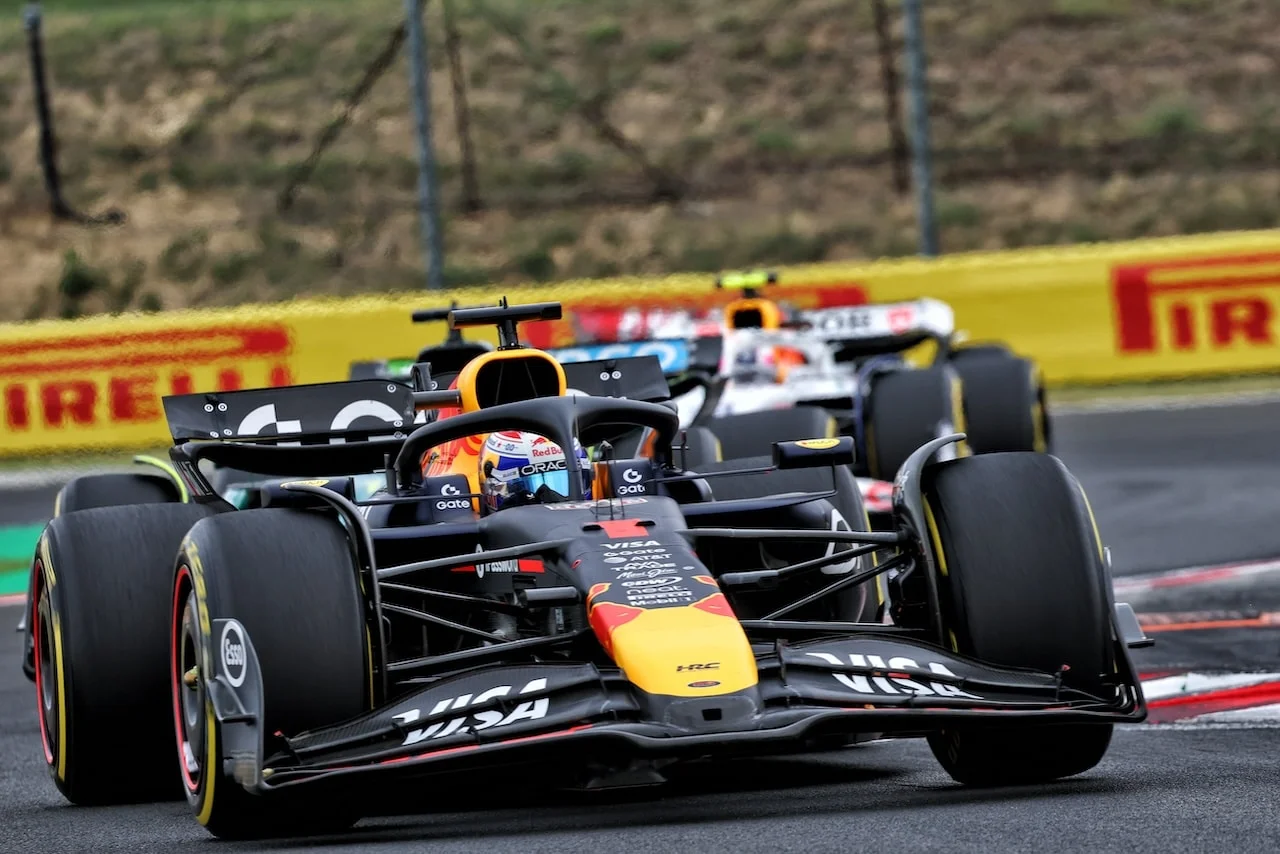
Verstappen pointed out that the hardest part is maintaining control of the neck muscles throughout a race, given the extreme G-force drivers endure on every corner. He explained:
“For me, the worst is if you cannot hold up your neck, your head, if you are struggling a lot with your neck, that is the worst. The rest you can compensate a bit, but if you’re going through a corner and your head [feels like it is] falling off, that is very tough.” —Max Verstappen, Red Bull Racing driver
Despite rigorous training focused on strengthening neck muscles, even elite drivers can suffer from neck-related issues. Kevin Magnussen, for example, has experienced significant neck problems, underscoring how physically demanding F1 racing remains.
The Physical Fitness Behind F1 Performance
Formula 1 drivers endure incredible physical strain during races, requiring them to maintain peak fitness levels year-round. The extreme G-forces during fast corners demand strong neck and core muscles, alongside cardiovascular endurance to sustain high levels of concentration and control.
The story of Coulthard’s lap comparison with Verstappen highlights the extraordinary demands a driver faces, showing how world-class competitors must combine technical skill and superior physical conditioning to excel.
Max Verstappen‘s remarks reinforce that while many factors influence race outcomes, the ability to endure and manage one’s physical condition under pressure often separates the best from the rest.
Implications for the Future of F1 Training and Racing
As drivers continue pushing the limits of speed and performance, the physical demands they face are likely to increase, prompting teams and athletes to develop even more specialized training regimens. Verstappen’s insights emphasize the critical role of physical resilience in achieving success on the track.
The stories shared by Coulthard, Verstappen, and others illustrate how advances in fitness and technique go hand in hand with engineering improvements, shaping the future of Formula 1 competition at the highest level.
