
Max Verstappen now stands one penalty point away from a race ban following a high-profile collision with George Russell during the Formula 1 Spanish Grand Prix. The incident, which occurred late in the race after a safety car period, resulted in Verstappen receiving a 10-second time penalty and three penalty points on his FIA superlicence, bringing his total to 11 points for the season. This puts the Dutch driver at risk of suspension if he incurs another penalty before the end of June, raising concerns about the potential impact on his championship campaign.
Consequences of the Spanish GP crash and race penalties explained
The penalty issued for the incident caused Verstappen to drop from his finishing position to tenth place in the race standings. With Formula 1 regulations stipulating that accumulating 12 penalty points within a 12-month period triggers an automatic one-race ban, Verstappen is now on the brink of missing a future Grand Prix. Despite this pressure, former Formula 1 driver Johnny Herbert believes Verstappen’s approach on track will not significantly change in response to the looming threat.
Johnny Herbert’s assessment of Verstappen’s mentality amid penalty pressure
According to Johnny Herbert, the risk of a race ban is unlikely to alter Verstappen’s driving style. Herbert emphasized that a single penalty point could come from a small error but will not deter Verstappen from racing aggressively.
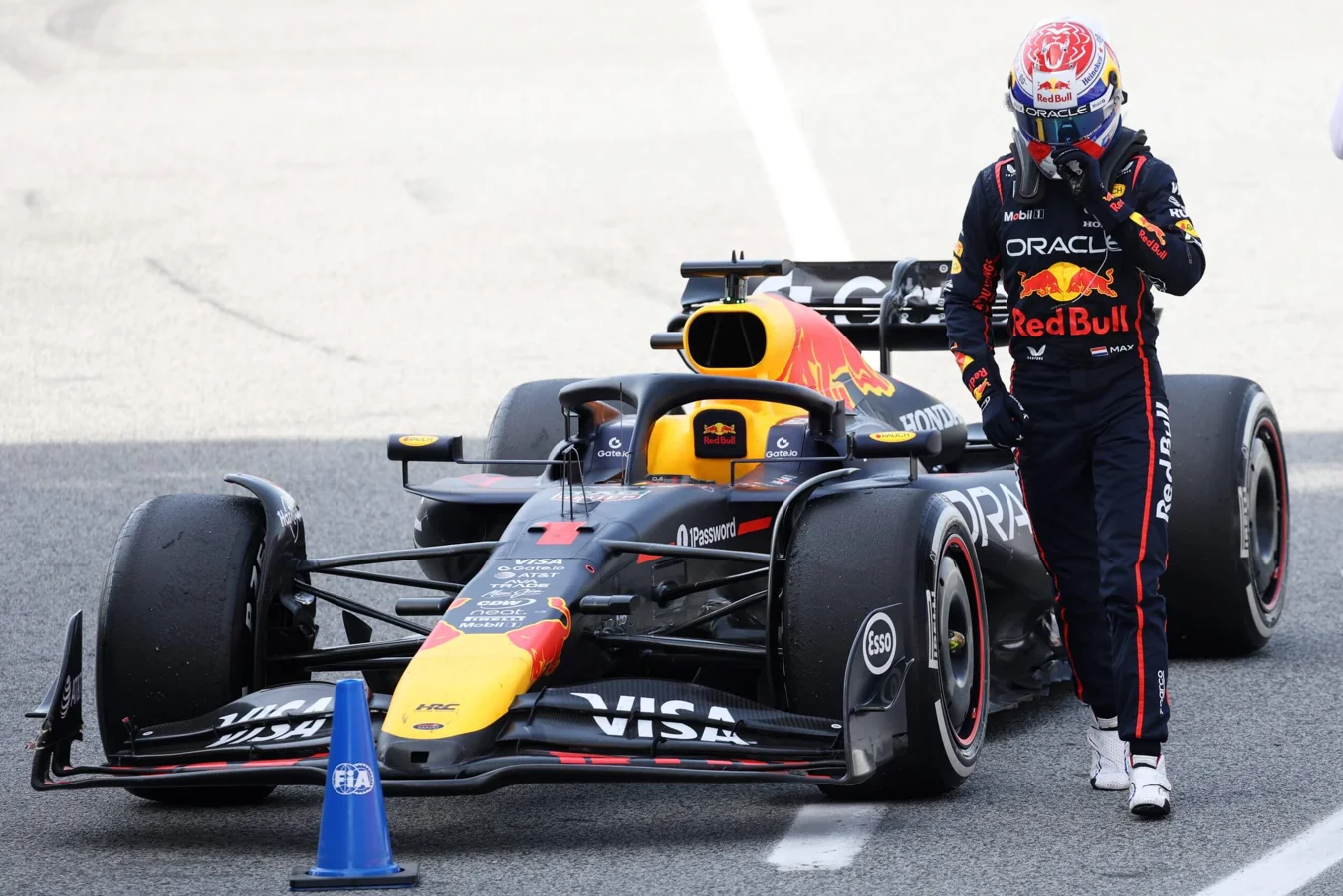
“You’ve got to think about the penalty point situation, one point can be from very simple error of judgement,”
Herbert said.
That one penalty point from being banned will be on his mind [but] it will not change the way he’s driving.
—Johnny Herbert, former F1 driver and FIA steward
Herbert also noted Verstappen’s shift in status within races:
“For years, Verstappen has been the chased but now he’s the chaser, he’ll have to be slightly more measured. Those little moments of aggression will have to be controlled.”
He described the Red Bull driver as the smartest competitor on the grid, capable of bending racing rules to his advantage, but warned that Verstappen may need to reconsider his tactics for upcoming events such as the Canadian and Austrian Grands Prix.
Calls for stricter enforcement and disqualification in severe incidents
While Herbert acknowledges Verstappen’s talent and racecraft, he argues that the penalties imposed for the Spanish GP clash were too lenient and suggested that disqualification would have been more appropriate to send a clear message. He cautioned that recurring aggressive behavior should face harsher sanctions to prevent dangerous racing.
“Max Verstappen deserved a black flag and should have been disqualified,”
Herbert declared.
There’s a point where you have to be hard on the driver when there have been many of these types of incidents. Verstappen is the best driver on the track, with the best racecraft and judgement, but there is always a story with him.
That type of racing should not happen, if it does happen, the penalty should be harsher to stamp it out. It can’t just be a 10-second penalty, otherwise you’re treating it like any other racing incident.
—Johnny Herbert, former F1 driver and FIA steward
Formula 1 stewards have several options for penalizing drivers, ranging from time penalties to more severe drive-through or stop-go penalties, both of which would have pushed Verstappen out of points-scoring positions. In more extreme circumstances, such as the disqualification of Romain Grosjean for causing a major first-lap crash at the 2012 Belgian Grand Prix, race bans or disqualifications are used to enforce safety and fairness.
Implications for Verstappen’s championship bid and future races
The impending threat of a race ban hangs over Verstappen’s season, introducing extra tension into an already fiercely competitive battle for the drivers’ championship. Despite this, Herbert’s analysis suggests that Verstappen will continue to drive assertively, possibly requiring intervention from race officials with stiffer penalties to curb risky behavior. The next few races, particularly in Canada and Austria, may prove pivotal in determining whether Verstappen maintains his aggressive approach or adjusts his tactics to avoid suspension.
