
Ford CEO Jim Farley has stressed that Max Verstappen is a crucial figure in Red Bull-Ford’s effort to develop the new power unit for Formula 1’s 2026 regulations. This partnership aims to create a competitive engine that can challenge established manufacturers when the updated F1 rules take effect.
The collaboration between Red Bull Powertrains and Ford is focused on building the power unit for 2026, a year expected to significantly shift the competitive balance within the sport. Traditionally dominant teams like Mercedes are confident about their next engine, but Red Bull aims to close the gap with Verstappen playing an integral role in that process.
Verstappen’s Role in Red Bull’s Technical Partnership with Ford
Currently, Red Bull uses Honda engines, but from 2026 onward, Honda will supply only Aston Martin. Red Bull’s powertrain future depends on the new Ford collaboration, with Verstappen under contract until 2028. Farley, who recently met Verstappen at the Italian Grand Prix in Monza, highlighted the Dutch driver’s importance to the project.
“I think this is one of the most important pillars of foundation for the PU (power unit) success,”
Farley told Sky Sports News.
Farley praised Verstappen’s growing maturity and calmness during the 2023 season, noting that the driver provides vital stability as the teams focus on engineering challenges.
“Talking to Max, we at Ford really have grown our respect for Max watching him this year. The way he has provided stability without drama in an environment where we’re all just trying to do our jobs. I can really see that in his eyes today versus last year.”
—Jim Farley, Ford CEO
Leadership Dynamics and Engineering Expertise at Red Bull
Laurent Mekies, the new Red Bull CEO and team principal, brings an engineering background that has benefited the power unit project. Mohammed replaced Christian Horner, shifting leadership toward more technical precision as Red Bull pursues its 2026 goals.
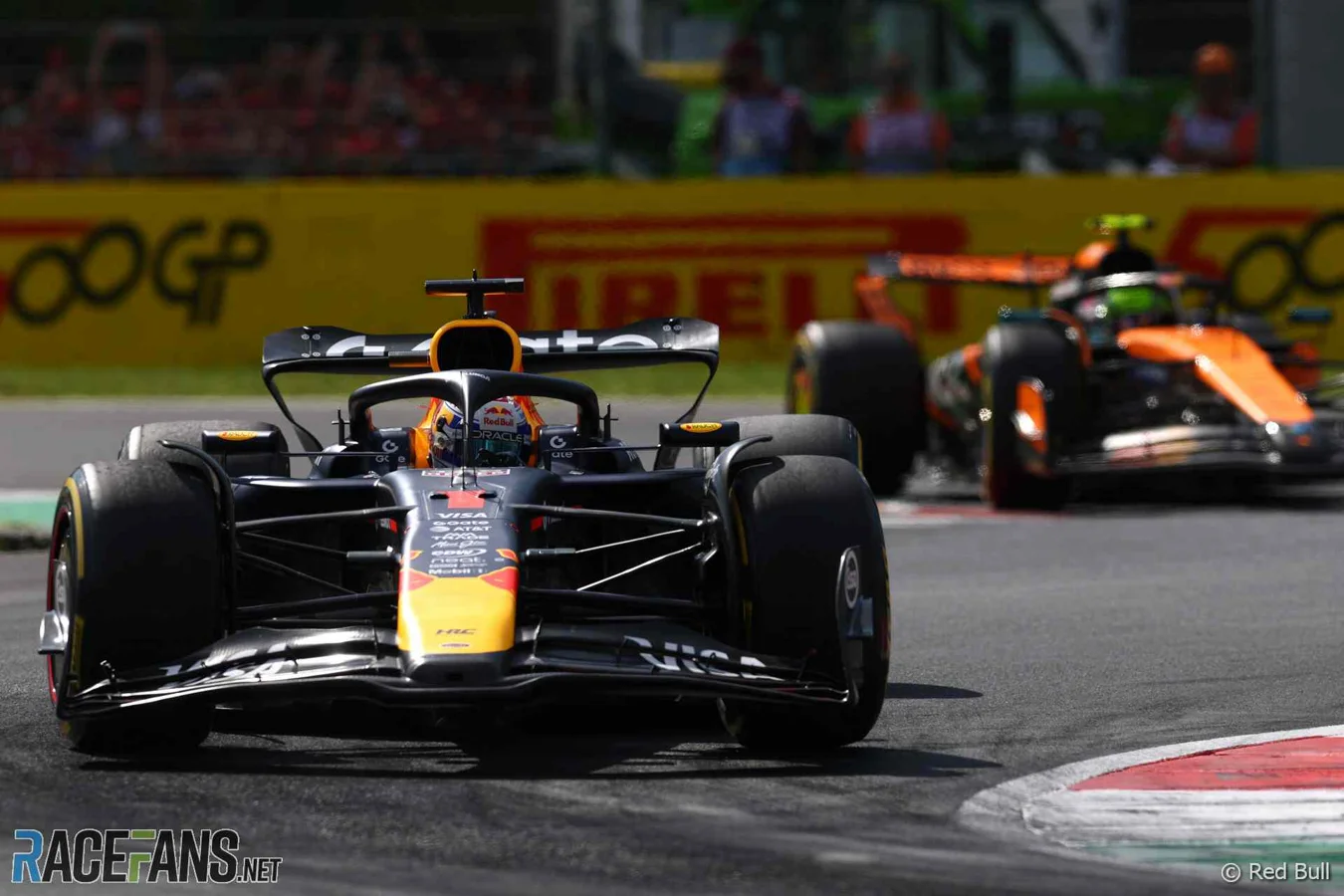
Mekies acknowledged that Verstappen contributes more than just feedback during testing seasons.
“Max is doing a lot more than just asking for the numbers. You would be surprised. Max is giving so much to the projects also outside of the car. He’s not just asking the numbers,”
Mekies explained.
“He’s testing the car in the simulators, he’s working with engineers on both sides of the fence to understand how do we develop these 2026 cars – where do we try to get the power? Where do we try to get the downforce? So that’s how central to the project he is.”
—Laurent Mekies, Red Bull CEO and Team Principal
Following Verstappen’s dominant performance in Monza, Farley emphasized Mekies’s engineering expertise as a critical asset in guiding the team through technical challenges ahead.
“He’s a technical person which is exactly right for this change in 2026. He’s absolutely the right leader. We are completely behind him and I can really feel it with the team.”
—Jim Farley, Ford CEO
Facing Established Competitors and the Scale of the Challenge
Red Bull-Ford prepares to compete against seasoned rivals including Mercedes, Ferrari, Honda, and newcomers Audi under the new engine regulations. Mercedes boss Toto Wolff described the Red Bull-Ford endeavor as comparable to climbing Mount Everest, highlighting the enormity of the task confronting a team entering with less historical experience in engine manufacturing.
“They are taking on manufacturers with decades of experience,”
Wolff remarked.
Mekies echoed this assessment, calling the project “crazy” yet well-aligned with the cultures of both Red Bull and Ford. He acknowledged the project’s infancy compared to the long histories of their rivals.
“It’s a massive undertaking to go into. We don’t know where we are to compare to the competitions,”
Mekies stated.
He added that building infrastructure, recruiting talent, and developing processes from the ground up will be demanding and time-consuming.
“We do it the Red Bull-Ford way. Therefore, we do it at a top level in every area. It’s not about who is going to be the best team in Barcelona testing in January, but it’s about who will get the project right and who will develop the project.”
—Laurent Mekies, Red Bull CEO and Team Principal
The Road Ahead for Red Bull-Ford and Verstappen
Max Verstappen’s ongoing commitment to Red Bull until 2028 is a strategic asset in ensuring continuity as the team prepares for the new era of power units. His active involvement in both simulation and technical development underscores how central he is to Red Bull’s plans to remain competitive amid shifting F1 landscapes.
As Formula 1 transitions into 2026, Red Bull-Ford faces a steep climb to challenge manufacturers with decades of motor racing and engineering prowess. The partnership’s success will depend not only on technology but also on leadership, teamwork, and Verstappen’s contributions.
The upcoming Azerbaijan Grand Prix in Baku will offer continued opportunities to assess performances, but Red Bull-Ford’s focus remains firmly fixed on mastering the complex demands of the 2026 Formula 1 power unit regulations.
