
Max Verstappen has challenged the widespread belief that Red Bull’s Formula 1 cars are built to match his unique driving style. He insists the RB21 is not specifically designed for him; instead, his success stems from his ability to adapt effectively to the car he is given.
Since 2019, Verstappen has dominated Red Bull’s Formula 1 results, winning 60 grands prix and securing four World Championships. This impressive record contrasts sharply with that of his five team-mates, who together have only five race wins and no championships during the same period.
Why the Perception of a Customized Car Exists
Verstappen’s dominant performance has fueled speculation in the paddock, particularly around the idea that Red Bull designs their cars to meet the Dutch driver’s specific requirements. His former team-mate Alex Albon described Verstappen’s preferred car setup as having an extremely sharp front end that feels “eye-wateringly sharp.”
Albon explained this sensation by comparing it to a highly sensitive video game mouse setting, where the cursor darts instantly across the screen, describing it as
“so sharp that it makes you a little bit tense.”
Despite these perceptions, Red Bull’s technical director Pierre Wache has denied any intentional tailoring of the car for Verstappen. He emphasized that the team’s focus is solely on producing the quickest car possible for all their drivers.
The Team’s Approach to Car Design
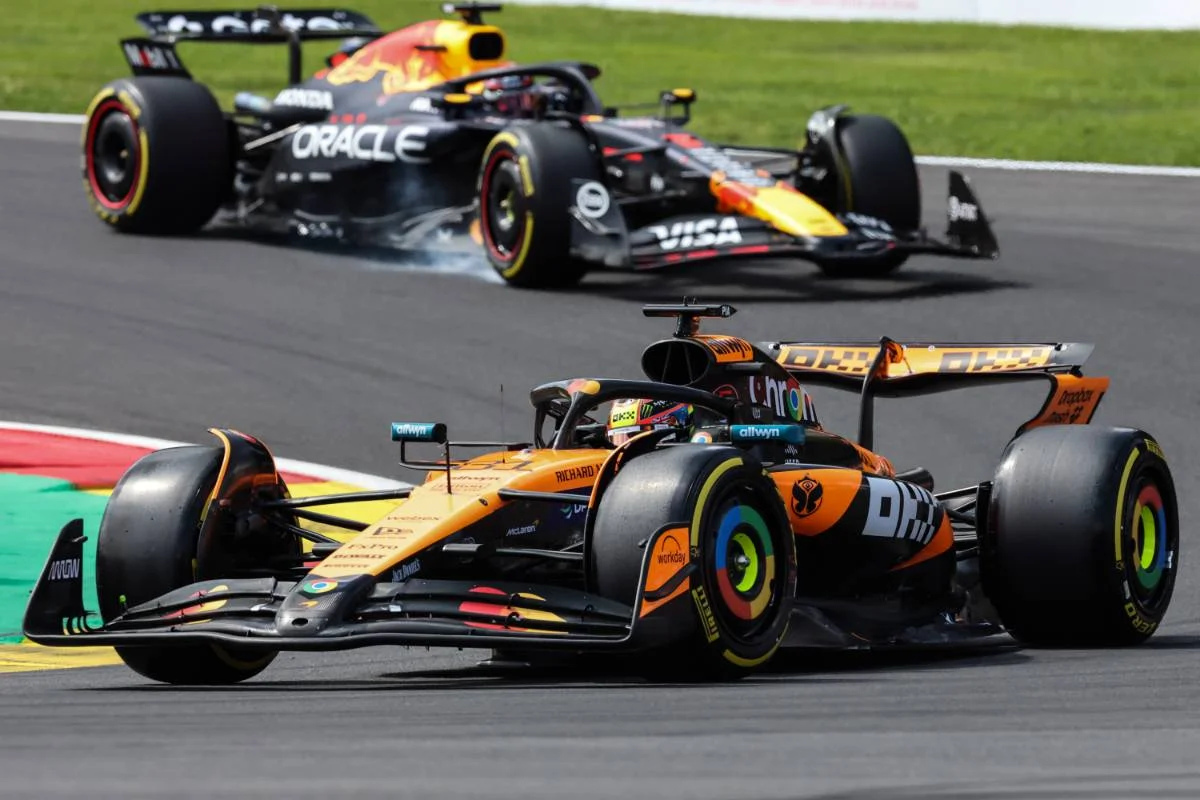
Wache clarified the design philosophy behind the RB21, emphasizing that the goal is to create a fast car rather than building around any individual driver’s preferences. He admitted that while Verstappen is able to handle a car with a less balanced feel, this choice is deliberate in pursuit of speed.
“It wasn’t our intention to develop specifically for Max,”
Wache stated.
“But as a driver he can cope with less connected balance.”
He also noted the trade-offs involved:
“To make a quick car, by definition you go towards this. You still have the possibility to create an understeery car but it would be slower. Our job is to move away from this and then use the set-up to make it quicker.”
Verstappen’s Adaptation Over Preference
During the 2024 season, Verstappen has scored 187 of Red Bull’s 194 total points, underlining his overwhelming contribution. Despite this dominance, the driver maintains that the RB21 is not the ideal car he would choose, but one to which he adapts better than his team-mates.
“I just adapt to what I’ve got. It’s not what I like, it’s just what I have,”
Verstappen said during a discussion with Chris Harris on the Ford Performance YouTube channel.
He explained that although he must tailor his driving to the car’s characteristics for maximum speed, some elements are not to his personal liking.
“I’d like different bits on the car.”
When asked if he appreciates the public recognition for his performances, Verstappen acknowledged the applause but stressed that his motivation is internal:
“Of course it does, but I’m not doing it to show the people what I’m capable of. I’m doing it because I want to be the best with myself.”
Verstappen’s Pursuit of Perfection Despite Success
Known for his relentless drive, Verstappen described himself as a perfectionist who is rarely satisfied with his efforts.
“I’m quite in that sense quite a perfectionist, it’s never good enough and if I can of course come out of the car and say to myself ‘that’s good enough’, it’s never good enough, but pretty good.”
Pressed about whether he has achieved that “pretty good” standard, he admitted:
“I’ve had a few laps that were pretty good.”
He notably cited his qualifying session at the 2024 Jeddah Grand Prix, reflecting on his impressive first run in Q3.
“I came back in the box and ‘shit’, I don’t think I can do that again. I didn’t go faster in the second run so I could do it again.”
The Implications for Red Bull and Its Drivers
Verstappen’s ability to adapt rather than rely on a tailor-made car suggests a distinctive skill set that continues to give him an edge over his team-mates. While the RB21’s design prioritizes overall speed, not personalization, Verstappen’s willingness and capacity to adjust have been vital in maintaining his success and Red Bull’s competitive edge.
As the team prepares for future seasons, understanding and leveraging this dynamic may influence car development and driver support strategies. Verstappen’s perfectionist mindset and adaptation highlight the ongoing challenges of balancing car performance with driver preferences in a sport where fractions of a second make the difference between winning and losing. The RB21’s current iteration may not be Verstappen’s ideal, but his mastery of adaptation ensures he remains at the forefront of Formula 1.
