
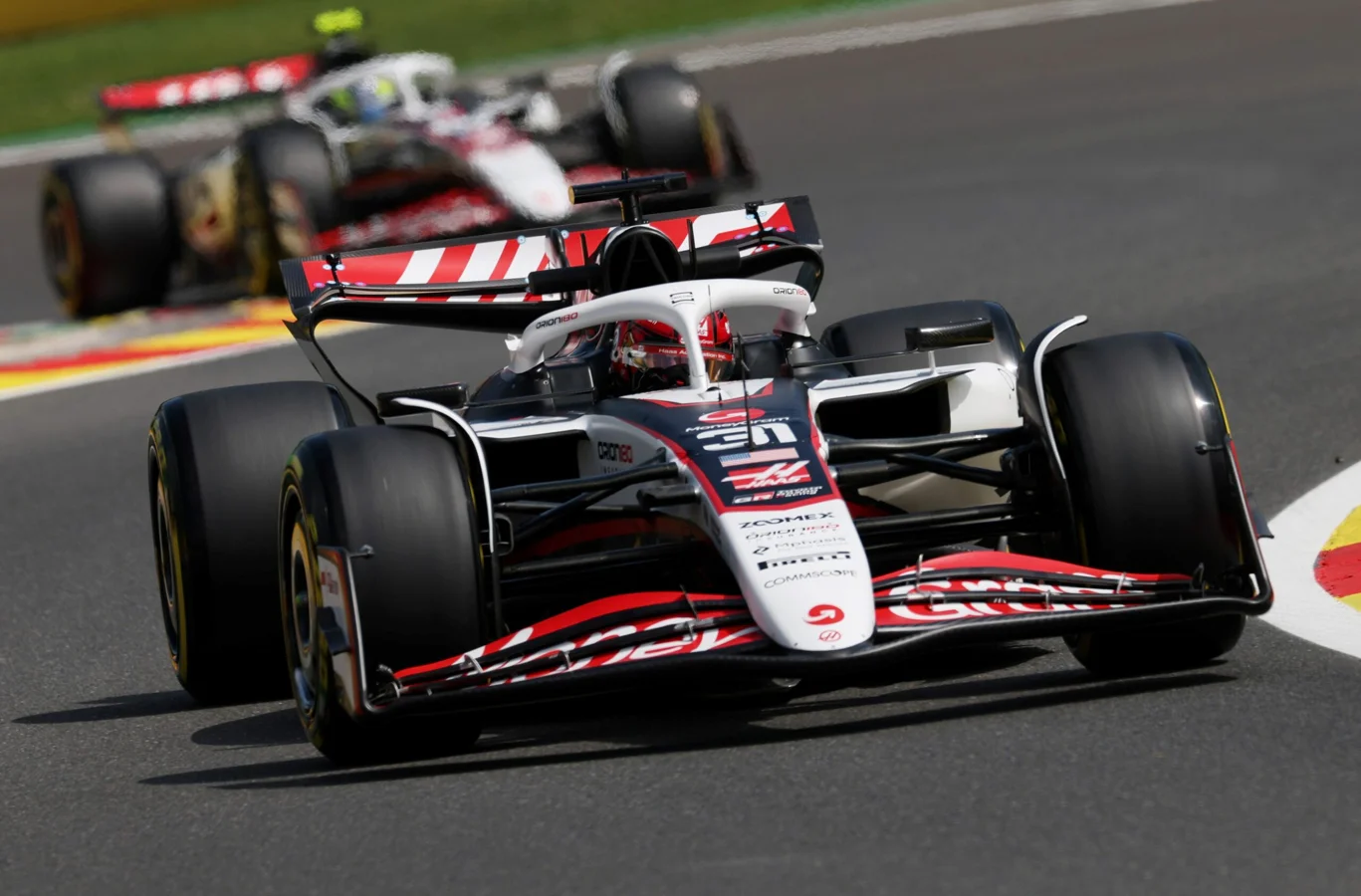
A local karting driver in Sweden has regained the fastest lap record previously set by Haas F1 driver Oliver Bearman at a track near Varberg during the recent summer break. This marked the conclusion of an intense competition for the Oliver Bearman kart track record, which unfolded while Bearman was on holiday between Formula 1 races.
Oliver Bearman’s Dedicated Effort to Break the Lap Record During Vacation
During the unofficial three-week summer break between the British and Belgian Grands Prix, Oliver Bearman took the opportunity to visit Sweden with his girlfriend’s family. They encouraged him to attempt beating the existing lap record at a nearby kart track. Despite initially being slightly off the pace, Bearman committed to pushing the limits in pursuit of the record.
“I was on vacation in Sweden and there was a kart track very close to where I was staying that week,”
Bearman revealed.
“It was a coincidence. Of course, I was excited to go to Sweden for a while. My girlfriend’s family said: ‘Look, you have to beat the lap record’. And I was like, yeah, come on, it will be easy. Then on the first day I was three or four tenths off.”
He described the track as demanding precision, with each lap lasting only 29 seconds, which required near-perfect execution.
“The track was really cool. It was a short lap, only 29 seconds, so you had to be super precise and I was trying every trick in the book to do it because the guy was quick.”
The High-Tech Approach Bearman Employed to Gain Performance
To overcome challenges such as engine overheating and weight issues, Bearman used inventive methods including removing fuel from the kart and using a leaf blower to cool the engine. His girlfriend also assisted by managing the tyres during the attempts.
“It was a serious, serious quest. On the final day we put new tyres and did it properly, dropping the pressures after every run,”
Bearman said about the final push.
“I was at it for almost two hours. You had to really put the perfect lap together and move some of the walls a little bit and finally, I managed to beat the lap time by just like half a tenth. I did like 15 laps where I was 0.03 or 0.04 away from it. And when you’re that close, you can’t quit until you win!”
He further described the measures taken:
“I have photos of me, the guy with me and my girlfriend taking fuel out of the car to try and make it lighter. I was cooling down the engine between runs with, like, a leaf blower.”
He explained that engine power dropped significantly due to heat, so removing some bodywork was necessary to keep temperatures manageable.
Bearman also mentioned tactical details about his driving style and race conditions:
“Someone was slipstreaming me on the straights and then moving out of the way at the last minute so I could do the lap. I went with normal clothes, but I made sure to have shorts and a thin t-shirt on to keep the weight down. And even on the straights, I was head down. I wasn’t messing around.”
The Swift Reclamation of the Lap Record by Local Driver Elton Zevenwacht
The previous record holder, 23-year-old Swede Elton Zevenwacht, had his lap time briefly surpassed by Bearman’s efforts without Bearman initially knowing who he was challenging. Bearman humorously suggested that Zevenwacht deserved to be in Formula 1 given his skills.
However, Zevenwacht quickly reclaimed the record just days later, setting a new fastest lap time of 28.95 seconds on Friday evening. This beat Bearman’s new record of 28.97 seconds and restored local pride by being the first driver to run the lap faster than 29 seconds at the track.
Significance of the Rivalry and What It Means for Future Karting Records
This exchange reflects the competitive spirit and dedication found even at the local kart level, with a Formula 1 driver applying professional standards and equipment troubleshooting techniques outside the premier racing environment. It highlights how karting remains a fundamental proving ground for racing talent like Bearman and Zevenwacht, blending determination with technical savvy to shave off critical tenths of a second.
The swift reclaiming of the lap record by Zevenwacht also illustrates how local expertise and familiarity with the track can offset raw driving talent combined with modern methods. The rivalry at the Varberg track demonstrates that the pursuit of speed in karting is both a personal challenge and a community accolade.
As Oliver Bearman returns to his F1 commitments, this episode will likely remain a memorable challenge outside the Formula 1 paddock and may motivate him and others to return to karting with renewed enthusiasm to push performance boundaries further. Meanwhile, the local track record continues to represent a coveted achievement for skilled drivers in Sweden and beyond.
