
Daniel Suarez’s impressive homecoming win at the Chilango 150 in Mexico City earned admiration from fellow NASCAR Cup Series driver Ricky Stenhouse Jr. Suarez overcame a difficult start at Autodromo Hermanos Rodriguez by rallying from the back of the pack after switching to a backup car. Ricky Stenhouse Jr praises Daniel Suarez Mexico victory for its resilience and strategic execution under challenging conditions.
Daniel Suarez’s Recovery From Early Setbacks in Mexico City
Driving the No. 9 Chevrolet for JR Motorsports, Suarez faced major difficulties even before the race began. In qualifying, he crashed into the stadium section wall, damaging his car severely enough to require a backup vehicle. This incident resulted in a penalty that placed him last on the starting grid. Despite this, Suarez showcased remarkable determination and skill by maneuvering through the field during the race.
During the event, Suarez also avoided involvement in a critical multi-car accident that eliminated key contenders Connor Zilisch and Ty Gibbs. Taking advantage of the restart, Suarez seized the lead and maintained it for the final 19 laps, ultimately securing the victory in front of his home crowd in Monterrey, Mexico.
Ricky Stenhouse Jr.’s Reflections on Mexico City Race Challenges
Currently 20th in the overall driver standings — eight spots ahead of Suarez — Ricky Stenhouse Jr. reflected on the demanding conditions presented by the Mexico City race. Joining Prime Video’s pre-race coverage, Stenhouse emphasized the difficulties caused by the track’s high altitude, located approximately 7,500 feet above sea level, which influences both vehicle performance and driver endurance.
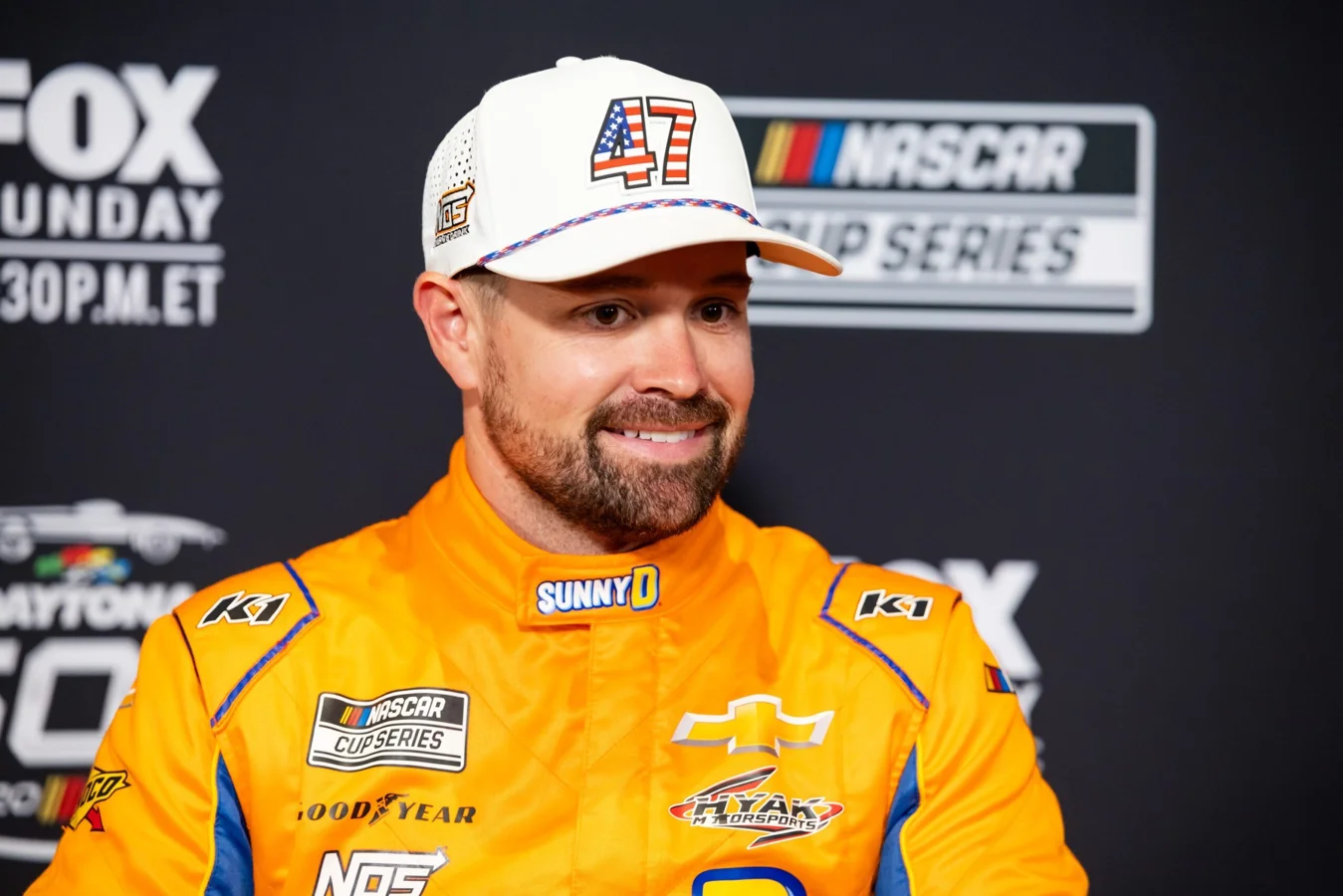
He noted the widespread concern among engine manufacturers about overheating caused by the thinner air, leading to inadequate engine cooling during practices. Stenhouse shared,
“Definitely, all the engine manufacturers are worried about overheating. Heard there were a few overheating issues throughout that practice session,”
—Ricky Stenhouse Jr., Cup Series Driver.
He further described the unique racing dynamics in the stadium section of the course:
“You’re so slow right here (the stadium section), but I feel like there is some time to be made up, so you are kind of hustling it. You go on the gas and there’s nothing there, and then all of a sudden it lights up, almost like a two-stroke dirty bike,”
—Ricky Stenhouse Jr., Cup Series Driver.
Impact of Altitude and Mechanical Issues on Competitors
The challenging altitude also affects driver stamina, as lower oxygen levels contribute to quicker fatigue, a factor Daniel Suarez addressed by arriving early for training sessions. Such environmental challenges have affected multiple drivers, notably Christopher Bell, who encountered serious mechanical failure during Saturday’s Xfinity Series race. His No. 24 Toyota Supra suffered a critical engine issue in the stadium section, leading to smoke and a premature exit.
Bell’s struggles extended to qualifying for the Cup Series, where he placed 31st out of 37, while Ricky Stenhouse Jr. qualified further back at 33rd, highlighting the widespread difficulties teams faced in adapting to this unique race environment.
Significance of Suarez’s Win and Its Broader Effects
Daniel Suarez’s comeback victory underscores the importance of adaptability and perseverance in NASCAR, especially under extraordinary conditions like those in Mexico City. His triumph not only marks a personal milestone at his home track but also demonstrates the critical role of strategy and resilience amid physical and mechanical challenges experienced throughout the race weekend. For drivers like Stenhouse and Bell, the event highlights the ongoing need to refine preparations and vehicle setups for high-altitude courses.
