
Success in NASCAR depends not only on individual talent but also on the teamwork and knowledge-sharing that happen behind the scenes. At Trackhouse Racing, this approach has created a strong sense of unity. When Shane van Gisbergen finished 31st at Iowa Speedway, he chose to highlight his teammate Ross Chastain’s outstanding performance instead of dwelling on his own setback, demonstrating how collaboration fuels the team’s overall success.
Unlike many racing teams where rivalries can simmer, Trackhouse Racing maintains a culture where drivers such as Ross Chastain, Daniel Suarez, and Shane van Gisbergen support each other openly. This environment has been particularly beneficial for van Gisbergen as he adapts to NASCAR’s demanding racing style.
While van Gisbergen brought significant experience from Supercars and excelled on road and street courses, mastering NASCAR’s oval tracks has been a tougher challenge. This is where Chastain’s mentorship and expertise have played a vital role, accelerating van Gisbergen’s learning curve and setting a high standard within the team.
Van Gisbergen’s Reflections on Team Unity and Performance Growth
Shane van Gisbergen recently shared insights during an interview with Corey LaJoie on the Stacking Pennies podcast, revealing how the combined efforts of his teammates have helped strengthen Trackhouse Racing’s performance. He acknowledged the ups and downs all team members face but pointed out the gradual improvement across the board.
As a team, some weeks I felt like I drove pretty well, and I was still 30th, but Ross (Chastain) was 31st or 29th,
van Gisbergen explained.
Well, Ross and Daniel (Suarez), we’d struggle as a team, you know. So, I felt like we were getting there, and then as our team is getting better. We’re learning a bit more, our oval cars are getting better, I’m kind of creeping up there with it,
he added.
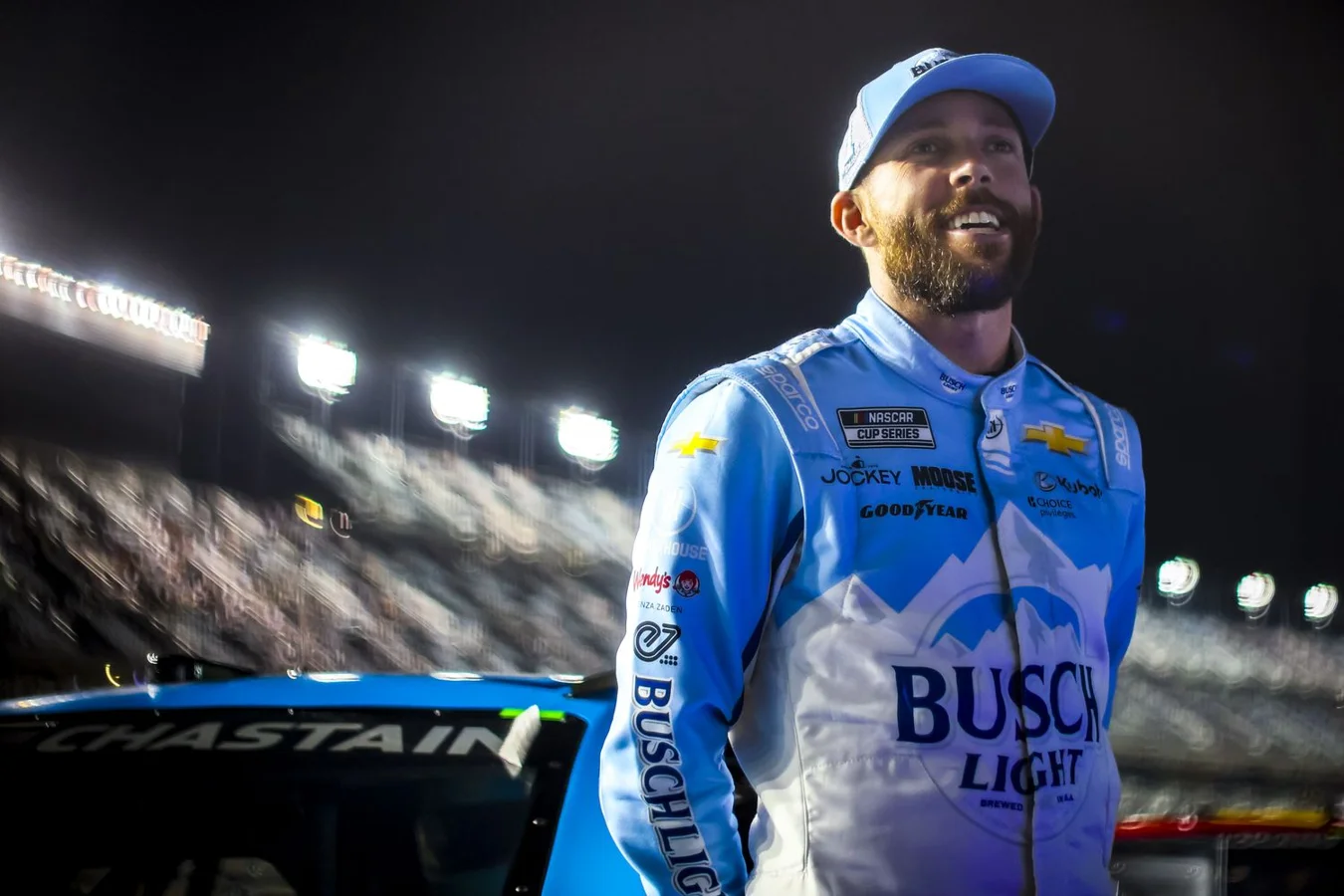
His praise for Ross Chastain’s talent was particularly striking. Van Gisbergen emphasized how Chastain’s restart technique and race positioning have a significant impact not only on his own results but on the entire team’s competitiveness.
And Ross has got some amazing ability on restarts and his positioning to get a top-10 result with a 25th-place car,
van Gisbergen noted.
He’s exceptional, very good, so I’m just trying to benchmark to him and Daniel, but I feel like as a team we’ve gotten better, and like my average running positions now, inside the top 20, or my pace is in the 20s now. So, it’s been a huge gain on the ovals and only getting better too,
he continued.
Progress on Ovals Reflects Growth Within Trackhouse Racing
This NASCAR season has been transformative for Shane van Gisbergen. After an impressive win at Autódromo Hermanos Rodríguez, the New Zealand driver built momentum with consecutive victories at Chicago and Sonoma. Although these successes came on road courses, his oval track performance has steadily advanced, marking a turning point in his NASCAR journey.
Tracking van Gisbergen’s performance metrics reveals consistent improvement in average running positions and pace, especially on NASCAR’s challenging ovals. His No. 88 Chevrolet has demonstrated greater reliability and competitiveness as he continues to adjust his driving style.
The collective strength of Trackhouse Racing, supported by teammates like Ross Chastain and Daniel Suarez, has been crucial for these gains. Knowledge sharing and mentorship within the team have accelerated van Gisbergen’s adaptation process and contributed to raising their overall competitiveness in NASCAR.
What This Means for the Future of Trackhouse Racing
Shane van Gisbergen’s progress highlights how Ross Chastain’s talents extend beyond individual success to influence the entire team’s performance. The synergy between teammates at Trackhouse Racing showcases a model of collaboration that could become a blueprint for other NASCAR teams aiming to improve through shared expertise.
As van Gisbergen’s oval skills continue to develop and his benchmarks with Chastain and Suarez set new standards, Trackhouse Racing is likely to remain a strong contender throughout the season. The ongoing evolution of their teamwork and car performance signals promising potential for upcoming races in NASCAR.
