
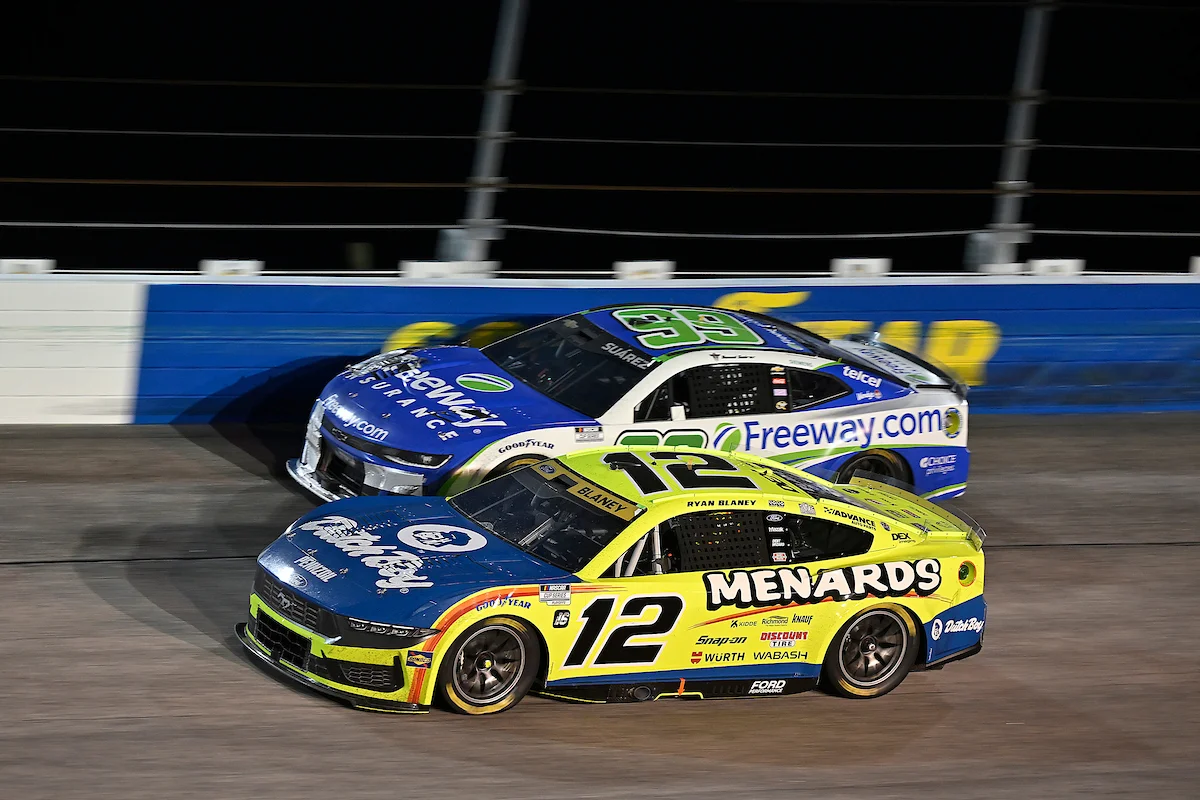
Ryan Blaney NASCAR fastest-lap discussions have intensified following Josh Berry’s unexpected fastest lap bonus point at Darlington in the 2025 NASCAR Cup Series season. This controversy highlights the broader debate over the value and fairness of awarding points for the fastest lap, especially when drivers out of contention can still earn these bonus markers. The issue has attracted comments from drivers, officials, and enthusiasts alike as the playoff battles heat up.
A surprising fastest lap stirs playoff tensions
At the Darlington race, Josh Berry shocked the NASCAR world by recording the fastest lap of the entire event, despite finishing last in the standings. This was Berry’s first fastest lap honor of the season and earned him a crucial bonus point. Currently, Berry is tied on points with Alex Bowman for the last transfer spot advancing to the Round of 12, both trailing the cutoff by 19 points. With challenging tracks like Gateway and Bristol ahead in the Round of 16, Berry’s path to extending his season likely hinges on capturing a win.
Berry’s lightning-fast 29.038-second lap came after he spent more than two hours recovering from an early crash, making his comeback all the more remarkable. This bonus point, while small, could prove vital in the cutthroat playoff environment. However, the outcome has stirred debate among fans and experts about the rule’s impact on competitive integrity.
Fastest lap points rule under scrutiny
Introduced this season across NASCAR’s national series, the Fastest Lap Award permits drivers outside of contention to still chase meaningful points by setting the fastest lap during the race. Earlier in 2025, Kyle Larson exploited this rule twice, chalking up bonus points at Mexico City and Watkins Glen that bolstered his playoff seeding. NASCAR managing director Mike Forde has acknowledged the growing concerns around the policy.
Some purists argue that awarding points solely based on a fastest lap time is unfair when drivers out of the main battlefield use the opportunity to make qualifying-style attempts during race downtime, often after major incidents. Critics suggest this rule creates an exploitative loophole rather than encouraging genuine competition. One columnist summarized this viewpoint by saying the practice
“
allows teams to essentially run a one-lap qualifying setup mid-race,
”
prompting calls for reconsideration.
Ryan Blaney’s candid perspective on the fastest-lap controversy
Ryan Blaney, a key figure in the NASCAR Cup Series, was direct about his stance on the ongoing fastest lap point debate. Speaking to Frontstretch, he remarked,
I don’t care. I don’t really care, to be honest with you. Um, no. I don’t really care. Um, I haven’t really even paid that any thought, to be honest with you. I know it’s happened a few times with like guys wreck and they’re a bunch left down and they just go make runs. Um, but yeah, it doesn’t really hasn’t affected my life yet. So, I don’t know.
Blaney’s response reflects a measured indifference toward the current rule’s influence on his racing career, acknowledging its existence but dismissing it as a non-issue for himself. However, he also highlighted the technical challenges faced on certain tracks during a separate discussion, emphasizing the complexity of race craft and vehicle control.
Addressing technical difficulties, Blaney described the stresses of shifting gears at demanding tracks, explaining,
I think the two ends being very difference challenging. We have places like that. Um, but that’s, that’s tough, and especially double downshifting in one and two is tough. Fifth to third, back up to fifth, down to fourth for three and four, then back up to fifth. It’s a lot of stress on everything. Like, so you’re trying to make sure that when you just single downshift, you’re trying not to over-rev. And then when you add another one in there, it’s really easy to over-rev. And I think you see a lot of engine issues here just because of that. You get too quick with it. Um, so that’s a concern.
Traditionalists versus innovators: The fastest lap debate deepens
The introduction of this point system has sparked a divide between traditional NASCAR fans and those embracing new approaches. Traditionalists argue that awarding a fastest lap point to drivers who are no longer in contention dilutes competition legitimacy. They question why the rule should benefit drivers who cannot directly influence race outcomes in the conventional manner.
On the other hand, some commentators and fans see the fastest lap point as invigorating the sport by rewarding determination and perseverance, even under difficult circumstances. One sentiment expressed by commentators asks,
Why fix something that electrifies the garage and rewards determination?
This viewpoint suggests the rule adds excitement by giving every driver a chance to compete for something meaningful, regardless of position.
At this stage, NASCAR is contemplating potential adjustments, such as restricting bonus points for fastest lap achievements to those drivers still on the lead lap. However, any such changes are unlikely to take effect before the 2026 season, leaving the current system in place for now.
Ryan Blaney’s approach to navigating the playoffs
Beyond the fastest lap debate, Ryan Blaney continues to focus intently on his playoff performance strategy. The 2023 NASCAR Cup Series champion adopts a disciplined, focused approach, emphasizing the importance of taking the postseason a single race at a time. Writing off distractions and unpredictability, he concentrates solely on maximizing each week’s potential.
Speaking with SiriusXM NASCAR Radio, Blaney shared,
I mean, I think historically, we’ve had good runs at the playoff tracks. But you never know what’s going to happen, right? You could miss it one weekend and be behind the eight ball. You just go try to do the best job you can. I don’t know, I don’t really look forward to one more than others.
This mindset reflects a thoughtful, measured attitude toward the pressures of postseason racing, highlighting focus over reckless ambition. Blaney emphasizes a steady approach, regardless of the specific track or conditions.
Expanding on his philosophy, he added,
I just try to look at what’s the next race, and I look forward to that one the most. Like, I focus all of my energy into just one week at a time type situation, and how do I give all of my effort to Gateway this weekend, and that’s the one I’m looking forward to the most, and then it will change to Bristol next week, you know?
This week’s Gateway event plays to Blaney’s strengths given his proven record at intermediate tracks. His victories across diverse circuits—including short tracks, road courses, superspeedways, and his three wins at Talladega—highlight his adaptability and competitive depth.
Implications of the fastest lap rule on the NASCAR playoffs landscape
The fastest lap point controversy underscores how nuanced and complex modern NASCAR competition has become. While some drivers see the extra points as a strategic advantage to gain playoff ground, others raise concerns about preserving competitive fairness. With playoff positions often determined by just a few points, the ability for non-contending drivers to earn bonus points can have significant implications.
Ryan Blaney’s frank opinion illustrates the split in driver perceptions, where some remain indifferent, and others carefully consider the rule’s competitive consequences. As NASCAR continues to monitor feedback and race outcomes, the balance between innovation and tradition remains a pivotal topic.
Looking ahead, the ongoing debate is likely to influence how NASCAR adjusts its rules in the future, weighing the desire to maintain excitement and opportunity against the need for equitable competition. The playoff races at Gateway, Bristol, and beyond will serve as critical proving grounds for drivers and teams navigating this evolving landscape.
