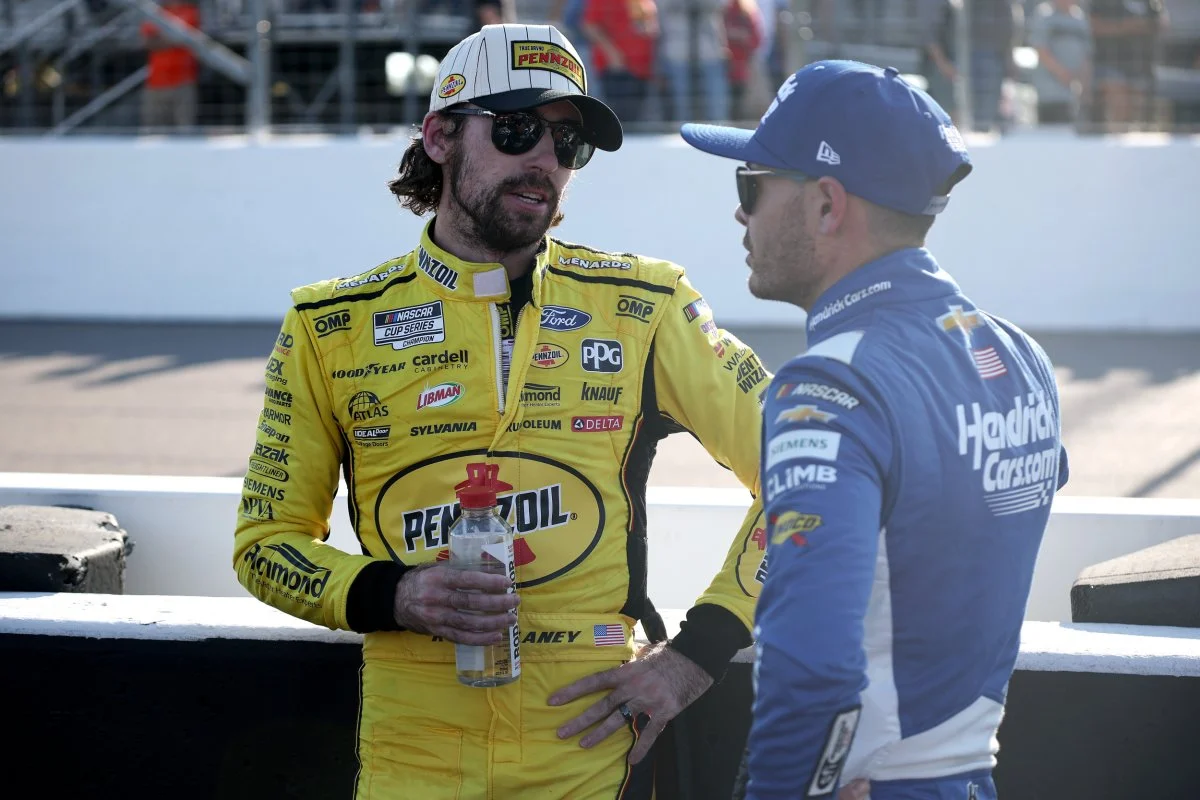
At Bristol Motor Speedway on Saturday night, Goodyear introduced a softer right-side tire designed to wear out quickly, encouraging drivers and teams to focus on managing their allotted tire sets strategically throughout the race. This change aimed to increase control over race outcomes by emphasizing tire durability, but it sparked mixed reactions among competitors. Team Penskedriver Ryan Blaney, who finished fourth, expressed concerns about balancing performance and safety in tires.
Ryan Blaney Calls for a Balanced Approach to Tire Wear
Blaney highlighted the need for a middle ground in tire wear, emphasizing that tires should degrade rather than suddenly fail. He said,
“There’s an in-between. Got to keep working on it. That’s really all you can do. It’s tough. My gosh, I don’t envy their job of trying to figure that out. Just try to do the best job they can.”
He later added,
“They’ve done a good job so far of getting softer and softer at other places, and it’s worked. Here’s just a little bit of a different animal that they got to keep working with. So, hopefully we get a little bit of a kind of an in-between.”
The night race featured 36 lead changes, ranking as the third most in Bristol’s history, alongside 14 cautions, the highest number since 2020.
Brad Keselowski Observes Impact of Temperature on Tire Wear
Brad Keselowski, co-owner and driver for RFK Racing, finished second and supported the new tire’s performance. He noted that cooler track temperatures led to increased tire wear, saying,
“The temperature dropped to the threshold, and we got a tire-wear race. It’s so freaking … I don’t know. There are some scientists somewhere that could have a big study on this one – how, like, a five-degree swing of track temp changes it so dramatically.”
He compared the conditions to those from 1995, indicating the track’s surface played a key role in tire behavior. The Goodyear team confirmed that the cooler temperature caused the tire compound to function as expected, mirroring the conditions observed in the March 2024 Bristol race.
Drivers Agree on Tire Wear Patterns
Christopher Bell, who finished 10th, shared his thoughts on the tire’s performance during the race, stating,
Image of: Ryan Blaney
“Honestly, I thought it was identical. It was the exact same,”
referring to the similarity with previous tire wear experiences earlier in the year. The race conditions demonstrated the grueling nature of high tire wear, challenging both drivers and their teams to manage equipment effectively.
Potential Long-Term Effects of Tire Wear Adjustments
The introduction of the softer Goodyear tires at Bristol has shown how variable factors like temperature can drastically affect tire degradation and race dynamics. While some drivers remain apprehensive about the extremes of tire wear, there is a shared hope that finding the right balance will enhance competition and safety on short tracks. Continued adjustments and collaboration between teams and Goodyear could lead to more frequent and engaging tire-wear races in the future, increasing the strategic complexity of NASCAR events.