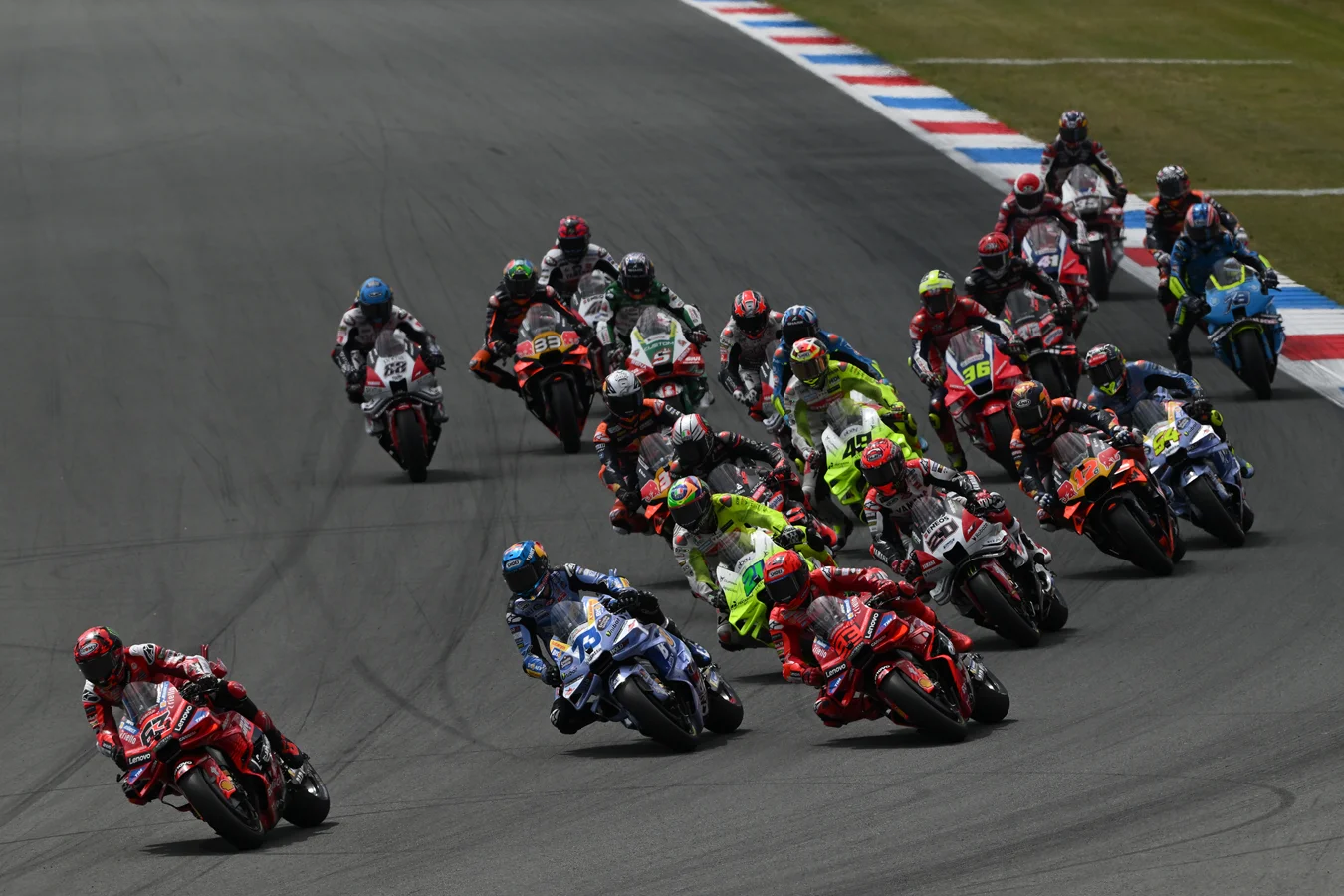
The 2024 German Grand Prix at Sachsenring drew over 250,000 spectators, ranking it as the second-largest MotoGP weekend crowd this season, behind only the Le Mans event. This remarkable turnout occurred despite the absence of a full-time German rider on the MotoGP grid, highlighting the event’s broad appeal beyond local star power.
Unlike the French round, which enjoys support from well-known riders like Fabio Quartararo and Johann Zarco, Sachsenring’s attendance numbers were achieved without the boost of a permanent German rider. Stefan Bradl’s wildcard entry for HRC ended with him finishing last, as he retired from full-time competition in 2016, and no German riders appeared in the 2024 lineup at all.
The Significance of Loyal Fanbases Beyond National Favorites
MotoGP’s challenges with inconsistent attendance in various markets make Sachsenring an intriguing example of sustained fan enthusiasm. Jordan Moreland, host of the Crash.net MotoGP Podcast, pointed out the contrast with other events:
“The Liberty news was followed by a massive sell-out crowd for the British F1 Grand Prix, with a lot of home drivers for the British fans,”
he said.
“And now we’re going to Germany, where there’s no German MotoGP rider – but the fans still turn up.”
—Jordan Moreland, Crash.net MotoGP Podcast host
This suggests that the Sachsenring event benefits from strong traditions and fan loyalty, factors that continue to draw crowds even without a homerider to cheer on.
What Sachsenring Teaches Liberty Media About Event Success
Crash.net MotoGP editor Pete McLaren underscored the value of the Sachsenring model as MotoGP seeks ways to boost attendance. Comparing the Silverstone venue, which struggles to attract fans for MotoGP despite overflowing with spectators for Formula 1, McLaren said,
Image of: MotoGP
“It’s a good comparison, isn’t it?”
and added,
“So if you’re Liberty, you’re going to want more Sachsenrings – events with big crowds, even if they don’t have a home rider. Sachsenring does a great job of getting the fans in year after year, so it’d make a great case study for Liberty.”
—Pete McLaren, Crash.net MotoGP editor
The take-home message for Liberty Media is to identify and develop venues like Sachsenring that consistently generate strong attendance through fan engagement and event experience rather than relying solely on home-country riders.
Potential Enhancements to Race Weekend Formats
While Liberty Media revamped MotoGP’s branding earlier in 2024, there remains room to improve the race weekend’s format, particularly to maintain energy on race day. Pete McLaren suggested extending the Sunday warm-up session to give teams more time for adjustments, especially those who start outside the top ten.
He proposed,
“I’d make warm-up longer, maybe give teams with concessions an extra ten minutes and maybe another ten minutes for those starting outside the top ten,”
—Pete McLaren, Crash.net MotoGP editor.
This change could allow riders further back on the grid to find better performance setups, potentially enhancing racing quality. A 30-minute warm-up followed by a 45-minute race would provide approximately 75 minutes of action, balancing the intense Saturday sessions without overwhelming the Sunday schedule. McLaren noted this total would still be below the nearly 1 hour 37 minutes of the British Formula 1 Grand Prix race, suggesting a manageable increase.
Exploring Cross-Promotional Opportunities Between MotoGP and Formula 1
Liberty Media’s ownership of both MotoGP and Formula 1 presents unique chances for collaboration and fan base growth. Pete McLaren pointed out that broadening MotoGP’s audience could be achieved by attracting fans from other motorsport disciplines.
He said,
“The easiest way for MotoGP to grow is to attract fans from other motorsports,”
and later added,
“Showing F1 fans some MotoGP clips on the big screens during a race weekend, or having more MotoGP riders at F1, would make more people aware of the sport.”
—Pete McLaren, Crash.net MotoGP editor
Additionally, offering combined ticket incentives for fans to attend both their home Formula 1 and MotoGP events could encourage crossover attendance. McLaren explained,
“Getting more people to attend both their home F1 and MotoGP rounds each season would be a realistic target – helped by things like a discount for MotoGP on the more expensive F1 ticket.”
—Pete McLaren, Crash.net MotoGP editor
Attendance Growth Trends at Sachsenring from 2007 to 2024
The impressive crowd of 252,826 in 2024 represents a steady increase compared to previous years, demonstrating growing interest in the German Grand Prix weekend over the last decade and beyond:
2024: 252,826 fans
2023: 233,196 fans
2022: 232,202 fans
2021: Held with Covid restrictions
2020: Cancelled due to Covid
2019: 201,162 fans
2018: 193,355 fans
2017: 164,801 fans
2016: 212,411 fans
2015: 211,588 fans
2014: 209,408 fans
2013: 204,491 fans
2012: 195,685 fans
2011: 230,133 fans
2010: 224,668 fans
2009: 214,711 fans
2008: 221,492 fans
2007: 226,944 fans
Looking Ahead to Future MotoGP Engagement
The sustained success of Sachsenring despite the absence of German riders highlights the strength of passionate fan communities and well-organized events. As Liberty Media analyzes these trends, they may focus on expanding strategies that boost fan turnout through event experience enhancements and cross-sport promotions rather than relying on nationality-based support alone.
Innovations to weekend formats and collaborative marketing with Formula 1 could further enrich the MotoGP experience, potentially attracting broader audiences and reinforcing the sport’s global presence.
Our Reader’s Queries
Q. Why is MotoGP not so popular?
A. Unfortunately, people prefer entertainment over sports, so MotoGP is trying to profit from this trend. However, MotoGP currently lacks personalities that can generate enough excitement to captivate audiences.
Q. Has anyone won F1 and MotoGP?
A. John Surtees is well-known for being the sole World Champion in both motorcycle racing and Formula 1, demonstrating impressive skill and bravery in both sports.
Q. Did F1 buy MotoGP?
A. With F1 and MotoGP both managed by Liberty, it now oversees the top two global racing series. This decision impacts how the sports are governed, how competitions are arranged, and the strategy to make money. Although the EU has given the deal a thumbs-up, some people still wonder if this might lead to a monopoly in the industry.
Q. Who earns more, MotoGP or F1?
A. Formula 1 generates significantly more revenue than MotoGP. The difference in income is not related to the skills of the drivers or riders, or the risks involved.