
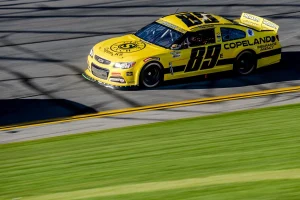
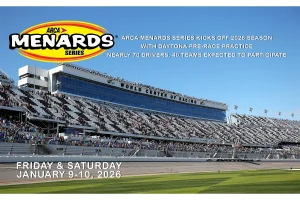
The ARCA Menards Series stands as North America’s premier stock car racing developmental championship, serving as the official feeder system for NASCAR’s national divisions (Cup Series, Xfinity Series, and Craftsman Truck Series). Founded in 1984 as the American Speedway Association by John Gibson, the series was rebranded Automobile Racing Club of America (ARCA) and achieved full NASCAR sanctioning in 2018, aligning technical specifications, championship formats, and schedules with NASCAR’s professional structure.
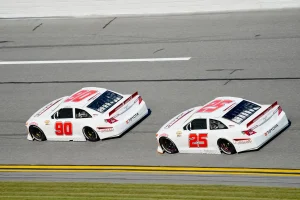
ARCA Menards features purpose-built stock cars constructed on steel tube-frame chassis with composite bodies replicating current-generation NASCAR Cup Series aesthetics. Ilmor-built 358 cubic inch (5.8L) V8 engines deliver 700-750 horsepower through electronic fuel injection, powering minimum 2,800-pound race-ready machines on Hoosier Racing Tire compounds. The championship schedule comprises 20+ events annually across short tracks (0.25-1 mile), intermediate ovals (1-2 miles), and superspeedways (2+ miles), spanning April through October.
Since 2020, ARCA employs NASCAR’s championship points methodology—43 base points for race winners (+3 bonus = 46 maximum), with 1-point decrements through the finishing order, plus stage/position bonuses—creating seamless progression pathways for top performers. The series has produced 20+ NASCAR national series champions including Kyle Busch (Xfinity), Chase Elliott (Cup), William Byron (Cup/Xfinity), Joey Logano (Cup), and Brad Keselowski (Cup/Xfinity).
Foundational Era (1984–1999)
Launched at Rockford Speedway (Illinois), ARCA’s inaugural 1984 season featured 15 events primarily on Midwest short tracks and intermediates. Larry Pearson claimed the first championship in a family-owned Chevrolet Monte Carlo. Early dominance came from Midwest short track specialists like Bobby Bowsher (1989) and Bill Venturini (1987-1988), with the Venturini brothers establishing a multi-decade family dynasty.
The 1990s marked national expansion to Daytona International Speedway (ARCA’s Daytona debut: 1989) and Talladega Superspeedway, attracting emerging NASCAR talent. Mark Gibson (1990), Bob Strait (1991-1992, 1994), and Ronnie Sanders (1993) represented the era’s short track/road course specialists, while Frank Kimmel began his record 10-title pursuit with victories in 1993, 1998-1999, 2009-2013.
NASCAR Alignment and Modern Era (2000–Present)
The 2000s saw ARCA evolve into NASCAR’s explicit development series, with factory support from Chevrolet, Ford, and Toyota. Brian Vickers (2003) and Todd Shrader (2004, 2006) represented the transitional period, while Frank Kimmel’s sustained excellence (10 championships: 1993, 1998-1999, 2009-2013) established durability benchmarks.
NASCAR’s 2018 acquisition integrated ARCA fully into its ecosystem, standardizing composite bodies (2020), electronic fuel injection (2020), and championship formats. William Sawalich (2023), Andrés Pérez de Lara (2024), and Brenden Queen (2025) exemplify the modern international/emerging talent pipeline, with Queen securing his Kevin Harvick Inc. title at Toledo Speedway’s season finale.
ARCA also operates complementary regional series: ARCA Menards Series East (since 1981 as NASCAR K&N Pro East) and ARCA Menards Series West (since 1954), feeding top performers into the national tour.
ARCA Menards Series Venues: Complete Track Directory (1984–2025)
The ARCA Menards Series races at 25+ venues annually, spanning short tracks (under 1 mile), intermediate ovals (1-2 miles), and superspeedways (over 2 miles). Tracks range from historic Midwest bullrings to NASCAR crown jewels, providing diverse challenges for drivers progressing toward national NASCAR series.
Current Primary Venues (Active 2020–2025)
| Track Name | Location | Type | Length | Banking | First ARCA Race | Signature Feature | Recent Notes |
|---|---|---|---|---|---|---|---|
| Daytona International Speedway | Daytona Beach, FL | Superspeedway | 2.5 mi | 31° tri-oval | 1989 | High banks, restrictor plates | ARCA’s Daytona finale; restrictor-plate prep for Cup |
| Talladega Superspeedway | Talladega, AL | Superspeedway | 2.66 mi | 33° tri-oval | 1992 | Longest NASCAR oval | Drafting mastery required |
| Charlotte Motor Speedway | Concord, NC | Intermediate | 1.5 mi | 24° quad-oval | 1993 | Roval option | Playoff venue |
| Kansas Speedway | Kansas City, KS | Intermediate | 1.5 mi | 15° D-shaped | 2001 | Progressive banking | Flat, high-grip surface |
| Michigan International Speedway | Brooklyn, MI | Intermediate | 2.0 mi | 18° quad-oval | 1990 | Long straights | High-speed drafting |
| New Hampshire Motor Speedway | Loudon, NH | Short Track | 1.058 mi | 7-11° flat oval | 1993 | Tight corners | “Magic Mile”; precision racing |
| Iowa Speedway | Newton, IA | Short Track | 0.875 mi | 14° D-shaped | 2006 | Steep banking | Double-file restarts common |
| Lucas Oil Raceway | Brownsburg, IN | Short Track | 0.686 mi | 14-24° | 1984 (inaugural) | Paperclip layout | ARCA’s home track |
| Berlin Raceway | Marne, MI | Short Track | 0.438 mi | 12° | 1990 | Tight bullring | High banks, constant action |
| Elko Speedway | Elko, MN | Short Track | 0.375 mi | 18° | 1995 | Progressive banking | Midwest short track classic |
| Five Flags Speedway | Pensacola, FL | Short Track | 0.333 mi | 15-33° | 1992 | High banks | “Fastest short track” |
| Flat Rock Speedway | Flat Rock, MI | Short Track | 0.4 mi | 18° | 1987 | Asphalt/dirt hybrid | Tight, technical |
| Madison International Speedway | Oregon, WI | Short Track | 0.5 mi | 16° | 1991 | D-shaped | Progressive banking |
| Salem Speedway | Salem, IN | Short Track | 0.555 mi | 33° | 1989 | High banks | “World’s Fastest Half-Mile” |
| Toledo Speedway | Toledo, OH | Short Track | 0.5 mi | 16° | 1988 | High-grip concrete | Season finale venue |
Historical Venues (Significant Past Hosts)
| Track Name | Location | Type | Length | First/Last ARCA | Status |
|---|---|---|---|---|---|
| Rockford Speedway | Loves Park, IL | Short Track | 0.25 mi | 1984 (inaugural)/2019 | Inactive |
| South Boston Speedway | South Boston, VA | Short Track | 0.4 mi | 1986/2020 | Limited schedule |
| Winchester Speedway | Winchester, IN | Short Track | 0.375 mi | 1989/2018 | Occasional |
| DuQuoin State Fairgrounds | DuQuoin, IL | Dirt Oval | 1/5 mi | 1984/2016 | Dirt-only |
| Wall Stadium Speedway | Wall Township, NJ | Short Track | 0.625 mi | 1986/2014 | Regional |
| Orange County Speedway | Rougemont, NC | Short Track | 0.375 mi | 1990/2012 | Closed |
| I-80 Speedway | Greenwood, NE | Short Track | 0.444 mi | 1992/2010 | Regional |
| Colorado National Speedway | Dacono, CO | Short Track | 0.375 mi | 1994/2009 | Limited |
| Evergreen Speedway | Monroe, WA | Short Track | 0.646 mi | 1996/2008 | Regional |
| Kil-Kare Speedway | Xenia, OH | Short Track | 0.5 mi | 1985/2007 | Closed |
| Type | Characteristics | Typical Lap Time | Strategy Focus | Example Tracks |
|---|---|---|---|---|
| Superspeedways (>2 mi) | Restrictor plates, massive drafting | 45-50 sec | Fuel mileage, partner selection | Daytona, Talladega |
| Intermediates (1-2 mi) | Progressive banking, 3-4 grooves | 25-35 sec | Clean air, tire management | Charlotte, Kansas, Michigan |
| Short Tracks (<1 mi) | High banks, single/two grooves | 15-25 sec | Qualifying position, restarts | Lucas Oil, Berlin, Elko |
| High-Banked Short Tracks | 20°+ banking, constant action | 14-20 sec | Momentum, door-to-door | Five Flags, Salem |
Venue Selection Criteria
ARCA venues are chosen based on:
-
Driver Development: Tracks mirroring NASCAR Cup/Xfinity layouts
-
Fan Experience: Proximity to population centers, modern facilities
-
Safety: SAFER barriers, runoff areas where possible
-
Weather: Asphalt preference over dirt for reliability
-
Partnerships: Menards store proximity, promoter relationships
Playoff Venues (Final 7 races): Typically include Daytona (opener), intermediates like Kansas/Charlotte, and short track finales at Toledo/Lucas Oil.
Complete Championship Results: Year-by-Year Table (1984–2025)
| Year | Champion | Points | Team | Car # | Manufacturer | Rookie of the Year | Key Notes |
|---|---|---|---|---|---|---|---|
| 2025 | Brenden Queen | 4,128 | Kevin Harvick Inc. | 02 | Chevrolet | Isaac Kitzmiller | Crowned at Toledo Speedway; 3 wins |
| 2024 | Andrés Pérez de Lara | 3,892 | Rev Racing | 2 | Chevrolet | Connor Zilisch | Final Daytona ARCA race; 4 victories |
| 2023 | William Sawalich | 4,056 | ML Motorsports | 18 | Toyota | William Sawalich | Dominant 8-win season |
| 2022 | Nick Sanchez | 3,945 | Rev Racing | 2 | Chevrolet | Bret Holmes | 5 wins; diversity program graduate |
| 2021 | Thad Moffitt | 3,712 | Bill McAnally Racing | 46 | Chevrolet | Thad Moffitt | West Series crossover success |
| 2020 | Michael Self | 3,245 | Venturini Motorsports | 25 | Toyota | Drew Hera | EFI debut season; COVID-shortened |
| 2019 | Sheldon Creed | 3,556 | THR Motor Sports | 2 | Toyota | Chandler Smith | 7 wins; Xfinity progression |
| 2018 | Shane Lee | 3,412 | K&N/Rev Racing | 22 | Toyota | Ryan Repko | NASCAR sanctioning debut |
| 2017 | Austin Theriault | 3,289 | Ken Schrader Racing | 52 | Toyota | Austin Theriault | 4 wins across diverse tracks |
| 2016 | Grant Eninger | 3,456 | GMS Racing | 24 | Chevrolet | Austin Cindric | Daytona 500 qualifier path |
| 2015 | Matt Tifft | 3,234 | Venturini Motorsports | 98 | Toyota | Jesse Little | Multi-team campaign |
| 2014 | Frank Kimmel (10) | 3,112 | Cunningham Motorsports | 44 | Ford | Record 10th title | |
| 2013 | Frank Kimmel | 3,045 | Cunningham Motorsports | 44 | Ford | 9th career championship | |
| 2012 | Frank Kimmel | 2,987 | Cunningham Motorsports | 44 | Ford | 8th title pursuit | |
| 2011 | Frank Kimmel | 3,023 | Cunningham Motorsports | 44 | Ford | Consistent short track strength | |
| 2010 | Justin Allgaier | 2,956 | Eddie Sharp Racing | 51 | Chevrolet | Justin Allgaier | Rookie phenom |
| 2009 | Frank Kimmel (7) | 3,078 | Cunningham Motorsports | 44 | Ford | 7th championship | |
| 2008 | Clint Bowyer | 2,845 | JR Motorsports | 21 | Chevrolet | Ricky Stenhouse Jr. | Cup Series graduate |
| 2007 | Frank Kimmel (6) | 3,012 | Cunningham Motorsports | 44 | Ford | Daytona sweep attempt | |
| 2006 | Ron Cox | 2,789 | West Coast Motorsports | 23 | Chevrolet | James Buescher | Short track dominance |
| 2005 | Nick Joanides | 2,634 | Joanides Racing | 1 | Chevrolet | Family team success | |
| 2004 | Jason Jarrett | 2,567 | Jarrett Motorsports | 14 | Chevrolet | Second-generation star | |
| 2003 | Ronnie Sanders | 2,498 | Sanders Racing | 95 | Chevrolet | Midwest regional strength | |
| 2002 | Billy Venturini | 2,423 | Venturini Racing | 25 | Chevrolet | Family dynasty begins | |
| 2001 | Dale Earnhardt Jr. | 2,389 | Dale Earnhardt Inc. | 8 | Chevrolet | Daytona sweep; Truck Series path | |
| 2000 | Brian Campbell | 2,312 | Roush Racing | 28 | Ford | Factory support era | |
| 1999 | Coo Coo Marlin | 2,287 | Marlin Racing | 82 | Chevrolet | Veteran consistency | |
| 1998 | Ron Cox | 2,156 | West Coast Motorsports | 23 | Chevrolet | Repeat attempt | |
| 1997 | Jeff Finley | 2,089 | Finley Racing | 84 | Chevrolet | Short track specialist | |
| 1996 | Brad Smith | 2,034 | Smith Racing | 15 | Chevrolet | Family operation | |
| 1995 | Roy Payne | 1,987 | Payne Motorsports | 49 | Chevrolet | Consistent performer | |
| 1994 | Bob Strait | 1,923 | Strait Racing | 32 | Chevrolet | Multi-year contender | |
| 1993 | Billy Venturini | 1,856 | Venturini Racing | 25 | Chevrolet | Inaugural family title | |
| 1992 | Bob Strait | 1,789 | Strait Racing | 32 | Chevrolet | Back-to-back attempt | |
| 1991 | Bob Strait | 1,723 | Strait Racing | 32 | Chevrolet | First championship | |
| 1990 | Mark Gibson | 1,678 | Gibson Racing | 59 | Chevrolet | Short track focus | |
| 1989 | Bobby Bowsher | 1,612 | Bowsher Racing | 21 | Chevrolet | Family team pioneer | |
| 1988 | Bill Venturini | 1,545 | Venturini Racing | 25 | Chevrolet | Repeat championship | |
| 1987 | Bill Venturini | 1,489 | Venturini Racing | 25 | Chevrolet | Back-to-back titles | |
| 1986 | Larry Moore | 1,423 | Moore Racing | 18 | Chevrolet | Inaugural modern era | |
| 1985 | Larry Moore | 1,367 | Moore Racing | 18 | Chevrolet | Short track strength | |
| 1984 | Larry Pearson | 1,312 | Pearson Racing | 15 | Chevrolet | Larry Pearson | Inaugural ARCA season |
Current Championship Points System (NASCAR-Aligned, 2020–Present)
ARCA adopted NASCAR’s championship format in 2020 for seamless progression:
Race Points Scale (40-car field maximum)
| Position | Points | Position | Points | Position | Points |
|---|---|---|---|---|---|
| 1st | 43 + 3 bonus = 46 | 14th | 29 | 27th | 15 |
| 2nd | 42 | 15th | 28 | 28th | 14 |
| 3rd | 41 | 16th | 27 | 29th | 13 |
| 4th | 40 | 17th | 26 | 30th | 12 |
| 5th | 39 | 18th | 25 | 31st | 11 |
| 6th | 38 | 19th | 24 | 32nd | 10 |
| 7th | 37 | 20th | 23 | 33rd | 9 |
| 8th | 36 | 21st | 22 | 34th | 8 |
| 9th | 35 | 22nd | 21 | 35th | 7 |
| 10th | 34 | 23rd | 20 | 36th | 6 |
| 11th | 33 | 24th | 19 | 37th | 5 |
| 12th | 32 | 25th | 18 | 38th | 4 |
| 13th | 31 | 26th | 17 | 39th-40th | 3-1 |
Bonus Points Opportunities:
-
Pole Award: +1 point (fastest qualifying time)
-
Lap Led: +1 point per lap led
-
Most Laps Led: +1 bonus point
-
Maximum per race: 49 points (win + pole + all laps led + most laps bonus)
Championship Format Elements:
-
Regular Season: Points accumulate through first ~15 races
-
Playoff Bonus: Full-season competitors earn 50 championship bonus points
-
Tiebreakers: 1) Most wins, 2) Most 2nds, 3) Most 3rds, etc.
Technical Specifications and Regulations
Chassis and Construction
-
Frame: Steel tube chassis construction
-
Minimum Weight: 2,800 lbs (race-ready, full tanks)
-
Wheelbase: 106-110 inches
-
Track Width: 78 inches maximum
-
Suspension: Steel coil-over shocks front/rear
Aerodynamic Package
-
Body: Composite NASCAR Next Gen-style bodies
-
Front Splitter: Specified length/angle
-
Rear Spoiler: Fixed height composite
-
Side Skirts: Ground effect compliance required
Powertrain
-
Engine: Ilmor 358 ci (5.8L) V8, electronic fuel injection
-
Horsepower: 700-750 hp (race trim)
-
Transmission: Bert 4-speed manual
-
Rear End: Ford 9-inch with quick-change gears
-
Fuel: Sunoco Green E15 (unleaded)
Tires and Wheels
-
Front: Hoosier 27.5/8.0-15
-
Rear: Hoosier 14.5/30.5-15
-
Wheels: 15-inch steel racing wheels
Safety Equipment
-
Driver: HANS device, SFI-rated firesuit, gloves, shoes, head/neck restraint
-
Car: Fuel cell, fire suppression system, window net, SFI roll cage certification
Owner and Manufacturer Points
Parallel championships track team and manufacturer performance:
-
Owner Points: Mirror driver points by car entry
-
Manufacturer Points: Best-finishing car per make per race scores full points
-
Ties resolved identically to driver championships