
The NASCAR Cup Series is the top level of stock car racing in the United States, sanctioned by NASCAR and run with purpose-built “stock cars” on ovals and road courses across a 36-race season. Historically known as Strictly Stock (1949), Grand National (1950–1970), Winston Cup, Nextel Cup, Sprint Cup, and Monster Energy Cup, it has carried the generic NASCAR Cup Series name under a tiered “Premier Partner” sponsorship model since 2020.
Overview and history
NASCAR Cup Series originated as the Strictly Stock Division in 1949, sanctioning eight races mostly on dirt short tracks and beach courses, reflecting stock car racing’s moonshine-running roots in the American Southeast.
Strictly Stock to Grand National (1949–1970)
The inaugural race at Charlotte Speedway on June 19, 1949, saw Jim Roper declared winner after Glenn Dunaway’s disqualification for illegal springs; Red Byron claimed the first championship. Renamed Grand National in 1950 for prestige, the series ballooned to 60+ races some years across dirt ovals (198 of first 221 events), fairgrounds, and emerging pavements like Darlington (1950). Martinsville remains the sole surviving 1949 track. Dirt dominated through 1959 (Daytona Speedway debut); by 1960s superspeedways paved over clay surfaces. Final dirt Grand National before modern era: Richard Petty’s 1970 Raleigh win.
Winston Cup Modern Era Begins (1971–2003)
R.J. Reynolds’ 1971 Winston sponsorship ($100K initial) marked NASCAR’s professional pivot: schedule cut to 31 races, dirt/short ovals phased out (to Busch Series), $30K minimum purses, uniform points system (1975 Latford design rewarding full participation). Daytona 500 went live flag-to-flag on CBS (1979), boosted by Yarborough-Allison brawl. Brickyard 400 (1994 Indy) peaked popularity; TV deals exploded (Fox/NBC/Turner $2.4B 1999–2006).
Key Winston Milestones Table
| Year | Event |
|---|---|
| 1971 | Winston Cup debuts; 31-race schedule. |
| 1972 | Modern era begins: no dirt/short tracks. |
| 1979 | Daytona 500 live TV; 16M viewers. |
| 1987 | Elliott’s 212.809 mph Talladega pole (restrictor plates follow). |
| 1994 | Brickyard 400; 250K fans. |
| 1998 | Winston No Bull 5 replaces Million. |
Sponsorship Evolution (2004–Present)
Nextel (2004), Sprint (2008 post-merger), Monster Energy (2017–2019) preceded 2020’s tiered model (Busch Light, Coca-Cola, Xfinity Premier Partners; Freeway Insurance 2026). Chase/Playoffs launched 2004 (10 drivers), expanded to 16 by 2014 with elimination rounds and Championship 4 finale (2014). Stage cautions (2017) added mid-race points. Next Gen car (2022) standardized chassis, independent suspension.
Car Generations Timeline
| Gen | Years | Key Features |
|---|---|---|
| Gen 1 | 1949–64 | Production stock cars. |
| Gen 2 | 1965–80 | Aero cars (Superbird Daytona); 366ci limit. |
| Gen 3 | 1981–91 | Downsized intermediates; Buick Regal dominance. |
| Gen 4 | 1992–2006 | Fiberglass bodies; Car of Tomorrow tested. |
| CoT | 2007–12 | Winged safety-focused spec. |
| Gen 6 | 2013–21 | Sedan resemblance; fuel injection 2012. |
| Next Gen | 2022– | 670hp V8, diffusers, sequential trans. |
NASCAR Cup Series championships are decided through a hybrid regular season and playoff system spanning 36 races, where stage points, wins, and playoff performance determine the final standings.
Regular Season Points (Races 1-26)
Points awarded per race based on finish position (40 max for winner), plus 5 for leading most laps, 1 for leading a lap, and stage bonuses (top 10 in Stages 1/2: 10-1 points). Playoff points accumulate: 5 per win, 3 per stage win, 1 per stage top-10.
Playoff Qualification
16 drivers advance after race 26, prioritized by wins (max 16). Remaining spots by regular season points. All get 2000 base points + 3 per playoff point earned.
Playoff Rounds Breakdown
Four elimination stages over 10 races condense field from 16 to 1 champion.
| Round | Races | Starting Field | Reset Points | Advancement |
|---|---|---|---|---|
| Round of 16 | 27-29 | 16 drivers | 2000 + bonuses | Top 12 advance; 4 eliminated |
| Round of 12 | 30-32 | 12 drivers | 3000 each | Top 8 advance; 4 eliminated |
| Round of 8 | 33-35 | 8 drivers | 4000 each | Top 4 advance; 4 eliminated |
| Championship 4 | 36 | 4 drivers | 5000 each | Highest finisher = champion |
Win in any round auto-advances; points reset ignores prior eliminations.
Stage Racing (Since 2017)
Races split into 2-4 stages (green/white checkered ends stage, caution follows). Stage lengths vary by track (e.g., ~25% race each for Stages 1/2).
-
Stage 1/2: Top 10 get 10-1 playoff + championship points.
-
Final Stage: Full race points only.
-
Incentivizes aggression all race; ~20% more passes observed.
Tiebreakers and Awards
Championship ties: most wins > stage wins > regular season points. Regular season champion gets trophy (Coca-Cola). Non-playoff drivers compete for $1M “Sunoco bonus.” Owners’ points mirror drivers’ (separate title); manufacturers score via best car per race.
Playoffs boost late-season TV ratings 30%+ vs. pre-2004 formats where titles often clinched early.
NASCAR Cup Series Drivers’ Champions (1949–2024)
| Season | Champion | Team |
|---|---|---|
| 1949 | Red Byron | Raymond Parks |
| 1950 | Bill Rexford | Julian Buesink |
| 1951 | Herb Thomas | Herb Thomas |
| 1952 | Tim Flock | Ted Chester |
| 1953 | Herb Thomas | Herb Thomas |
| 1954 | Lee Petty | Petty Engineering |
| 1955 | Tim Flock | Carl Kiekhafer |
| 1956 | Buck Baker | Carl Kiekhafer |
| 1957 | Buck Baker | Hugh Babb |
| 1958 | Lee Petty | Petty Enterprises |
| 1959 | Lee Petty | Petty Enterprises |
| 1960 | Rex White | Rex White Racing |
| 1961 | Ned Jarrett | Buck Baker / W.G. Holloway (independent Jarrett entry) |
| 1962 | Joe Weatherly | Bud Moore Engineering |
| 1963 | Joe Weatherly | Bud Moore Engineering |
| 1964 | Richard Petty | Petty Enterprises |
| 1965 | Ned Jarrett | Bondy Long Racing |
| 1966 | David Pearson | Cotton Owens Garage |
| 1967 | Richard Petty | Petty Enterprises |
| 1968 | David Pearson | Holman-Moody |
| 1969 | David Pearson | Holman-Moody |
| 1970 | Bobby Isaac | K&K Insurance Racing (Nord Krauskopf) |
| 1971 | Richard Petty | Petty Enterprises |
| 1972 | Richard Petty | Petty Enterprises |
| 1973 | Benny Parsons | DeWitt Racing |
| 1974 | Richard Petty | Petty Enterprises |
| 1975 | Richard Petty | Petty Enterprises |
| 1976 | Cale Yarborough | Junior Johnson & Associates |
| 1977 | Cale Yarborough | Junior Johnson & Associates |
| 1978 | Cale Yarborough | Junior Johnson & Associates |
| 1979 | Richard Petty | Petty Enterprises |
| 1980 | Dale Earnhardt | Rod Osterlund Racing |
| 1981 | Darrell Waltrip | Junior Johnson & Associates |
| 1982 | Darrell Waltrip | Junior Johnson & Associates |
| 1983 | Bobby Allison | DiGard Racing |
| 1984 | Terry Labonte | Hagan Racing |
| 1985 | Darrell Waltrip | Junior Johnson & Associates |
| 1986 | Dale Earnhardt | Richard Childress Racing |
| 1987 | Dale Earnhardt | Richard Childress Racing |
| 1988 | Bill Elliott | Melling Racing |
| 1989 | Rusty Wallace | Blue Max Racing (Raymond Beadle) |
| 1990 | Dale Earnhardt | Richard Childress Racing |
| 1991 | Dale Earnhardt | Richard Childress Racing |
| 1992 | Alan Kulwicki | AK Racing |
| 1993 | Dale Earnhardt | Richard Childress Racing |
| 1994 | Dale Earnhardt | Richard Childress Racing |
| 1995 | Jeff Gordon | Hendrick Motorsports |
| 1996 | Terry Labonte | Hendrick Motorsports |
| 1997 | Jeff Gordon | Hendrick Motorsports |
| 1998 | Jeff Gordon | Hendrick Motorsports |
| 1999 | Dale Jarrett | Robert Yates Racing |
| 2000 | Bobby Labonte | Joe Gibbs Racing |
| 2001 | Jeff Gordon | Hendrick Motorsports |
| 2002 | Tony Stewart | Joe Gibbs Racing |
| 2003 | Matt Kenseth | Roush Racing |
| 2004 | Kurt Busch | Roush Racing |
| 2005 | Tony Stewart | Joe Gibbs Racing |
| 2006 | Jimmie Johnson | Hendrick Motorsports |
| 2007 | Jimmie Johnson | Hendrick Motorsports |
| 2008 | Jimmie Johnson | Hendrick Motorsports |
| 2009 | Jimmie Johnson | Hendrick Motorsports |
| 2010 | Jimmie Johnson | Hendrick Motorsports |
| 2011 | Tony Stewart | Stewart‑Haas Racing |
| 2012 | Brad Keselowski | Penske Racing |
| 2013 | Jimmie Johnson | Hendrick Motorsports |
| 2014 | Kevin Harvick | Stewart‑Haas Racing |
| 2015 | Kyle Busch | Joe Gibbs Racing |
| 2016 | Jimmie Johnson | Hendrick Motorsports |
| 2017 | Martin Truex Jr. | Furniture Row Racing |
| 2018 | Joey Logano | Team Penske |
| 2019 | Kyle Busch | Joe Gibbs Racing |
| 2020 | Chase Elliott | Hendrick Motorsports |
| 2021 | Kyle Larson | Hendrick Motorsports |
| 2022 | Joey Logano | Team Penske |
| 2023 | Ryan Blaney | Team Penske |
| 2024 | Joey Logano | Team Penske |
Cars and technical specs
NASCAR Cup Series cars evolved from unmodified production vehicles in 1949 to today’s highly regulated Next Gen prototypes, balancing safety, parity, and performance across seven generations.
Next Gen Car (2022–Present)
Introduced 2022 for cost control and modern tech, the Next Gen uses a composite symmetric body (Chevy Camaro, Ford Mustang, Toyota Camry), steel tube-frame chassis with bolt-on front/rear clips, and 3,200 lb minimum weight (no driver/fuel). Key upgrades: independent rear suspension (double wishbone, Öhlins dampers), rack-and-pinion steering, 18-inch forged aluminum BBS wheels with Goodyear low-profile tires (365/35R18 front, 380/35R18 rear), and carbon brakes (15-inch front/14-inch rear rotors).
Next Gen Specs Table
| Component | Specification |
|---|---|
| Engine | 5.86L (358ci) pushrod V8; 670 hp (510 hp superspeedways w/ spacers) |
| Transmission | 5-speed sequential Xtrac (transaxle) + reverse |
| Suspension | Independent front/rear double wishbone; adjustable coil-overs |
| Brakes | 6-piston front/4-piston rear monobloc; carbon discs |
| Aerodynamics | Front splitter, rear diffuser, full undertray; no sideforce |
| Fuel | ~20 gal Sunoco E15; fuel injection (since 2012) |
| Top Speed | 200+ mph; 212.809 mph record (1987, pre-restrictors) |
Generation Evolution Timeline
| Generation | Years | Key Features |
|---|---|---|
| Gen 1 | 1949–1964 | Unmodified production cars; bench seats, rolled-down windows. |
| Gen 2 | 1965–1980 | Aero warriors (Superbird, Daytona); 366ci limit, restrictor plates (1970). |
| Gen 3 | 1981–1991 | 110-inch wheelbase; Buick Regal dominance, roof flaps (1994). |
| Gen 4 | 1992–2006 | Fiberglass bodies; offset Taurus era ends w/ common templates. |
| Car of Tomorrow (CoT) | 2007–2012 | Safety-focused; rear wing (spoiler 2010), wider chassis. |
| Gen 6 | 2013–2021 | Sedan resemblance; EFI 2012, digital dashes 2016. |
| Next Gen | 2022– | IRS, sequential trans, road-racing tech for closer racing. |
Pushrod V8s trace to 1950s; electronic aids limited (no traction/ABS). Teams spend $10-20M/season; parity via spec chassis (single supplier), engine rules.
Major titles and manufacturers
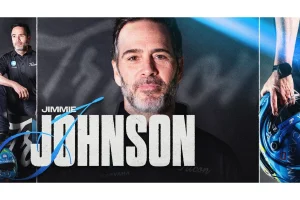
NASCAR awards three annual championships—Drivers’, Owners’, and Manufacturers’—with 32 unique Drivers’ champions since 1949, led by Richard Petty, Dale Earnhardt, and Jimmie Johnson (7 titles each).
Drivers’ Championships
Johnson holds five consecutive titles (2006–2010). Petty’s seven span three decades (1964, 1967, 1971–72, 1974–75, 1979); Earnhardt dominated 1980s–90s (1980, 1986–87, 1990–94).
All-Time Wins Leaders
| Rank | Driver | Wins |
|---|---|---|
| 1 | Richard Petty | 200 |
| 2 | David Pearson | 105 |
| 3 | Jeff Gordon | 93 |
| 4 | Darrell Waltrip / Bobby Allison | 84 |
| 6 | Jimmie Johnson / Cale Yarborough | 83 |
| 8 | Dale Earnhardt | 76 |
| 9 | Kyle Busch | 63 |
Teams score identical to drivers; multi-car owners take best result per race. Hendrick Motorsports leads with 14 Owners’ titles (1995–98, 2001, 2006–10, 2013, 2016, 2020–21). Richard Childress Racing (6), Joe Gibbs Racing (5), Team Penske (4) follow.
Manufacturers’ Championships
Chevrolet dominates with 42 Cup titles, 851 wins; Ford 17 titles, 728 wins; Toyota 3 titles since 2007 entry. Points via best-finishing car per race (1960–2013 F1-style; owners’ mirror since 2014).
Recent Manufacturers’ Champs
| Year | Make |
|---|---|
| 2024 | Chevrolet |
| 2023 | Chevrolet |
| 2022 | Chevrolet |
| 2021 | Chevrolet |
| 2020 | Ford |
| 2019 | Toyota |
| 2018 | Ford |
| 2017 | Toyota |
Active leaders: Kyle Busch (63 wins), Kevin Harvick (60), Denny Hamlin (51). Rookie of Year separate award.
Tracks and calendar
NASCAR Cup Series 2025 schedule spans 36 points races plus non-points Clash and All-Star across four track types: short tracks (high banking/contact), intermediates (1-2 mi drafting), superspeedways (2+ mi pack racing), and road courses (technical handling).
Track Classifications
| Type | Length | Count | Characteristics | Examples |
|---|---|---|---|---|
| Short Tracks | <1 mi | 6 | Flat/high banks; tire wear king | Martinsville (.526 mi), Bristol (.533 mi) |
| Intermediate | 1-2 mi | 17 | Drafting balance; stage strategy | Charlotte (1.5 mi), Kansas (1.5 mi) |
| Superspeedways | 2+ mi | 5 | Restrictor plates; big packs | Daytona (2.5 mi), Talladega (2.66 mi) |
| Road Courses | Varies | 5 | Braking/handling; wet tires possible | Sonoma (2.52 mi), COTA (3.41 mi) |
2025 Calendar Highlights
Season starts February 2 Clash at Bowman Gray Stadium (short track non-points); Daytona 500 opener February 16. Mexico City (Autódromo Hermanos Rodríguez) June 15 marks first points international race since 1958 (Toronto).
Key Schedule Table
| Period | Races | Notable Tracks/Events |
|---|---|---|
| FOX (Feb-May) | 12 | Daytona 500, COTA (Mar 2), Darlington Spring (Apr 6), Talladega Spring |
| Prime Video (May-Jun) | 5 | Coca-Cola 600 (May 25), Mexico City (Jun 15), Pocono |
| TNT (Jun-Aug) | 5 | Atlanta Summer (Jun 28), Chicago Street, Brickyard 400 (Jul 27) |
| NBC (Aug-Nov) | 14 | Iowa Speedway (Aug 3), Playoffs start Darlington (Aug 31), Phoenix Finale (Nov 2) |
Playoffs: Darlington (R16), Gateway/Bristol (R16), NHMS/Kansas/ROVAL (R12), Vegas/Talladega/Martinsville (R8), Phoenix Championship 4.
Track Records and Extremes
-
Shortest: Martinsville .526 mi (82.2 mph race avg record).
-
Longest: Talladega 2.66 mi (212.809 mph pole, Elliott 1987).
-
Highest Banking: Bristol 36° turns.
-
Flattest: New Hampshire 7°.
-
Dirt Return: Bristol 2021–22 (night dirt, paused 2023–25).
-
International: Mexico City 2025 (F1 circuit, ~2.4 mi).
Southeast roots (half races) expand nationwide; 38-week format since 2001. TV: FOX/Prime/TNT/NBC rotation.
NASCAR Cup Series races on 28 unique tracks in 2025 (36 points events), spanning short ovals, intermediates, superspeedways, road courses, and one street circuit, with Southeast roots but national reach.
Current Cup Tracks by Type
Short Tracks (<1 mile, 6 tracks)
High tire wear, aggressive restarts; paperclip/stadium shapes dominate.
| Track | Location | Length | Banking | Capacity | Notes |
|---|---|---|---|---|---|
| Martinsville | Ridgeway, VA | 0.526 mi | 12° | 55,000 | Paperclip; oldest continuous track (1947). |
| Bristol | Bristol, TN | 0.533 mi | 24-36° | 153,000 | Steepest concrete; night dirt 2021-22. |
| Richmond | Richmond, VA | 0.75 mi | 14° | 60,000 | D-shaped; spring/fall doubleheader. |
| North Wilkesboro | North Wilkesboro, NC | 0.625 mi | 14° | 18,000 | Returned 2023; historic short track. |
| Iowa Speedway | Newton, IA | 0.875 mi | 14° | 30,000 | New 2024; flat D-shape. |
| Lucas Oil IRP | Brownsburg, IN | 0.686 mi | 14° | 30,000 | Short track staple. |
Drafting balance; stage strategy key.
| Track | Location | Length | Banking | Capacity | Notes |
|---|---|---|---|---|---|
| Phoenix | Avondale, AZ | 1.022 mi | 9-10° | 51,000 | Playoff finale; flat tri-oval. |
| Darlington | Darlington, SC | 1.366 mi | 25° | 58,000 | Egg-shape; Throwback Weekend. |
| Charlotte | Concord, NC | 1.5 mi | 24° | 89,000 | Quad-oval; Coke 600 (600 mi). |
| Kansas | Kansas City, KS | 1.5 mi | 15° | 74,000 | D-shaped; night racing. |
| Las Vegas | Las Vegas, NV | 1.5 mi | 20° | 123,000 | Steep tri-oval; Playoff R12. |
| Texas | Fort Worth, TX | 1.5 mi | 24° | 112,500 | D-shaped; Spring doubleheader. |
| Homestead | Homestead, FL | 1.5 mi | 18-20° | 65,000 | Season finale pre-2023. |
Superspeedways (2+ miles, 5 tracks)
Restrictor plates/spacers; pack racing chaos.
| Track | Location | Length | Banking | Capacity | Notes |
|---|---|---|---|---|---|
| Daytona | Daytona Beach, FL | 2.5 mi | 31° | 101,000 | Daytona 500 opener. |
| Talladega | Lincoln, AL | 2.66 mi | 33° | 78,000 | Fastest (212 mph record 1987). |
| Atlanta | Hampton, GA | 1.54 mi | 24° | 71,000 | Reconfigured quad-oval. |
| Michigan | Brooklyn, MI | 2 mi | 18° | 72,000 | D-shaped; high speeds. |
| Indianapolis | Speedway, IN | 2.5 mi | 9° | 235,000 | Brickyard 400. |
Technical; braking/handling focus.
| Track | Location | Length | Capacity | Notes |
|---|---|---|---|---|
| Sonoma | Sonoma, CA | 2.52 mi | 47,000 | Wine country hills. |
| Watkins Glen | Watkins Glen, NY | 2.45 mi | 38,900 | Esses famous. |
| COTA | Austin, TX | 3.41 mi | 150,000 | F1 layout; esses. |
| Charlotte ROVAL | Concord, NC | 2.28 mi | 86,000 | Infused oval/road. |
| Chicago Street | Chicago, IL | 2.2 mi | N/A | Urban barriers. |
Mexico City (Autódromo Hermanos Rodríguez, 2.674 mi road course) debuts 2025 as first international points race since 1958. Total: ~3,000 miles raced; 38-week season.
Cultural and Global Reach
NASCAR Cup Series generates $3B+ annual economic impact, drawing 75M U.S. fans (primarily Southeast, 55+ males, rural/working-class) with 2.5M average TV viewers (2025 down 14% YoY) while pushing global expansion.
Domestic Fanbase and Economics
Core audience: 34% aged 55-64, 60% male, strong Southern roots (moonshine heritage). $7.7B media deal (2025-31: FOX/NBC/Prime/TNT) yields ~$1B/year; sponsorships (Busch, Coke, Xfinity) $500M+. Live gates: Daytona 500 peaks 100K+; total attendance ~5M/season. Merch/TV rights sustain 17 full-time teams ($15-20M/car budget).
Revenue Breakdown
| Source | Value |
|---|---|
| TV/Streaming | $1B/year |
| Sponsorships | $500M |
| Gates/Merch | $300M |
| Track Revenue | $1B+ |
2025 averaged 2.45M viewers (record low; cable/streaming fragmentation). Daytona 500: 6-9M peak. Playoffs boost 20%; Chicago Street Race drew urban youth. Digital: 1B+ social impressions; Netflix “Full Speed” (2023) expanded reach.
Global Expansion Efforts
U.S.-centric (99% revenue domestic); Mexico/Canada lead overseas (6% Mexican fans). 2025 Mexico City debut (Autódromo Hermanos Rodríguez) first points international since 1958. Exhibition history: Japan (1996-98), Australia. Whelen Euro Series (Europe), Pinty’s (Canada) build grassroots.
| Market | Fan Penetration |
|---|---|
| Mexico | 6.1% sports fans |
| Canada | Strong Pinty’s tie-in |
| Europe | Whelen Series growth |
| Brazil/Asia | Emerging digital |
Petty family (200 wins), Earnhardt “Intimidator,” Johnson’s 7 titles define lore. Films: “Talladega Nights,” Pixar “Cars” (Piston Cup nod). Gaming: iRacing/NASCAR Heat. Diversity push: Drive for Diversity; women like Hailie Deegan rising. 2025 Liberty Media (F1 owner) Dorna acquisition rumors signal global ambitions.