
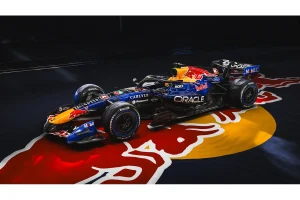
Formula One represents the FIA-sanctioned apex of single-seater, open-wheel circuit racing, structured as the FIA Formula One World Championship since its inception in 1950. Universally acclaimed as motorsport’s highest echelon, it delivers seasons of 20-24 Grands Prix across FIA Grade One circuits—ranging from purpose-built permanent road courses to meticulously adapted street and park layouts—with cumulative points from qualifying sprints, main races, and fastest laps determining the annual Drivers’ and Constructors’ World Championships.
Core Structure and Championships
Formula One operates as the FIA Formula One World Championship, the apex of single-seater open-wheel racing under strict “Formula One” technical regulations ratified by the Fédération Internationale de l’Automobile (FIA) in 1946 and first applied in 1947. Sanctioned annually since 1950, it crowns two champions: the Drivers’ World Champion (individual) and Constructors’ World Champion (team/chassis designer), determined by cumulative points from 20-24 Grands Prix, plus sprints and fastest laps. Over 75 seasons (as of 2025), 34 drivers and 16 constructors have claimed titles, with championships often hinging on razor-thin margins—e.g., 2021’s Verstappen-Hamilton decider separated by 8 points after 22 rounds.
Historical Foundations and Evolution
Pre-WWII Grand Prix racing fragmented across national rules (e.g., France’s Voiturette formula), coalescing post-1945 into unified FIA formulas: Formula One (4.5L unsupercharged/1.5L supercharged engines initially) and Formula Two. The 1950 World Championship launched with seven scoring rounds—Silverstone (British GP, May 13), Monaco, Indianapolis 500 (non-points for Europeans), Spa, Reims, Silverstone alternate (70th Anniversary), Bremgarten (Swiss), and Monza—excluding Indy results after 1960 due to incompatible rules.
Giuseppe “Nino” Farina clinched the inaugural Drivers’ title for Alfa Romeo in the Tipo 158 “Alfetta,” winning three races (Britain, Belgium, Italy) over teammate Juan Manuel Fangio (two wins) by three points (30-27), with Alfa’s customer privateers filling midfield. Fangio dominated 1951-1957 across Alfa Romeo, Maserati, Mercedes-Benz, and Ferrari, securing five titles (47% win rate from 51 starts)—a record unbroken for 45 years until Michael Schumacher (1994-2004, Benetton/Ferrari) matched it, then Lewis Hamilton (2008-2020, McLaren/Mercedes) equaled seven.
Constructors’ honors began 1958 (retroactive to 1950 data published), crediting chassis-engine pairings; Ferrari leads with 16 (1961 debut). Eras define dominance: British “Invasion” (1960s, Lotus/Cooper), turbo 1980s (McLaren-TAG Porsche), Schumacher’s Ferrari streak (2000-2004: five straight), Mercedes hybrids (2014-2021: eight), Red Bull-Verstappen (2022-2024+).
| Decade | Defining Champions (Drivers) | Constructors Dominance | Key Tech/Notes |
|---|---|---|---|
| 1950s | Fangio (5) | Ferrari (2), Maserati (2) | Front-engined; 2.5L limit; Fangio’s adaptability. |
| 1960s | Hill, Clark, Surtees, Brabham, Stewart | Lotus, Ferrari, BRM | Rear-engine revolution; 3L V8s; ground effect origins. |
| 1970s | Stewart (3), Fittipaldi (2), Lauda (2), Hunt, Scheckter | Ferrari (4), Lotus (1), McLaren (2), Tyrrell (1) | 3L flat-12s; turbo tease; safety awakenings. |
| 1980s | Piquet (3), Prost (2), Lauda, Mansell, Senna, Prost | McLaren (7), Williams (3), Ferrari (1) | 1.5L turbos >1,000 hp; active suspension banned 1994. |
| 1990s | Schumacher (2), Prost, Senna, Hill, Villeneuve | Williams (5), McLaren (2), Benetton (2) | V10s; electronics ban post-Senna 1994. |
| 2000s | Schumacher (5), Räikkönen, Alonso (2) | Ferrari (6), Renault (2), McLaren (1) | V8s; Bridgestone wars. |
| 2010s | Vettel (4), Hamilton (6) | Red Bull (4), Mercedes (6) | V6 hybrids debut 2014; halo 2018. |
| 2020s | Hamilton, Verstappen (4+) | Mercedes (1), Red Bull (4+) | Ground effect 2022; cost cap. |
Championship Mechanics and Eligibility
Drivers’ Championship: Sole possession after final race; ties broken by most wins, then 2nds, etc. Must start every scoring event (exceptions rare, e.g., Rindt’s 1970 posthumous title).
Constructors’ Championship: Best two cars per team per race; excludes privateers/customer teams (banned 1981 chassis rule). Ties by races won, etc.
Eligibility:
-
Drivers: FIA Super Licence (18+, 40 points/3yrs from F2/F3/Indy, 300km F1 testing, physical/criminal checks, $0.25M fee). Permanent numbers 2-99 (1 for defending champ); 17 retired (Bianchi tribute).
-
Teams: FIA entry approval, $200M anti-dilution fee (new 2026+ entrants), Grade 1 pit/garage compliance.
-
Circuits: Grade 1 homologation (runoffs, barriers, medical); min 3.5km length.
Scoring Events: Grands Prix (305km min), sprints (100km), fastest laps (top-10 only). Drop worst results? No—full accumulation tests endurance.
Title Deciders and Legacy
Dramatic finales abound: 1984 Lauda-Prost (0.5pt margin), 1986 Prost-Mansell-Piquet (Alonso math), 2021 Abu Dhabi controversy (last-lap SC). Fangio’s five teams, Schumacher’s Ferrari revival (6/11 titles), Hamilton’s records (105+ wins, 104+ poles) anchor lore. UK leads nations (20 titles/10 drivers), followed by Brazil (3), Finland (4). Jochen Rindt (1970) sole posthumous champ, killed pre-finale yet unbeatable.
This structure—meritocratic, global, tech-pushing—sustains F1’s allure, with 2026 Audi/Cadillac entries heralding expansion amid hybrid-to-electric transition.
Cars, Technology, and Cost Controls
Modern F1 cars embody engineering extremes: mid-engined, open-wheel hybrids with carbon-fiber composite monocoques fusing survival cells, front/rear impact attenuators, side intrusion panels, and the titanium halo cockpit protection ring introduced in 2018. Propulsion stems from 1.6-liter, 90-degree turbocharged V6 power units since 2014—integrating internal combustion (ICE ~700 hp), MGU-K kinetic recovery (~160 hp), MGU-H heat recovery, and battery storage for over 1,000 peak horsepower. Top speeds surpass 370 km/h on straights like Monza’s, while cornering loads exceed 5-6g laterally and longitudinally, demanding superhuman physical conditioning.
Aerodynamics generate ~2,000 kg of downforce at speed via front/rear wings, diffusers, and venturi-channelled ground-effect floors; 2022’s generational redesign excised bargeboards, mandated 18-inch Pirelli wheels with 25% less rotating mass, and prioritized floor-dominant downforce to slash turbulent “dirty air,” facilitating overtakes within 1 second. Fuel efficiency mandates 100 kg per race, blending E10 sustainable components toward 100% by 2026. Escalating costs prompted a 2021 budget cap—trimmed from $175M to $135M in 2023 (rising to $144.7M by 2026)—excluding driver salaries, top-three executives, marketing, and parental funding, compelling efficiency-driven R&D over fiscal arms races.
Points System and Race Weekends
Formula One’s points system incentivizes consistency across diverse track conditions, rewarding top-10 finishers while incorporating fastest lap bonuses and scaled reductions for disruptions, feeding directly into Drivers’ and Constructors’ championships. Race weekends blend preparation, qualifying drama, and high-stakes Grands Prix, structured over three days with optional sprint formats at eight events (2025), totaling up to 25 scoring opportunities per season.
Current Points Allocation (Post-2010, Updated 2022)
Standard Grand Prix awards points to the top 10 classified finishers—requiring at least 90% race distance completion—plus 1 bonus for fastest lap if finishing top 10. Constructors’ points sum both drivers’ hauls per team.
| Position | Points | Fastest Lap Bonus |
|---|---|---|
| 1st | 25 | +1 (if top 10) |
| 2nd | 18 | |
| 3rd | 15 | |
| 4th | 12 | |
| 5th | 10 | |
| 6th | 8 | |
| 7th | 6 | |
| 8th | 4 | |
| 9th | 2 | |
| 10th | 1 |
Reduced Points for Shortened Races (distance-based tiers, no fastest lap):
-
≥75% distance: Full points
-
≥58% but <75%: 18-15-12-10-8-6-4-2-1-0 (top 10)
-
≥25% but <58%: 13-10-8-6-4-3-2-1-0-0 (top 9)
-
≥2 laps but <25%: Half points (rounded down)
-
<2 laps complete: No points
Sprint Race Points (top 8, independent of Grand Prix grid):
| Position | Points |
|---|---|
| 1st | 8 |
| 2nd | 7 |
| 3rd | 6 |
| 4th | 5 |
| 5th | 4 |
| 6th | 3 |
| 7th | 2 |
| 8th | 1 |
Historical shifts—from 8-6-4-3-2 (1950) to 10-8-6-4-3-2-1 (1960), winner-takes-50% dominance (1960s), sliding scales (1991), and 25-point top-10 (2010)—reflect balance between rewarding excellence and grid depth.
Standard Race Weekend Schedule (Friday-Sunday)
Weekends span ~72 hours, accommodating global time zones (night races like Bahrain, Las Vegas) and weather variability.
| Session | Day/Time (Local) | Duration | Purpose |
|---|---|---|---|
| FP1 | Friday ~13:30 | 60 min | Initial setup, long runs, baseline data |
| FP2 | Friday ~17:00 | 60 min | Short runs, qualifying simulation, night adaptation |
| FP3 | Saturday ~12:30 | 60 min | Final tweaks, race pace confirmation |
| Qualifying | Saturday ~16:00 | 60 min total | Grid determination (Q1+Q2+Q3) |
| Grand Prix | Sunday ~15:00 | ~305 km / 2 hrs max | Championship race (min 305 km, ~1.5-3 hrs) |
Knockout Qualifying Breakdown:
-
Q1 (18 minutes): All 20 cars; slowest 5 eliminated. 107% rule: Anyone >107% of fastest Q1 time needs steward approval to start (rarely denied if competitive).
-
Q2 (15 minutes): Top 15; bottom 5 of this phase eliminated (positions 11-15).
-
Q3 (12 minutes): Top 10; sets pole to P10. Single flying laps or trains form.
Parc fermé locks cars post-qualifying: no setup changes except approved repairs (e.g., gearbox), ensuring race-as-qualified.
Sprint Weekend Format (8 Events: China, Miami, Austria, Austin, Brazil, Qatar, Miami x2?)
Replaces FP1/FP2 with Sprint Shootout; adds Saturday sprint (~100 km, 30 min).
| Session | Day/Time | Duration | Notes |
|---|---|---|---|
| FP1 | Friday 13:30 | 60 min | Sole practice |
| Sprint Shootout | Friday 17:00 | 30 min total | SQ1 (12 min, top 8); SQ2 (10 min, top 4); SQ3 (8 min, pole) |
| FP2 | Saturday 11:00 | 60 min | Grand Prix prep |
| Sprint Race | Saturday 16:00 | ~100 km / 30 min | Sets Sunday grid; 8-7-6… points |
| Qualifying | Saturday 19:00 | 60 min | Full Q1-Q3 for Grand Prix |
| Grand Prix | Sunday 15:00 | 305 km | Main event |
Introduced 2021 (3 events), expanded for action; shootout mirrors qualifying but half-duration per phase.
Pit Stops, Tires, and Race Dynamics
Mandatory: Minimum 1 stop (dry); wet-to-dry transitions free. Pit lane: 80 km/h entry/exit (60 km/h under SC).
Tires (Pirelli, 18-inch since 2022):
-
Slicks: C1 (hardest), C2, C3, C4, C5 (softest); 2 compounds mandatory use.
-
Inters/Wets: Green-banded intermediate; full wet (blue); extreme wet (2025 trials).
-
Allocation: 13 sets dry, 4 inters, 2 full wets per weekend.
Race Length: Fixed ~305 km (shorter for Monaco/Singapore); 2-hour max (extendable 1 hour rain); DRS from Lap 2 in 3 zones/car max.
Parc Fermé Violations: Gear ratio, wing angle changes banned; penalties range from grid drops to DSQ.
This structure—balancing strategy, raw speed, and unpredictability—delivers ~1,000 points contested annually, with championships often decided by <20 points margins.
Safety Systems, Flags, and Race Control
Formula One’s safety framework has evolved from the perilous early decades—where 52 drivers perished between 1950-1994—to a multi-layered system integrating proactive circuit design, reactive interventions, advanced medical response, and data-driven protocols, making it statistically safer than public roads per kilometer raced. The FIA race director, supported by a rotating panel of three stewards (one driver representative), enforces the International Sporting Code and technical regulations in real-time from the Race Control room, issuing directives via radio, pit boards, and official broadcasts.
Core Safety Interventions
Safety Car (SC) deployment neutralizes racing after serious incidents, recovery operations, or extreme weather, bunching the field behind a Mercedes-AMG GT safety vehicle at ~120-150 km/h (track-dependent) with overtaking prohibited and pit stops slowed to 80 km/h. Lapped cars may unlap during full-course yellow. Virtual Safety Car (VSC), introduced post-Jules Bianchi’s 2014 fatality, enforces minimum lap/sector delta times (typically 30-40% slower than personal best) without bunching, ideal for lighter incidents.
Red flags halt sessions entirely—drivers return to pits at reduced speed for restarts (standing if <2 laps completed, rolling otherwise) or abandonment. Medical Car shadows the safety car with a 20-person team led by Prof. Sid Watkins’ successors, equipped for on-track trauma. FIA-mandated halo (mandatory 2018, saving Romain Grosjean 2020, Zhou Guanyu 2022) withstands 12g frontal impacts; HANS devices (2003) curb basilar skull fractures; wheel tethers prevent flying debris.
Flag Signals and Meanings
Flags, displayed at marshal posts and digitally via LED panels/cockpit displays, provide instantaneous, standardized communication. Waving flags denote immediate action; static for ongoing conditions.
| Flag Type | Visual Description | Meaning and Driver Action |
|---|---|---|
| Green | White-green flag | Track clear; racing resumed after yellow. Full throttle permitted. |
| Single Yellow (waving/static) | Yellow only | Caution—incident ahead; slow down, no overtaking, be prepared to stop. |
| Double Yellow (waving/static) | Two yellows | Extreme danger; slow drastically, ready to stop fully, no overtaking. |
| Blue (waving/static) | Blue with orange band | Faster car approaching (lapped or blue-flagged); yield position promptly. Persistent ignoring risks time penalties. |
| Black & White Diagonal | Diagonal black/white | Unsportsmanlike driving (e.g., weaving); warning—next breach escalates. |
| Black & Orange Spot (with number) | Black flag + orange circle + driver number | Mechanical defect/hazard; pit immediately for inspection/repairs. |
| Black (with number) | Black flag + driver number | Disqualified; report to pits, session ends for that driver. |
| White | White flag | Slow vehicle ahead (e.g., medical car); reduce speed. |
| Red | Red flag | Session stopped; slow to 60 km/h, return to pits or grid. No overtaking. |
| Chequered | Black/white checkers | Session ended; slow down, return to parc fermé. No stopping on track. |
| Slippery Surface | Yellow/red striped | Oil/debris/wet patches; extreme caution. |
Race Control Operations and Enforcement
Race Control coordinates via telemetry feeds, 100+ trackside cameras, GPS tracking (to 0.1s accuracy), and weather radars. Pit lane speed limit: 80 km/h (60 km/h under SC/VSC). Start procedures: formation lap bunches grid, standing starts (5 red lights extinguish), rolling backups if stalls occur. DRS (Drag Reduction System) activates post-lap 2 in designated zones if within 1s of car ahead, toggleable by driver button.
Penalties range from warnings to drives-through (full lap in pits at min speed), 5-10s time additions, grid drops (3-5+ places), or disqualifications. Stewards review incidents within minutes using video/telemetry, prioritizing “causing a collision,” “excessive force,” or “track limits” (3+ breaches = 5s penalty; 5th = drive-through). Post-1994 reforms (Senna/Ratzenberger weekend) mandated circuit audits (Grade 1 requires 20m runoffs at 250 km/h zones), barrier upgrades (TecPro/SAFER), and mandatory driver briefings.
Medical and Emergency Response
FIA Institute standards equip each circuit with a 60-bed medical center, two on-track response units (RTV), and helicopters. Response time targets: 2 minutes arrival. Sid Watkins Award honors medical excellence; annual FIA Super Licence mandates anti-doping, mental health training. No driver fatalities since Bianchi (2015), with 15 years incident-free as of 2025, reflecting halo’s 80% head impact reduction and VSC’s 50% incident severity drop.
This regime—bolstered by AI collision prediction and 2026’s lighter, agile chassis—ensures F1’s safety lead while preserving edge-of-control thrills.
Grands Prix Calendar, Circuits, and Venues
1950’s Europe-heavy slate (Silverstone, Monaco, Indy 500) ballooned to 24 races by 2024, spanning six continents bar Africa (Morocco last 1958). Logistics cluster Europe-Mideast, Asia-Pacific, Americas for sustainability.
Detailed Current Venues Table (Contracted 2026+ with History)
| Grand Prix | Circuit | Country/City | Track Type | Length | Direction | F1 Debut | Key Features/History | Contract To |
|---|---|---|---|---|---|---|---|---|
| Abu Dhabi | Yas Marina | UAE | Permanent night | 5.281 km | Anti-CW | 2009 | Twilight finale; hotel-pit innovation; 2021 reprofile. | 2030 |
| Australia | Albert Park | Melbourne | Park/street semi | 5.278 km | CW | 1996 | Lakeside; 2022 chicane removal; season opener. | 2037 |
| Austria | Red Bull Ring | Spielberg | Permanent hills | 4.318 km | CW | 1970 | Österreichring legacy; altitude drops; Red Bull HQ. | 2041 |
| Azerbaijan | Baku City | Baku | Street | 6.003 km | Anti-CW | 2016 | 2.2 km straight; castle walls; DRS chaos. | 2030 |
| Bahrain | BIC | Sakhir | Desert permanent (night) | 5.412 km | CW | 2004 | Mideast first; outer loop variant; endurance layout. | 2036 |
| Barcelona | Catalunya | Montmeló | Permanent | 4.657 km | CW | 1991 | All-corner test bed; 2023 chicane gone. | 2026 |
| Belgium | Spa-Francorchamps | Stavelot | Classic triangle | 7.004 km | CW | 1950 | Eau Rouge/Raidillon; 24 corners; rain roulette. | 2031 |
| Britain | Silverstone | Silverstone | WW2 airfield | 5.891 km | CW | 1950 | Maggotts-Becketts; every season; fastest lap record. | 2034 |
| Canada | Gilles Villeneuve | Montreal | Island semi | 4.361 km | CW | 1978 | Wall of Champions; Forum chicane; Senna poles. | 2031 |
| China | Shanghai Int’l | Shanghai | Modern Tilke | 5.451 km | CW | 2004 | Tightening 1-2; 1.2 km back straight. | 2030 |
| Dutch | Zandvoort | Zandvoort | Dunes/banked | 4.259 km | CW | 1952 | Tarzan banking; Verstappen circus. | 2026 |
| Hungary | Hungaroring | Mogyoród | Twisty permanent | 4.381 km | CW | 1986 | Iron Curtain debut; Monaco sans walls. | 2032 |
| Italy | Monza | Monza | Speed temple | 5.793 km | CW | 1950 | Parabolica/Lesmo; banking remnants. | 2031 |
| Japan | Suzuka | Suzuka | Figure-8 Honda | 5.807 km | CW | 1987 | 130R/ Spoon; Senna-Prost duels. | 2029 |
| Las Vegas | Strip Circuit | Las Vegas | Night street | 6.120 km | Anti-CW | 2023 | Sphere backdrop; 1.1 km straight. | 2027 |
| Mexico | Hermanos Rodríguez | Mexico City | Stadium hybrid | 4.304 km | CW | 1963 | 2,225m altitude; Peraltada bank. | 2028 |
| Miami | Miami Int’l Autodrome | Miami Gardens | Stadium street | 5.412 km | CW | 2022 | Hard Rock loop; Netflix fame. | 2041 |
| Monaco | Monaco Street | Monte Carlo | Iconic street | 3.337 km | CW | 1950 | Swimming pool; qual > race. | 2035 |
| Qatar | Lusail | Lusail | Floodlit smooth | 5.419 km | CW | 2021 | MotoGP base; night kerbs. | 2032 |
| São Paulo | Interlagos | São Paulo | Anti-CW undulator | 4.309 km | Anti-CW | 1973 | Senna S; 2021 Hamilton controversy. | 2030 |
| Saudi | Jeddah Corniche | Jeddah | Fastest street | 6.174 km | Anti-CW | 2021 | 27 corners; blind entries. | 2030 |
| Singapore | Marina Bay | Singapore | Night street | 4.940 km | Anti-CW | 2008 | First night; 2-hr limit tester. | 2028 |
| Spain | Madring (planned) | Madrid | Urban hybrid | ~5.0 km | CW | 2026 | Barcelona replacement. | 2035 |
| USA | COTA | Austin | Modern Tilke | 5.513 km | Anti-CW | 2012 | 133m climb; esses homage. | 2034 |
Top Drivers and Major Records
Over 75 years, 34 drivers claimed titles amid eras defined by Alfa dominance, British Invasion, turbo 1980s, Schumacher’s Ferrari dynasty, and hybrid modernity. Tragedies catalyzed survival leaps.
Drivers and Records Table
| Category | Driver(s) | Detail |
|---|---|---|
| Most Titles | M. Schumacher, L. Hamilton | 7 (Schumacher 1994-2004; Hamilton 2008-2020). |
| Constructors Titles | Ferrari | 16 (1961 debut). |
| Win % | J.M. Fangio | 47% (24/51). |
| Wins | L. Hamilton | 105+. |
| Poles | L. Hamilton | 104+. |
| Consecutive Titles | M. Schumacher | 5 (2000-04). |
| Titles/Team | M. Schumacher/Ferrari | 5. |
| Posthumous | J. Rindt | 1970. |
| Nation Titles | UK | 20 (10 drivers). |
| Title Span | M. Schumacher | 10 years. |
Key Fatalities Table (Influential Cases)
| Driver | Year | Event/Session | Impact |
|---|---|---|---|
| J. Rindt | 1970/Quali Monza | Barriers/cars. | |
| R. Peterson | 1978/Race Monza | Starts/medical. | |
| G. Villeneuve | 1982/Quali Zolder | Contact integrity. | |
| R. Ratzenberger | 1994/Quali Imola | Aero failure. | |
| A. Senna | 1994/Race Imola | Comprehensive reforms. | |
| J. Bianchi | 2014/Race Suzuka | VSC/virtual rules. |
Teams, Pathways, Economics, and Future Direction
Formula One’s competitive landscape features ten constructors (expanding to eleven in 2026), each fielding two cars per event, clustered primarily in the UK’s “Motorsport Valley” around Northamptonshire and Oxfordshire for supply chain synergy. Ferrari remains the sole Italian survivor in Maranello, while Haas operates a hybrid US-Italian model; Sauber transitions to Audi factory power in Hinwil, Switzerland, and Cadillac prepares a 2028 entry via Andretti collaboration.
Current Teams and Bases Table
| Team (2025 Entry) | Base Location | Chassis/Engine | Key Notes |
|---|---|---|---|
| Ferrari | Maranello, Italy | Ferrari | 16 Constructors’ titles; sole engine-chassis maker since 1961. |
| Mercedes-AMG Petronas | Brackley, UK | Mercedes | Dominant hybrid era (8 titles 2014-2021); Hamilton/Russell core. |
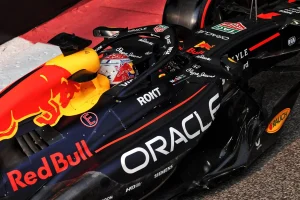
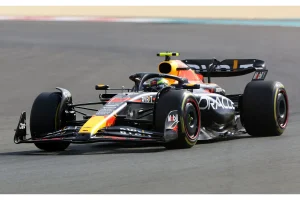
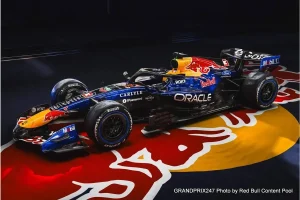
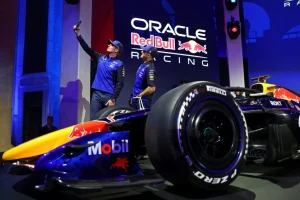
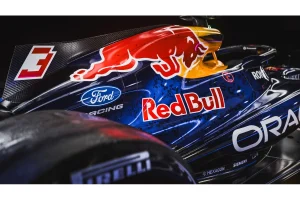
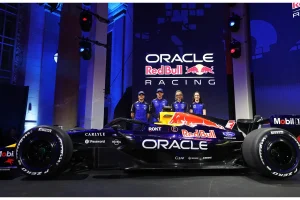
| Oracle Red Bull Racing | Milton Keynes, UK | Red Bull Powertrains (Honda RBPT) | Verstappen dynasty; 2022-24 titles; own engines from 2026. |
| McLaren Formula 1 Team | Woking, UK | Mercedes | Resurgent; Piastri/Norris; historic 9 titles. |
| Aston Martin Aramco Cognizant | Silverstone, UK | Mercedes | Lawrence Stroll project; Alonso/Stroll; F1 return 2021. |
| BWT Alpine F1 Team | Enstone, UK / Viry-Châtillon, FR | Renault | French roots; Ocon/Gasly; midfield challengers. |
| Williams Racing | Grove, UK | Mercedes | 9 titles legacy; Sainz/Albon; Dorilton Capital ownership. |
| Visa Cash App RB (Racing Bulls) | Faenza, Italy / Milton Keynes, UK | Red Bull Powertrains | Red Bull sister; Tsunoda/Lawson; development squad. |
| MoneyGram Haas F1 Team | Kannapolis, USA / Maranello, Italy | Ferrari | Gene Haas venture; Magnussen/Hülkenberg; smallest budget. |
| Stake F1 Team Kick Sauber | Hinwil, Switzerland | Ferrari | Audi factory from 2026; Bottas/Bearman; Alfa transition. |
Drivers progress via a structured feeder ladder emphasizing FIA-sanctioned single-seaters: karting (ages 6-14) feeds Formula 4 regional series, then FIA Formula 3 (ex GP3), FIA Formula 2 (ex GP2), and optional F1 Academy (women’s series since 2023). Super Licence demands 40 points over three years (e.g., F2 title = 40; F3 title = 25), 80% attendance, age 18+, and physical tests; exceptions rare (e.g., Verstappen’s 2015 direct promotion). Testing minimum: 300 km in current-spec car.
Economics and Governance
Liberty Media acquired Formula One Group’s commercial rights for $4.4 billion in 2017, transforming a Europe-centric sport into a $2.5-3 billion annual revenue machine via broadcasting (ESPN, Sky, ServusTV), sponsorships (crypto, Aramco), and hospitality. The 2021-2025 Concorde Agreement—binding FIA, teams, and Liberty—distributes ~$1.2 billion prize money: 45% split equally among teams (~$135M base each), 30% positionally (Mercedes topped ~$170M in 2023), 25% bonuses/marketing uplift. Historic disputes (e.g., 1990s CART split, 2009-12 manufacturer walkouts) resolved via these pacts, expiring 2030 with 2026 negotiations pending.
Team costs once exceeded $400M for frontrunners (Ferrari 2019), but the 2021 cost cap—$145M in 2025, adjustable for races/inflation—excludes driver salaries (~$50M for Verstappen), top-3 executives, parental funding, and travel. Independent auditors enforce; breaches (Red Bull 2021, Aston Martin 2023) trigger fines/wind-tunnel limits. Revenue streams: ~50% TV/media, 25% track fees (promoters pay F1 ~$50M/race), 25% sponsors/CFO.
Sustainability and Regulatory Future
F1 targets net-zero carbon by 2030, reducing logistics (77% emissions) via sustainable aviation fuel (SAF) trials, clustered calendars, and freight optimization; events mandate zero-waste, electric shuttles. Fuels progress: E10 in 2022, 100% sustainable drop-in by 2026 (no ethanol/biofuels). #WeRaceAsOne (2020-) drives diversity: 35% female hires target, F1 Academy, Dare to Dream scholarships.
2026 power unit revolution scraps MGU-H for simplified 50/50 ICE-electric split (ICE ~400 kW, electric ~350 kW, total ~1,000 hp), fully sustainable fuel, and active aero (manual DRS-style switches). Chassis shrinks 30 kg, 18-inch wheels persist, standard parts cut costs 10%. Aims: closer racing, manufacturer influx (Honda, Cadillac, Audi), electric parity with FE. Cadillac joins 2026 (initially Ferrari-powered), Audi 2026 full works. Calendar eyes 24 races, Madrid debuts 2026 replacing Barcelona.