
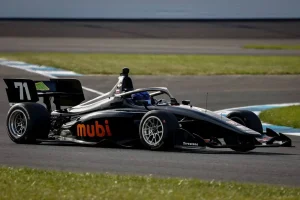
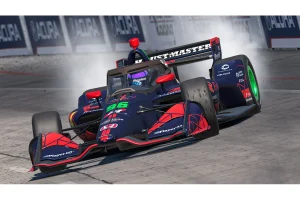
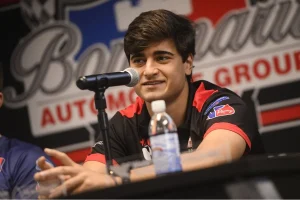
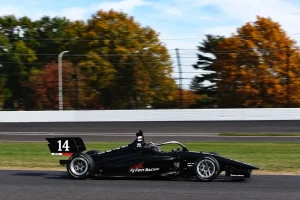
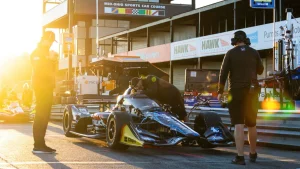
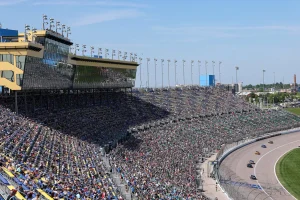
INDY NXT by Firestone stands as the premier developmental open-wheel series in North America, serving as the official feeder and highest rung of the Road to Indy ladder directly beneath the NTT INDYCAR SERIES. Sanctioned by IndyCar, it deploys identical Dallara chassis and Firestone tires as the top series, contesting ovals, road courses, and street circuits—often as undercard support—to groom talent for IndyCar’s high-stakes environment.
Overview and historical evolution
INDY NXT by Firestone is the top rung of the Road to Indy ladder and has evolved through several distinct eras since the 1970s, always serving as a feeder to top‑level American open‑wheel racing.
Roots and USAC Mini‑Indy (1970s–early 1980s)
After World War II, U.S. open‑wheel “ladder” racing relied on sprint cars and midgets, with no single formula‑car feeder to Indy. As top‑level cars switched to rear‑engined, formula‑style designs in the late 1960s, USAC launched the Mini‑Indy Series (1977–1980) using Super Vee machinery to create a more formal path toward Indy. Champions such as Tom Bagley, Bill Alsup, Dennis Firestone, and Peter Kuhn came from this series before it folded when USAC stopped sanctioning Indy car races outside the 500.
CART American Racing Series / original Indy Lights (1986–2001)
CART created the American Racing Series (ARS) in 1986 as a spec, rear‑engined formula series to be its official feeder. CART took over sanctioning in 1988, and in 1991 the series was rebranded as Indy Lights with Firestone title sponsorship, running as a regular undercard to CART events. It used March, then Lola F3000‑derived chassis with Buick V6 engines and produced future CART and IndyCar champions, Champ Car winners, and two future Formula 1 drivers. Financial trouble and the rise of the rival Indy Racing League led CART to cancel Indy Lights after the 2001 season, with Toyota Atlantic becoming Champ Car’s de facto main feeder.
IRL Infiniti Pro / Indy Pro Series (2002–2007)
To fill the development gap on the IRL side, the Infiniti Pro Series launched in 2002, using a Dallara chassis and a 3.5‑litre Infiniti‑based V8 tuned by TWR. Initially oval‑focused and lightly subscribed, it added road courses and more prize money from 2005, attracting higher‑profile prospects such as Marco Andretti and Phil Giebler. After Menards and Nissan ended sponsorship, it was renamed the Indy Pro Series but remained the primary IRL feeder up to the unified IndyCar era.
Firestone Indy Lights (2008–2022)
Following the unification of Champ Car and the IRL, the development series adopted the historic Indy Lights name in 2008, with Firestone as tyre and title sponsor. The Freedom 100 at Indianapolis Motor Speedway became its showpiece race, producing record‑close finishes like Logan Gomez’s 0.0005‑second win over Alex Lloyd in 2007 and Peter Dempsey’s four‑wide 0.0026‑second victory in 2013. In 2014 Andersen Promotions took over promotion and Cooper Tire replaced Firestone as tyre supplier, unifying the Road to Indy ladder under one promoter and brand.
In 2015 a new technical era began with the Dallara IL‑15 chassis and a 2.0‑litre turbocharged Mazda‑based MZR‑R engine producing 450 hp plus 50 hp push‑to‑pass, designed to last a full season without rebuilds. The 2020 season was cancelled due to low entries and the COVID‑19 pandemic, but from 2021 engines were prepared by AER and a halo device was added to the IL‑15 to modernise safety.
INDY NXT by Firestone (2023–present)
For 2023, Penske Entertainment rebranded the series as Indy NXT by Firestone, emphasising its role as the “next” step below the NTT INDYCAR SERIES. IndyCar took direct control of the series’ operation, while Andersen Promotions continued to run the lower‑tier USF Championships, and Firestone returned as tyre supplier to align with the top series. The Dallara IL‑15 chassis and AER‑prepared 2.0‑litre turbo engine remain in use with the halo, and recent champions such as Kyle Kirkwood (2021), Linus Lundqvist (2022), Christian Rasmussen (2023), Louis Foster (2024), and Dennis Hauger (2025) underline its continuing role as the final proving ground before full‑time IndyCar drives.
Across these eras—from USAC’s Mini‑Indy and CART’s American Racing Series through the IRL’s Infiniti Pro and today’s INDY NXT—the series has continuously adapted its branding, sanctioning, and technical package, but its core purpose has remained constant: to provide a structured, professional, formula‑car ladder that prepares drivers, teams, and engineers for full‑time competition in top‑tier IndyCar racing.
Technical specifications and regulations
A spec series ensures parity and cost containment (~$500K per season competitive package).
Current spec (2015-present: Dallara IL-15 era)
| Component | Specification | Notes |
|---|---|---|
| Chassis | Dallara IL-15 universal aero kit | Carbon-fiber monocoque; aeroscreen (halo variant) since 2021; ~1,400 lbs dry. |
| Engine | AER Mazda P63-2.0L turbo I4 | 450 hp base + 60 hp push-to-pass; season-durable (no rebuilds); direct injection. |
| Transmission | 6-speed sequential semi-automatic | Paddle-shift; paddle clutch. |
| Tires | Firestone Firehawk (IndyCar-spec) | Primary/alternate compounds; 18-inch wheels. |
| Fuel | VP Racing 101 RON unleaded | ~20 gal capacity; refuelable pits. |
| Dimensions | 192″ L x 76″ W | ~117″ wheelbase; oval/road aero variants. |
| Performance | 220+ mph ovals; 180+ mph roads | Push-to-pass mandatory restarts; 2L turbo aligns with IndyCar hybrid prep. |
Historical packages: March/Lola-Buick V6 (1986-2001); Dallara IP2-Infiniti/Nissan V8 (2002-2014). IndyCar approval required for teams/engines.
Championship calendar and weekend formats
14-16 rounds shadow IndyCar’s schedule: 3-4 ovals (IMS, Iowa, Texas), 6-8 roads (Barber, Road America), 3-4 streets (Detroit, Toronto). Doubleheaders at IMS (May) and Iowa Speedway.
Standard weekend schedule
| Session | Day/Time | Duration | Key Rules |
|---|---|---|---|
| Practice 1 | Friday PM | 30-45 min | Unlimited laps; setup optimization. |
| Practice 2 | Saturday AM | 30 min | Pre-qual tune-up. |
| Qualifying | Saturday PM | 20-30 min | Single hot lap per driver; full 27-car grid. |
| Race 1 (doubleheader events) | Saturday PM | 40 min / 75 miles | Rolling start; ~1 mandatory caution (ovals). |
| Race 2 | Sunday AM | 40 min / 75 miles | Independent; reverse top-8 grid select events. |
Ovals: Double-file restarts. Streets: Standing starts possible. Pit stops: Fuel/tires optional; ~10s fuel-only.
Points and championship determination
Points to all classified runners (80% distance completed). Bonuses: Pole (+1), most laps led (+2), laps led (+1).
Full points table
| Pos | Pts | Pos | Pts | Pos | Pts | Pos | Pts |
|---|---|---|---|---|---|---|---|
| 1 | 50 | 8 | 24 | 15 | 16 | 22 | 9 |
| 2 | 40 | 9 | 22 | 16 | 15 | 23 | 8 |
| 3 | 35 | 10 | 20 | 17 | 14 | 24 | 7 |
| 4 | 32 | 11 | 19 | 18 | 13 | 25 | 6 |
| 5 | 30 | 12 | 18 | 19 | 12 | 26 | 5 |
| 6 | 28 | 13 | 17 | 20 | 11 | 27 | 5 |
| 7 | 26 | 14 | 17 | 21 | 10 |
Titles: Driver, Team (single best car), Rookie-of-the-Year. Ties: wins > 2nds > 3rds > pole count.
Champions: Complete historical list
USAC Mini-Indy Series (1977-1980)
| Year | Champion(s) | Chassis | Engine |
|---|---|---|---|
| 1977 | Tom Bagley / Herm Johnson | Zink/Lola | Volkswagen |
| 1978 | Bill Alsup | Argo JM2 | Volkswagen |
| 1979 | Dennis Firestone | March 79V | Volkswagen |
| 1980 | Peter Kuhn | Ralt RT1/RT5 | Volkswagen |
CART American Racing Series / Indy Lights (1986-2001)
| Year | Champion | Team | Chassis | Engine |
|---|---|---|---|---|
| 1986 | Fabrizio Barbazza | Arciero | March 86A | Buick V6 |
| 1987 | Didier Theys | Truesports | March 86A | Buick V6 |
| 1988 | Jon Beekhuis | P.I.G. | March 86A | Buick V6 |
| 1989 | Mike Groff | Leading Edge | March 86A | Buick V6 |
| 1990 | Paul Tracy | Landford | March 86A | Buick V6 |
| 1991 | Éric Bachelart | Landford | March 86A | Buick V6 |
| 1992 | Robbie Buhl | Leading Edge | March 86A | Buick V6 |
| 1993 | Bryan Herta | Tasman | Lola T93/20 | Buick V6 |
| 1994 | Steve Robertson | Tasman | Lola T93/20 | Buick V6 |
| 1995 | Greg Moore | Forsythe | Lola T93/20 | Buick V6 |
| 1996 | David Empringham | Forsythe | Lola T93/20 | Buick V6 |
| 1997 | Tony Kanaan | Tasman | Lola T97/20 | Buick V6 |
| 1998 | Cristiano da Matta | Tasman | Lola T97/20 | Buick V6 |
| 1999 | Oriol Servià | Dorricott | Lola T97/20 | Buick V6 |
| 2000 | Scott Dixon | PacWest | Lola T97/20 | Buick V6 |
| 2001 | Townsend Bell | Dorricott | Lola T97/20 | Buick V6 |
IRL Infiniti Pro / Indy Pro / Firestone Indy Lights / INDY NXT (2002-present)
| Year | Champion | Team | Chassis | Engine |
|---|---|---|---|---|
| 2002 | A.J. Foyt IV | A.J. Foyt | Dallara IP2 | Infiniti |
| 2003 | Mark Taylor | Panther | Dallara IP2 | Infiniti |
| 2004 | Thiago Medeiros | Schmidt | Dallara IP2 | Infiniti |
| 2005 | Wade Cunningham | Stewart | Dallara IP2 | Infiniti |
| 2006 | Jay Howard | Schmidt | Dallara IP2 | Nissan |
| 2007 | Alex Lloyd | Schmidt | Dallara IP2 | Nissan |
| 2008 | Raphael Matos | AGR-AFS | Dallara IP2 | Nissan |
| 2009 | J.R. Hildebrand | AGR-AFS | Dallara IP2 | Nissan |
| 2010 | Jean-Karl Vernay | Schmidt | Dallara IP2 | Nissan |
| 2011 | Josef Newgarden | Schmidt | Dallara IP2 | Nissan |
| 2012 | Tristan Vautier | Schmidt | Dallara IP2 | Nissan |
| 2013 | Sage Karam | Schmidt Peterson | Dallara IP2 | Nissan |
| 2014 | Gabby Chaves* | Belardi | Dallara IP2 | Nissan |
| 2015 | Spencer Pigot | Juncos | Dallara IL-15 | Mazda |
| 2016 | Ed Jones | Carlin | Dallara IL-15 | Mazda |
| 2017 | Kyle Kaiser | Juncos | Dallara IL-15 | Mazda |
| 2018 | Patricio O’Ward | Andretti | Dallara IL-15 | Mazda |
| 2019 | Oliver Askew | Andretti | Dallara IL-15 | Mazda |
| 2020 | Cancelled (COVID-19) | – | – | – |
| 2021 | Kyle Kirkwood | Andretti | Dallara IL-15 | AER Mazda |
| 2022 | Linus Lundqvist | HMD | Dallara IL-15 | AER Mazda |
| 2023 | Christian Rasmussen | HMD | Dallara IL-15 | AER Mazda |
| 2024 | Louis Foster | Andretti Global | Dallara IL-15 | AER Mazda |
| 2025 | Dennis Hauger | Andretti Global | Dallara IL-15 | AER Mazda |
*2014 tiebreaker: Chaves over Jack Harvey (more 2nds).
Driver pathways, scholarships, and eligibility
Open to ages 16+ with FIA-equivalent license; internationals dominant (60%+ grids). Road to Indy scholarships exceed $1M annually:
-
Freedom 100: $150K+ IndyCar scholarship.
-
Champion: Full-season IndyCar funding potential.
-
Top 5: Oval/road test scholarships.
Teams (Andretti Global, HMD Motorsports, Hitech GP) limited to 2-3 cars; IndyCar series approval mandatory.
Safety, Race Control, and IndyCar Ladder Position
INDY NXT by Firestone incorporates IndyCar-derived safety standards and race management to mirror top-series conditions, preparing drivers for the ~230 mph ovals and hybrid-era demands of NTT INDYCAR SERIES while maintaining a spec-series cost ceiling. No fatalities recorded since 2002 re-launch, reflecting aeroscreen efficacy and medical response.
Safety Systems and Standards
INDY NXT mandates IndyCar-aligned protections, audited pre-season for chassis integrity.
Core Safety Features Table
| Component | Description | Introduction | Impact/Notes |
|---|---|---|---|
| Aeroscreen | Curved polycarbonate shield + titanium halo | 2021 (IL-15 retrofit) | Replaces open cockpit; survives 15g frontal impacts; debris-proof (e.g., 2023 IMS tests). |
| HANS Device | Head and Neck Support | 2003+ mandatory | Reduces basilar skull fractures by 80%; required with 6-point harness. |
| Wheel Tethers | Rear-wheel restraints | 2010s | Prevents wheel-gun debris; limits flying wheels in contacts. |
| Monocoque | Carbon-fiber survival cell | Dallara IP2/IL-15 | FIA 8865-2018 crash-tested; side-impact ~15g tolerance. |
| Fuel Cell | 20-gal foam-filled bladder | All eras | Self-sealing; fire-retardant; 8s max flow in pits. |
| Fire System | 10lb extinguisher | Mandatory | Driver/pit activated; bi-annual certification. |
| Medical | IndyCar medical team on-site | All weekends | 2-min response; helicopter evac; Sid Watkins standards. |
Oval-specific: Energy-absorbing SAFER barriers at IMS/Iowa; catch fencing upgrades. Road/street: Runoff expansions, TecPro barriers.
Race Control and Procedures
IndyCar Race Control (Niels Wittich or delegate) oversees from centralized hub, using 100+ cameras, telemetry (0.1s GPS), and spotters.
Key Procedures Table
| Procedure | Trigger | Driver Action | Notes |
|---|---|---|---|
| Full-Course Caution | Incident/obstruction/weather | Slow to pace car (~100 mph); single-file; pits open after 2 laps. | Mandatory mid-race oval caution (~Lap 20); double-file restart. |
| Push-to-Pass | Restarts / designated segments | +60 hp for 200s/engine stint (2x max). | Mandatory restarts; roads/streets: 3 zones post-Lap 1. |
| Pit Stops | Optional (fuel/tires/adjustments) | 60 km/h pit lane; 10s fuel-only; no refuel under green (ovals). | Tire warmers banned; 4 tires mandatory change if pitting. |
| Starts | Green flag | Rolling (all tracks); standing select streets. | Formation lap bunches field; jump starts = drive-thru. |
| Penalties | Track limits / avoidable contact | Black-flag drive-thru (30s), stop-go (20s), grid drop (9+ places). | Stewards review 5 min; “move-under-power” rule for ovals. |
| Flags | Standard IndyCar: Yellow (caution), Blue (lapped), White (slow), Red (halt), Checkered (end). | Slow/no overtake under yellow; yield under blue (>3x = penalty). | Digital LED boards + cockpit displays. |
Oval Nuances: ~Lap 20 “competition caution” bunches field for adjustments; lapped cars line up behind leaders on restart. Road/Street: Push-to-pass zones (DRS-like); no mandatory cautions.
Position in IndyCar Ladder
INDY NXT caps the Road to Indy pyramid, with ~75% graduation rate for top-5 finishers.
Road to Indy Ladder Table
| Tier | Series | Age/Level | Key Traits | Annual Cost | Indy NXT Grads |
|---|---|---|---|---|---|
| Entry | USF Juniors | 12-17 | Entry-level formula (Mygale/Ligier) | $150K | N/A |
| Development | USF Pro 2000 | 15-23 | Tatuus-Mazda (200 hp) | $300K | 40% NXT |
| Advanced | INDY NXT | 16-30 | Dallara IL-15 (450 hp) | $500K-$1M | Direct IndyCar |
| Pro | NTT INDYCAR SERIES | 18+ | Dallara DW12 hybrid | $5M+ | Dixon, Newgarden, Herta |
Scholarships: $1M+ pool. Freedom 100: $150K IndyCar test; NXT champ: Full season scholarship (e.g., Rasmussen 2024 path). Top-5: Oval/road rides.
Graduation Stats: 2024 champ Louis Foster → Andretti IndyCar 2025; 2023 Rasmussen → Ed Carpenter; 80% podium drivers reach IndyCar within 2 years. Prepares for hybrid push-to-pass, aeroscreen traffic.