
NASCAR remains one of the most prestigious racing series worldwide, continuously evolving its vehicle design to enhance competition. The introduction of the NextGen car marked a significant shift from earlier models, presenting new challenges to drivers transitioning from other racing disciplines.
Will Brown, former teammate of Shane Van Gisbergen and an Australian racing talent, shared his perspective on the contrasting demands of NASCAR’s NextGen car compared to the Gen 3 Australian supercar. As Brown prepared for his second NASCAR Cup Series start at the Chicago Street Course in 2025, he highlighted several technical differences that impact how drivers adjust to NASCAR’s style of racing.
Comparing Vehicle Features: Brown’s Perspective on Setup and Driver Experience
When Van Gisbergen joined NASCAR in 2023, Brown assumed his position at Triple Eight Racing, forging a strong bond both on and off the track. This relationship continued as Brown debuted in NASCAR’s Cup Series with Richard Childress Racing in 2024, during which Van Gisbergen acted as a mentor.
Reflecting on his upcoming race at the Grant Park 165, Brown explained how NASCAR’s NextGen car differs visually and functionally from the Gen 3 supercar familiar to Australian fans. He remarked,
I just wanted to talk about some of the key differences between the supercar back at home, the Gen 3 car, and the car at NASCAR.
—Will Brown, Driver
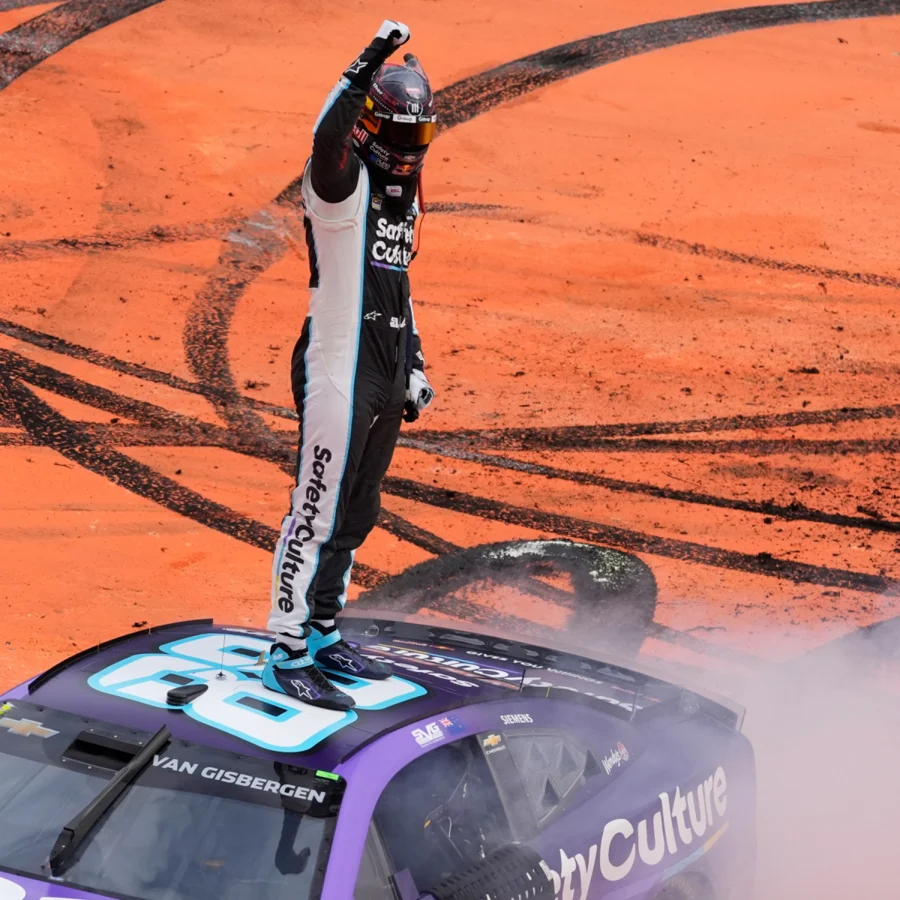
One notable distinction Brown pointed out was the absence of functional doors on the NextGen car, which restricts driver entry compared to the supercars’ conventional door design. Such differences, although seemingly minor, accumulate to affect a driver’s comfort and race-day performance. Brown also touched on the seating positions, noting that his usual setup varied from the NextGen car’s cockpit layout, and he was eager to assess the new configuration during the race.
Brown further compared in-car controls, observing that supercars feature more complex steering wheels equipped with numerous buttons for functions like line lockers, multiple display pages, and drink bottles. He stated,
The Supercar is probably a little more sophisticated inside. The steering wheel has a lot more buttons on it. We have line lockers, we can change our pages, and we have our drink buttons.
—Will Brown, Driver
Regarding rear visibility, both vehicle types showed similarities. The NextGen car’s use of a single rearview camera aligns with the supercar’s approach, likely easing one aspect of driver adaptation between the series.
Breaking down a *couple* differences between a @nascar cup series car and our @supercars – I’m no engineer but as a driver hopefully this can give you a bit more insight in to the cars! Both are fun to drive that’s for sure! pic.twitter.com/dqE44Phhvh
—Will Brown, Driver
Technical Challenges: Gear Shifting and Aerodynamics Affect Driver Transition
Brown also highlighted specific technical components that distinguish the NextGen cars from supercars, focusing on the gear-shifting mechanisms. He explained,
For the gearshift here, you actually have to lift to allow it to change gears. We have a gearshift cutback at home. So we just pull it when we see the red light, and you don’t have to lift.
—Will Brown, Driver
This difference in shifting technique can influence race outcomes, as even minimal delays can affect a driver’s position in tightly contested NASCAR races.
The aerodynamic design of each series’ vehicles also drew Brown’s attention. He noted that supercars have been modified extensively to improve racing quality, stating,
I believe the racing has been a lot better back at home. Over here, they have a flat four.
—Will Brown, Driver
Brown emphasized that despite these differences, the core of both car types remains comparable. The introduction of clip-based repair systems makes fixing damaged cars after crashes more efficient, a crucial factor given NASCAR’s demanding schedule.
Significance of the Technical Evolution for Driver Crossovers
The narrowing gap between the NASCAR NextGen car and Australian supercars has encouraged more drivers from the Supercars series to pursue NASCAR careers. Brown suggested that the shrinking technical divide facilitates smoother transitions and broader international participation in NASCAR.
At the high-profile Grant Park 165 event on the Chicago Street Course, Brown and Van Gisbergen competed directly, adding an intense yet friendly rivalry to the international narrative within NASCAR. Van Gisbergen humorously remarked on their competitive dynamic, indicating that both were focused on winning rather than cooperation during the race.
Overall, these insights from Brown underscore the adaptive challenges drivers face when switching from Australian Supercars to NASCAR NextGen vehicles. His observations shed light on the technical and practical hurdles involved and hint at a growing trend of international drivers making successful transitions into NASCAR’s premier series.
Our Reader’s Queries
Q. Why did Shane van Gisbergen quit Supercars?
A. Shane van Gisbergen believes leaving Supercars was the best decision for his career. He is now focusing on NASCAR, specifically in the Xfinity Series with Kaulig Racing. This year, he started his first full season after spending 15 years racing in Supercars.
Q. Why did Shane van Gisbergen leave Supercars?
A. I am stepping away from V8 Supercars for personal reasons that I prefer not to share publicly. I will return to New Zealand and currently have no definite future plans.
