
Shane van Gisbergen, the Kiwi speedster competing in the NASCAR Cup Series, openly criticized NASCAR’s growing focus on Formula 1-style international events, particularly questioning the suitability of certain race venues. As NASCAR expands its global presence in 2025 with events like those at Mexico City’s Autódromo Hermanos Rodríguez, van Gisbergen voiced his preference for traditional American tracks, expressing frustration over NASCAR’s attempt to mimic Formula 1’s global footprint.
Comparing NASCAR and Formula 1’s Different Racing Worlds
Though Formula 1 and NASCAR have occasionally shared race venues over past decades, the two motorsports differ significantly in their approach to circuits. Historically, F1 held the U.S. Grand Prix at Watkins Glen International from 1961 to 1980, while NASCAR incorporated Watkins Glen permanently from 1986. Later, the Circuit of the Americas (COTA) in Austin, Texas, became a crossover venue where F1 started racing in 2012 and NASCAR followed almost a decade later. Despite these overlaps, the design and conditions of circuits favor the contrasting characteristics of each series.
Formula 1’s lightweight, high-downforce cars excel on tight, twisty corners and wider tracks that reduce car-to-car contact. NASCAR’s heavier stock cars, by contrast, perform best on broader, more open circuits that accommodate close, physical racing often marked by fender rubbing. This fundamental difference has led Shane van Gisbergen to critique NASCAR’s races at venues like COTA, which he believes are ill-suited for stock cars.
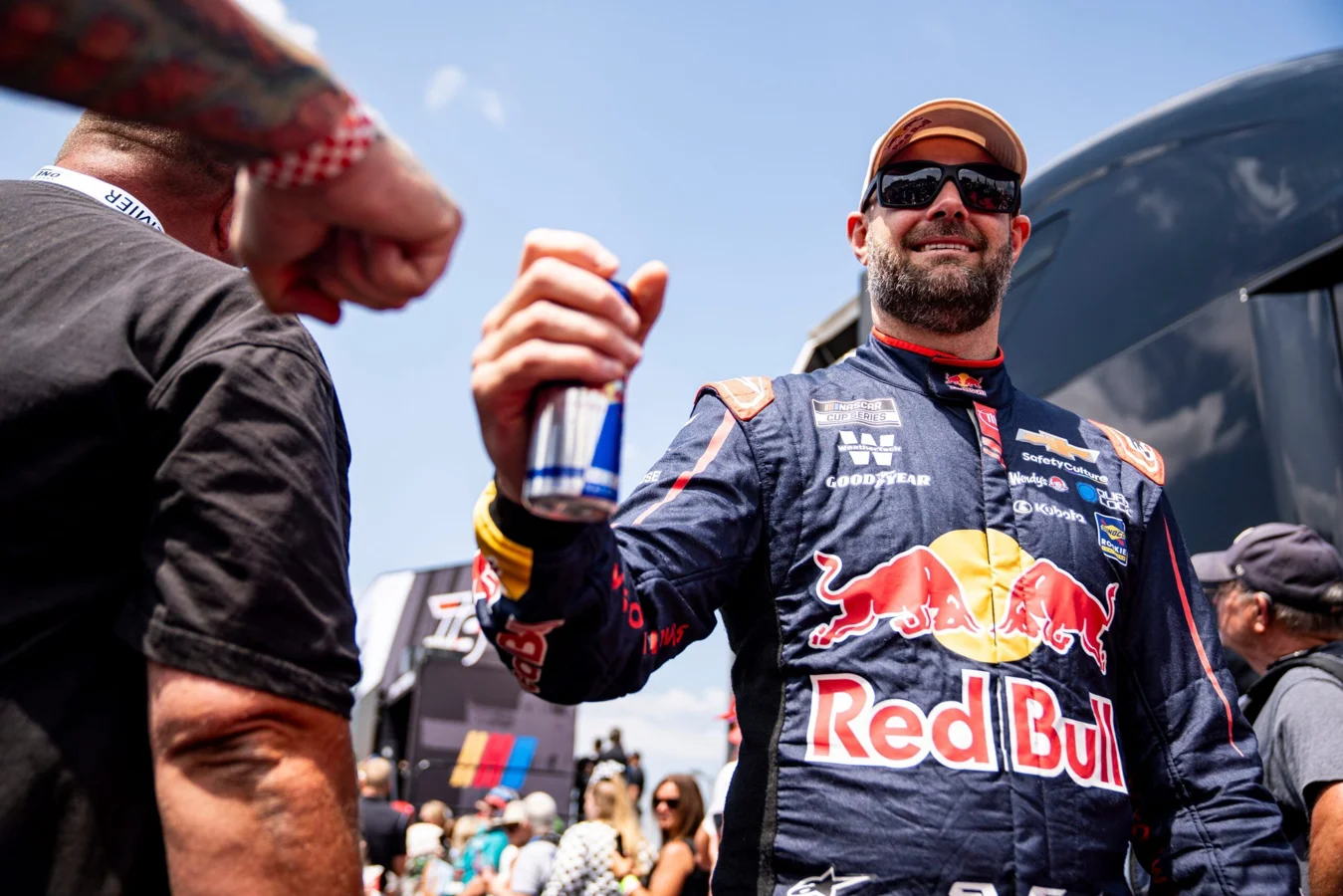
Van Gisbergen, who improved from a 30th-place finish in the 2024 Cup Series race at COTA to 6th in 2025, shared his blunt assessment of racing at the Texas circuit:
It does look pretty stupid at COTA when we’re off the track more than we’re on it.
— Shane van Gisbergen, NASCAR driver
He further expressed admiration for NASCAR’s own established road courses, highlighting tracks such as Laguna Seca and Road America as more fitting and exciting venues:
There’s plenty of cool tracks here, like Laguna Seca or Road America, and stuff.
— Shane van Gisbergen, NASCAR driver
Challenges at the Mexican Venue and Van Gisbergen’s Perspective
In June 2025, van Gisbergen claimed victory at the Viva Mexico 250, leading 60 out of 100 laps in Mexico City’s Autódromo Hermanos Rodríguez—a course also familiar from Formula 1’s Mexico City Grand Prix. Despite the win, van Gisbergen recounted difficulties with the car’s behavior in mixed weather conditions, illustrating the awkwardness of NASCAR machinery on such tracks.
Commenting on the handling issues, he said:
The cars just feel funky…like they just walk on the tire. It was mixed conditions there; it was a bit wet.
— Shane van Gisbergen, NASCAR driver
He also described a frightening incident involving a loose wheel during the race, sharing the difficulty of managing increasingly unstable brake pedal feel and the danger it posed:
Normally, I would push through it…The safety car came out at the end of the stage, and the tires stayed low, and I’m like, weaving, I can’t tell. The brake pedal’s long as well – it’s wrecked from the air…Every time I weaved, my pedal would go long, which means a loose wheel…Two laps after the yellow, it came right.
— Shane van Gisbergen, NASCAR driver
Van Gisbergen’s Commitment to NASCAR and Road Course Excellence
Since committing to NASCAR in 2023 and relocating from Australia, Shane van Gisbergen has rapidly established himself as a dominant force on road courses in the Cup Series. His remarkable average running position of 3.34 on these circuits underscores his strength, making him a formidable competitor when navigating technical and tight courses.
However, rising star van Gisbergen continues to identify oval racing as a key developmental area. His average finish on NASCAR’s oval tracks remains outside the top 25, reflecting a clear weakness he is diligently working to rectify.
Expanding Skills through Grassroots Events
To overcome his oval shortcomings, van Gisbergen has immersed himself in foundational NASCAR learning experiences, including competing in the 2025 Cook Out Summer Shootout at Charlotte Motor Speedway. This event is a stepping stone where many NASCAR careers begin, and van Gisbergen took it on alongside fellow drivers Bubba Wallace and Scott McLaughlin.
His efforts yielded immediate success when he narrowly won the Legends A-Main feature by just 0.417 seconds. Reflecting on the challenges of mastering restarts and oval racing tactics, van Gisbergen said:
You learn a lot. So, you have to choose yourself. The restarts are crazy. The restarts are just like Martinsville. You know, if you choose the outside, you can gain a row, but you have to get down as quick as you can … And then also keep in your head, like if someone hits you, you can’t just snap and get angry at that guy. You’ve got to kind of get your momentum going. It’s been fun learning that.
— Shane van Gisbergen, NASCAR driver
His expanding proficiency suggests that van Gisbergen’s oval track performance could improve significantly, potentially reshaping the competitive dynamics within the Cup Series.
Implications of Van Gisbergen’s NASCAR Critique
Shane van Gisbergen’s candid opinions highlight the tension NASCAR faces as it balances its traditional American roots with ambitions of global expansion influenced by Formula 1’s model. His critique serves as a reminder of the distinct identities and technical demands between the two racing disciplines.
As NASCAR continues to explore international venues and diversify its schedule, the perspectives of drivers like van Gisbergen emphasize the importance of respecting the unique characteristics that define stock car racing. His commitment to enhancing his skill set across diverse track types also signals a growing maturity in the fleet of NASCAR competitors.
The ongoing debate sparked by van Gisbergen’s comments adds a compelling angle to NASCAR’s evolution and raises questions about where the future of the sport is headed amid these transformative efforts.
