
NASCAR drivers have long developed unique ways to express their emotions during fast-paced races, and Shane Van Gisbergen recently exposed the humorous and strategic nature of these hand gestures. The Trackhouse Racing driver shared how racers communicate frustration or goodwill through their car windows, a form of communication rarely visible to television audiences but deeply embedded in the sport.
The intense environment of racing demands quick, clear interaction between drivers, and NASCAR’s NextGen cars enable this through specially designed windows. This has allowed for a distinct set of gestures that convey emotions and intentions without words, creating an unspoken hierarchy of hand signals on the track.
How NASCAR Hand Gestures Differ from Other Racing Disciplines
Before making his mark in NASCAR, Shane Van Gisbergen earned acclaim by winning the Australian Supercars Championship three times. After moving to stock car racing in 2023, he rapidly made a name for himself, claiming victory in his Cup Series debut at the Chicago Street Course. Despite initial challenges adapting to the sport, Van Gisbergen’s successes include three wins on road courses during the 2024-25 season in the Xfinity Series and a notable third-place finish at the Charlotte Roval.
In a recent interview on Jeff Gluck’s ’12 Questions’ series, Van Gisbergen discussed the nuances behind NASCAR’s hand gestures. When asked about his personal policy on using the middle finger while racing, he acknowledged that the NextGen car’s windows have made such gestures both possible and entertaining.
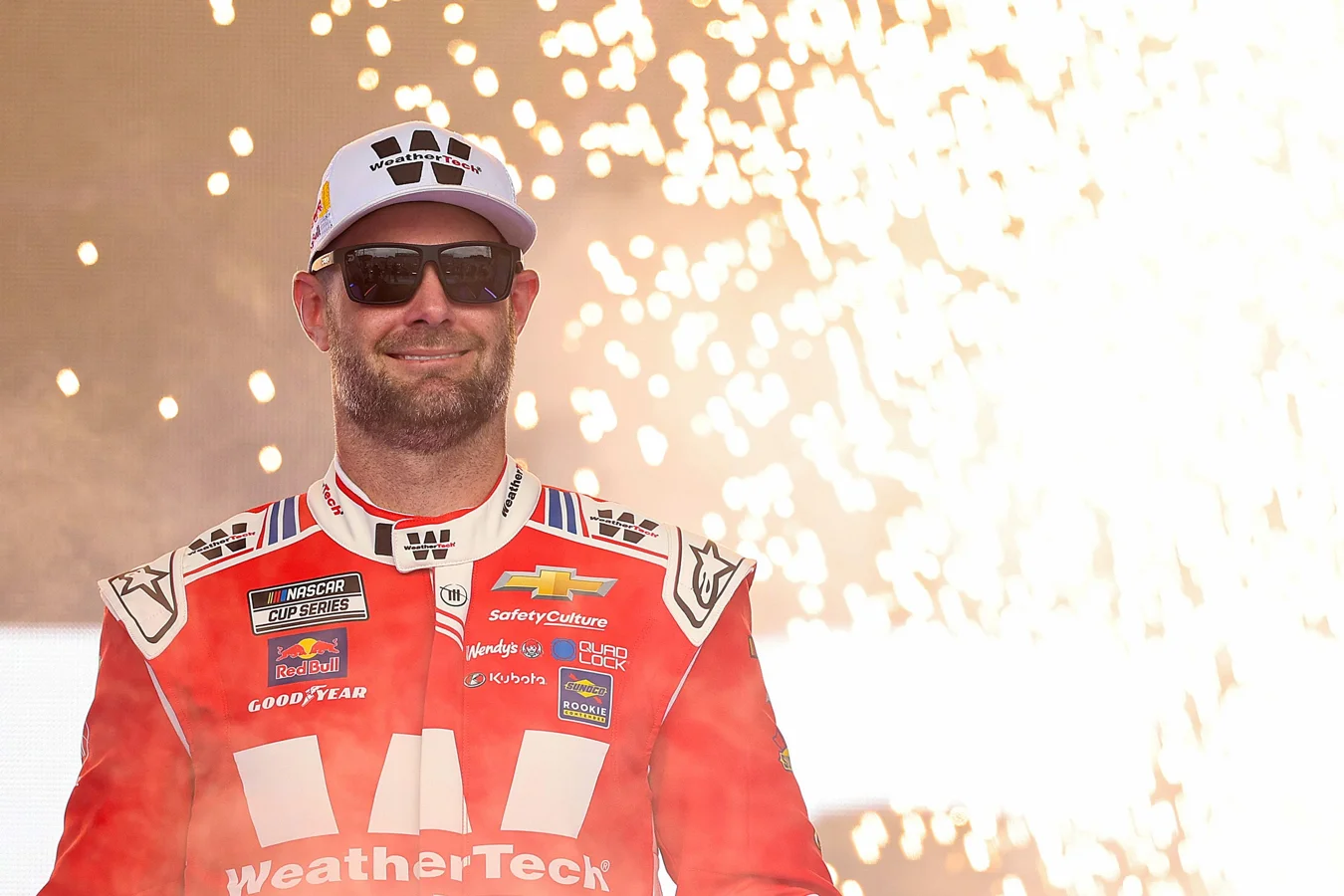
Van Gisbergen stated,
I’ve only just started doing it because we’ve got windows (in the cars) at home. It’s quite fun here doing it.
—Shane Van Gisbergen, Trackhouse Racing driver
Van Gisbergen’s Approach to Handling On-Track Frustrations
Though many of these hand signals are lighthearted, Van Gisbergen admitted to using them out of genuine frustration during a race in Michigan. Explaining one particular incident, he said,
I actually did it (in Michigan) at someone. They were racing me like an idiot, and then put their hand out at me. So I passed them and then did it back.
—Shane Van Gisbergen
He also emphasized that such gestures are bounded by respect and appropriateness. According to Van Gisbergen, the gestures are not meant to be overused or excessively rude. Instead, they are reserved for moments when drivers feel it is justified or done in a playful spirit.
He clarified,
I think it’s pretty rude, though. I don’t want to do that all the time. You only do it when people deserve it, I guess. Or for fun.
—Shane Van Gisbergen
Jeff Gluck, the interviewer, highlighted the rarity of these interactions being caught on camera, noting that fans often miss these details while watching races.
Van Gisbergen replied that many of the gestures actually come from polite exchanges on the track, such as drivers signaling gratitude when another competitor allows them to pass or assists them in some way. The variety and subtlety of these gestures contribute to a unique form of driver communication.
He described the increasing intensity of the signals, saying,
But you can see some people just put a sly finger out, and then I guess when they’re really angry, the whole hand comes out. (Laughs.) It’s quite funny, because you can’t express yourself in other racing because you’ve got the window. It’s pretty cool.
—Shane Van Gisbergen
What Van Gisbergen’s Insight Means for NASCAR and Its Fans
Van Gisbergen’s explanations reveal how NASCAR’s car design, particularly the inclusion of windows on NextGen vehicles, creates opportunities for drivers to express themselves more openly during competition. This enhances the human element of the sport, adding layers of personality and emotion that television coverage often misses.
For fans and fellow competitors, understanding this hidden language provides a deeper appreciation of the complex, interpersonal dynamics happening beyond the sheer speed and skill. With Van Gisbergen’s candid revelations, the next time viewers watch a race, they might look more closely for these subtle hand signals that show camaraderie, rivalry, or simple driver frustration.
As NASCAR continues to evolve, the interplay of technology, driver communication, and fan engagement will likely remain an intriguing aspect of the sport’s culture moving forward. Shane Van Gisbergen’s openness in sharing this inside joke sheds light on the often unseen interactions that enrich the racing experience for everyone involved.
Our Reader’s Queries
Q. Why did Shane van Gisbergen quit?
A. Shane van Gisbergen believes he made the “right choice” by leaving Supercars to follow a career in NASCAR. This year, he is focusing on his first full season in the NASCAR Xfinity Series with Kaulig Racing. Before this, he spent 15 years racing in Supercars.
Q. How much did Shane van Gisbergen win in NASCAR?
A. Stewart-Haas Racing is shutting down after 16 seasons. Stewart mentioned that finding sponsors for a four-car team was challenging. His departure coincides with tension between NASCAR and its teams about the sport’s future.
