
Anthony Davidson, providing analysis on Sky F1, sharply criticized Carlos Sainz after the collision with Oliver Bearman at the Italian Grand Prix, stating that Sainz was clearly to blame. The incident, which occurred as the drivers approached the second chicane, has put Bearman at risk of an automatic race ban under Formula 1’s penalty points system. This collision fault by Sainz has become a key talking point as Bearman’s future with Haas hangs in the balance.
Oliver Bearman Faces Pressure Amid Penalty Point Accumulation
Oliver Bearman, the 20-year-old British rookie driving for Haas, is on the verge of reaching the 12-point penalty threshold that triggers a forced suspension from a race. Bearman’s current total sits at 10 points, requiring a flawless performance at upcoming events, including the race in Baku on the streets of Azerbaijan, to avoid missing a race and losing his seat to Ryo Hirakawa. This comes after Bearman replaced Kevin Magnussen, who previously lost his spot due to exceeding the penalty points limit at the Azerbaijan Grand Prix last year.
While Bearman has demonstrated promise this season, achieving a career-best sixth place at the Dutch Grand Prix and scoring 16 championship points, he has also committed errors that contributed to his precarious situation. Anthony Davidson acknowledged that these mistakes are often a part of the learning curve for a new Formula 1 driver, emphasizing Bearman’s need to improve consistency to sustain a long career in F1.
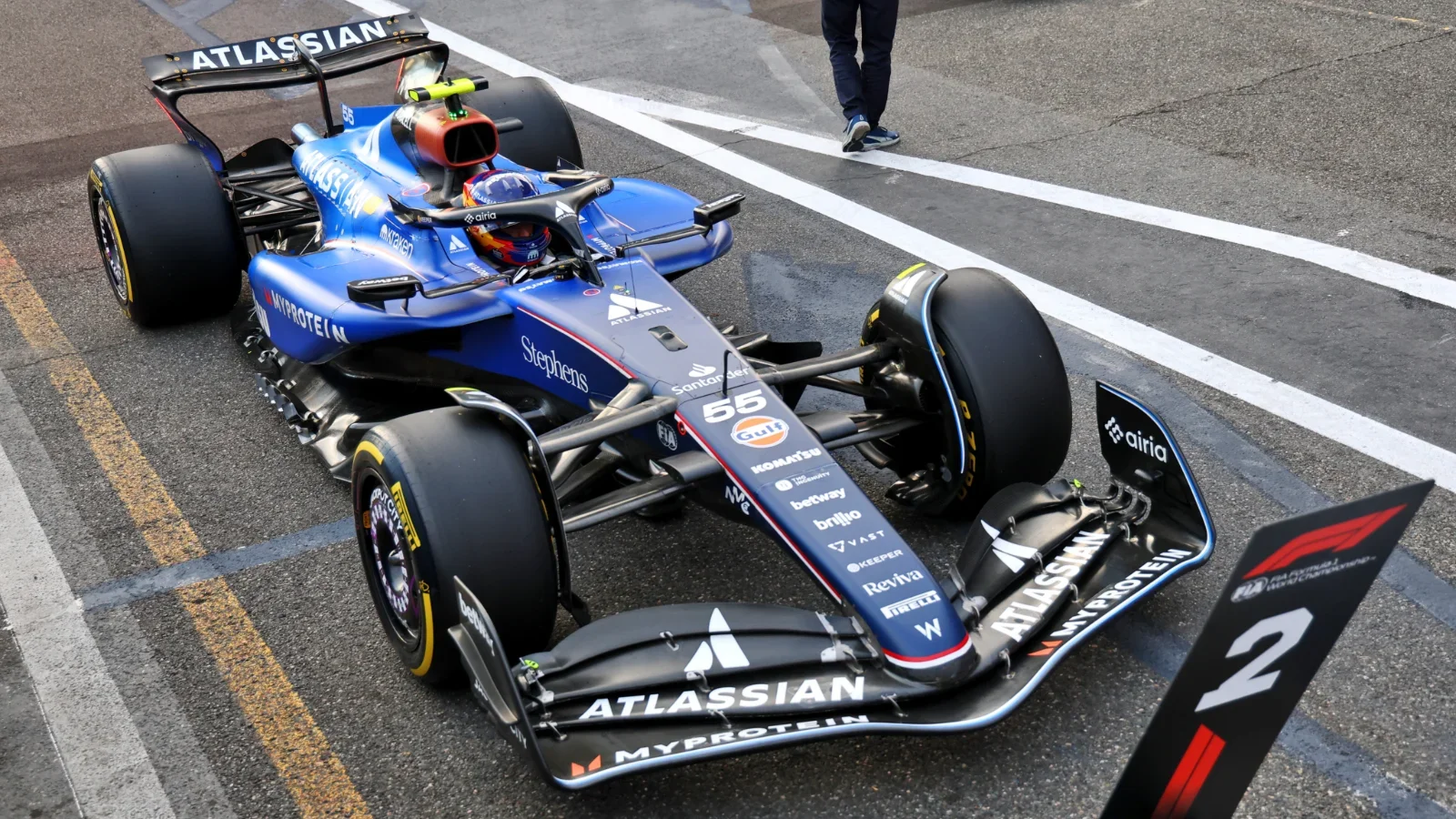
Davidson said on Sky’s broadcast,
“In his own words, saying, ‘I’m enjoying being part of Formula 1. It’s a pinch yourself moment when you arrive here in the scene and you’re a Formula 1 driver.’”
“But then you’re looking more for longevity, and that’s where he finds himself now.”
“And for him to stay in this game for a long, long time, he’s got to iron out the inconsistencies, which is all part and parcel of being a new driver in Formula 1, and that’s what the next step has to be for Ollie, because the speed is there. That’s the part you can’t really teach in many ways.”
So we’re looking for him — and he’ll be looking himself as well — to just iron out those inconsistencies.
— Anthony Davidson, Sky F1 Analyst
These inconsistencies have placed Bearman dangerously close to a mandatory race ban, with the penalty points collected from several incidents over two seasons.
Details of Bearman’s Penalties and Their Origins
Bearman’s first penalty points came last season during his second race as a substitute for Haas driver Kevin Magnussen, when he collided with Franco Colapinto at the Brazilian Grand Prix, incurring two points. Earlier this season, during the Monaco Grand Prix practice session 2, Bearman received two points for overtaking Carlos Sainz under red flag conditions. He also earned four penalty points at Silverstone after crashing during pit entry while the track was under red flags.
The most recent addition to his penalty tally was from the incident at Monza involving Sainz, where stewards determined Bearman caused the collision on lap 41. According to the stewards’ ruling, Sainz’s car (number 55) attempted an overtake on Bearman’s car (number 87) on the outside into Turn 4, reportedly having the “front axle ahead” at the apex, which would normally grant him the right to the racing line. The driver of car 87 then defended on the inside, causing the collision.
Car 55 attempted to overtake Car 87 on the outside into Turn 4 and had its front axle ahead of the front axle of Car 87 at the apex, thereby earning the right to the racing line,
the stewards’ statement read.
The driver of Car 87 defended his position on the inside instead of giving up the position and caused the collision.
Contrasting Views: Davidson and Bearman Dispute Stewards’ Decision
Despite the official ruling, Anthony Davidson disagrees with the stewards’ finding, arguing that closer analysis of extended footage reveals Sainz was at fault. He points out that Sainz did not leave enough room for Bearman during the maneuver, which ultimately led to the crash.
That one in Monza, for me, was 100 per cent Sainz’s fault,
Davidson stated emphatically.
He further explained,
“They are only guidelines, remember. It’s not a rule.”
“But in terms of what we saw there, it’s cut too short, and it makes it look like Ollie’s making the move down the inside. He wasn’t. That’s actually Sainz coming around the outside of him and basically leaving him nowhere to go.”
So I think that, for me, clearly, is an unfair penalty.
— Anthony Davidson, Sky F1 Analyst
Bearman himself expressed frustration with the interpretation of FIA’s guidelines, feeling the ruling did not give him adequate credit for space on the inside line. Speaking with F1TV, he admitted the penalty was harsh but accepted that he must now focus on clean racing to avoid suspension.
It’s annoying to be governed by these guidelines which I feel are quite vague in some areas and quite specific in others,
Bearman explained.
With my incident in Monza I felt like I was pretty hard done by.
The guidelines state that I don’t deserve any space on the inside in that specific scenario, which in my view is a bit harsh. Of course, I’m biased towards myself, but I think a lot of people will agree and say that was quite a harsh scenario.
It’s definitely something that I have to take into account. It’s a shame to be at this point, but I just have to have a few clean races.
— Oliver Bearman, Haas F1 Driver
Implications for Bearman’s F1 Career and Haas Team
Bearman’s current penalty points situation casts a shadow over his rookie season in Formula 1, where his promising speed has been undercut by risky incidents. Should he accumulate two more points or fail to complete clean races soon, he will automatically miss a Grand Prix, likely allowing Ryo Hirakawa to make his Haas debut. This potential loss of seat at Haas highlights the high stakes for young drivers competing in F1’s tight margins and unforgiving penalty point system.
The debate over Carlos Sainz’s responsibility adds an additional layer of controversy, with expert analysts questioning whether the existing rules fairly assess such incidents. As Haas, Bearman, and Sainz prepare for upcoming races, the outcome could shape the careers of multiple drivers and influence how race stewards approach on-track collisions in the future.
