
Tony Stewart, a three-time NASCAR Cup Series champion, recently criticized the sport’s departure from its traditional ties to dirt racing, highlighting concerns about the evolving development model used for NASCAR drivers. Stewart’s comments point to a growing divide between historic pathways and the structured routes now favored by NASCAR, reflecting his belief that the sport is losing connection with its grassroots foundation.
Comparison of past and present views on drivers competing outside NASCAR’s top tier
Reflecting on his own experiences, Stewart recalled how Joe Gibbs, the former team owner who guided him through much of his Cup career, was strongly opposed to drivers competing outside NASCAR’s highest levels. Stewart said,
“I think the hardest part about that is, you know, when I came back and ran here, Joe Gibbs hated it,”
emphasizing Gibbs’s reluctance to allow him to race outside the Cup car. However, Stewart noted that this stance has evolved, especially with younger drivers like Ty Gibbs, Joe’s grandson, who now regularly competes in sprint cars and midget races while pursuing a NASCAR career.
Stewart stated,
“That’s one thing from my history on the NASCAR side that I’m proud of is I feel like I took walls that were built and teams didn’t really want their drivers doing anything outside of the Cup stuff, NASCAR side at least.”
This highlights the barriers that once existed but have slowly started to erode thanks to efforts by drivers who embraced multiple racing disciplines.
Shift away from dirt racing in the current American racing landscape
Stewart argued that the modern era of American motorsport emphasizes a highly structured and specialized path toward success, especially in series like IndyCar, where drivers follow disciplined, narrow development routes. According to Stewart, dirt racing has become largely excluded from this formula.
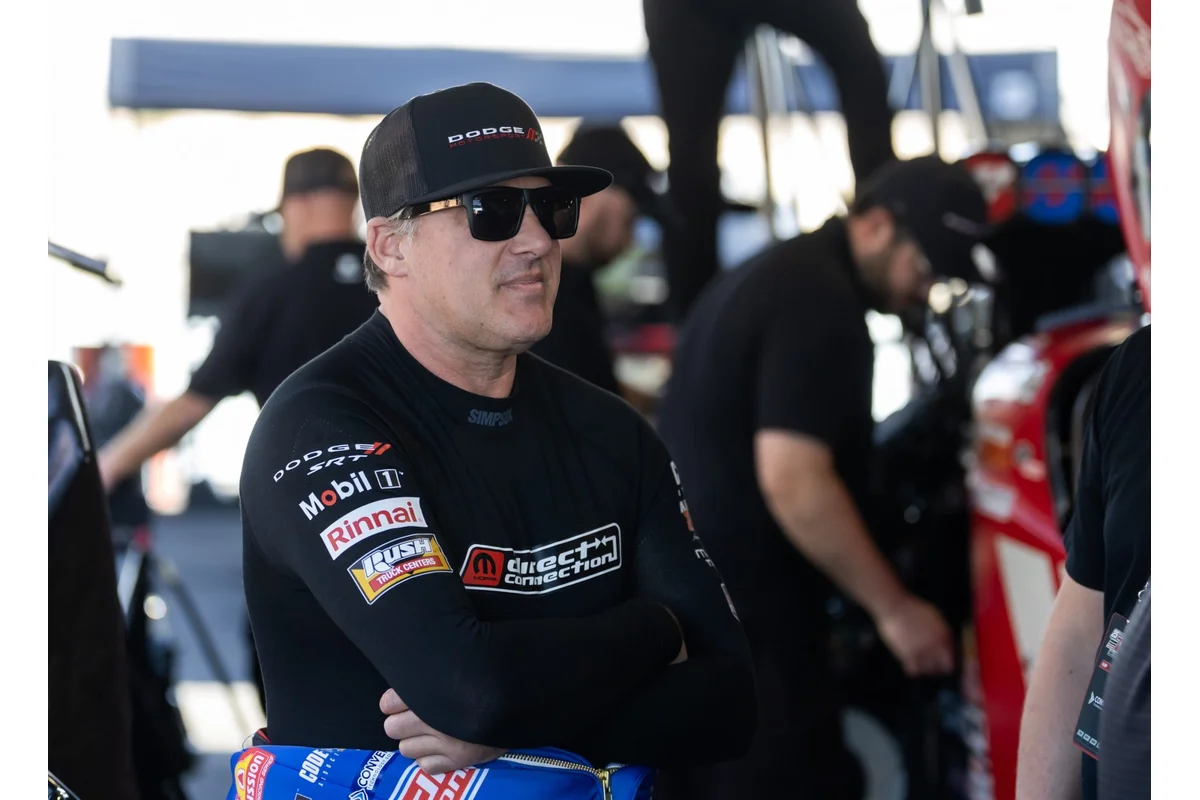
“I think in this era, it’s not like it used to be in the early days, where you had guys that participated in all disciplines,”
he said.
“Guys that get to IndyCar, they’re very structured, disciplined on the path to get there, and what their goals are. Dirt racing does not fit into that path, unfortunately. I’m not sure it really does for NASCAR anymore, either.”
Breaking down barriers between dirt racing and NASCAR careers
Stewart recognizes that only a select few drivers, including himself and Ken Schrader, have challenged the norms and successfully blended dirt track racing with NASCAR competition. He commented,
“We’ve had the pattern of (Ken) Schrader and myself, and guys that have come back and done it enough to at least break the barriers down so these guys can step into it.”
This legacy, he suggests, is important for preserving the sport’s roots and offering alternative experiences to emerging drivers.
Implications of Stewart’s critique for NASCAR’s future development path
Stewart’s remarks suggest that NASCAR’s modern development system may be losing valuable elements of its heritage by sidelining dirt racing. As the sport continues to grow more structured and focused on specific pipelines, the diverse backgrounds that once enriched its talent pool might be ignored. This shift could affect how future drivers develop and the culture within NASCAR, raising questions about how the sport balances tradition with modernization going forward.
Tony Stewart believes there are several #IndyCar drivers who could succeed at the Chili Bowl, but praised Santino Ferrucci as "the only one that has the balls to do it, or the passion to do it, at least." 👀 https://t.co/pD0shiuNIK
— Motorsport (@Motorsport) January 13, 2026
